Jining Maxpower Machinery Co., Ltd.




Choosing a mini excavator for construction requires more than comparing operating weights and purchase prices.
The right machine must fit the physical jobsite, reach the required digging depth, handle the planned attachments and deliver enough productivity for the expected workload. A machine that is too small may complete the work slowly, while an oversized model may create unnecessary transportation, access and operating costs.
For contractors, equipment rental companies and distributors, the decision should also account for future projects, maintenance support and long-term equipment utilization.
This mini excavator buying guide explains how to evaluate key specifications and select a machine suited to real-world construction conditions.
A mini excavator is a compact tracked machine commonly used where a conventional excavator would be too large or difficult to operate.
Typical construction applications include:
Utility trenching
Drainage installation
Residential foundations
Landscaping
Site preparation
Interior demolition
Roadside repairs
Material handling
Agricultural construction
Small commercial projects
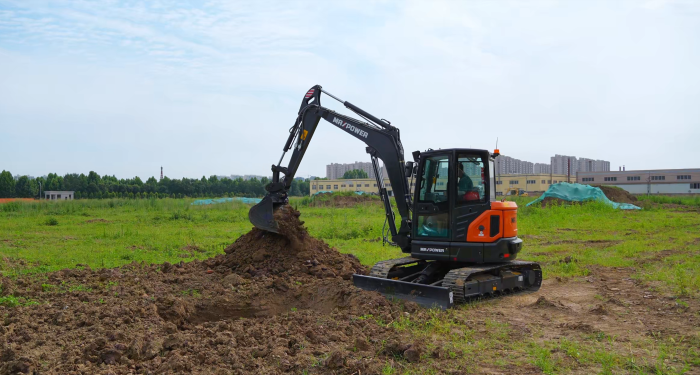
Its compact structure allows it to work near buildings, fences, walls and existing utilities. Many models can also operate with buckets, hydraulic breakers, augers, grapples and other attachments.
However, not every mini excavator is suitable for every construction task. The machine must be selected according to the project rather than the product category alone.
| Selection Factor | What to Check | Why It Matters |
|---|---|---|
| Operating weight | Machine weight and working stability | Affects capacity, transport and ground pressure |
| Machine dimensions | Width, height and tail swing | Determines whether the excavator can access the site |
| Digging depth | Maximum and practical working depth | Must match trench and foundation requirements |
| Working reach | Horizontal reach and dumping height | Affects excavation and truck loading |
| Hydraulic system | Flow, pressure and auxiliary circuits | Determines attachment compatibility |
| Bucket capacity | Bucket size and material density | Influences productivity |
| Lifting capacity | Load weight and working radius | Important for pipe and material handling |
| Undercarriage | Track width and adjustable features | Affects access and stability |
| Transport requirements | Trailer and vehicle capacity | Influences project mobility |
| Service support | Parts, manuals and technical assistance | Affects long-term operation |
Use this table as an initial checklist. Final selection should be based on the specifications of an individual model.
Start with the work the machine will perform most frequently.
A mini excavator used for shallow residential drainage does not need the same configuration as one operating a hydraulic breaker on commercial construction sites.
Typical work includes:
Small foundations
Utility connections
Drainage
Pool preparation
Driveway excavation
Landscaping
Compact dimensions and low ground disturbance may be more important than maximum bucket capacity.
Utility projects may require:
Narrow trenching buckets
Accurate control
Sufficient digging depth
Pipe-lifting capacity
Compact tail swing
The machine should be large enough to reach the required depth without operating continuously at its maximum limit.
Commercial projects often involve:
Higher material volumes
Longer working shifts
Heavier attachments
More demanding soil
Greater lifting requirements
A larger mini excavator or small excavator may provide better productivity than an ultra-compact model.
Indoor demolition may prioritize:
Compact dimensions
Machine height
Low operating weight
Tail-swing clearance
Attachment compatibility
Electric power options
Floor load limits
The carrier must be properly matched to the breaker, grapple or demolition attachment.
Road repairs and municipal projects often require a balance of transport flexibility and working performance.
A suitable machine may need to complete trenching, lifting, backfilling and pavement-breaking tasks during the same project.
Operating weight is a useful starting point, but it should not be treated as the only measure of performance.
Mini excavators can range from very compact machines used in gardens or interiors to larger models capable of supporting commercial construction.
| Approximate Class | Common Construction Use | Main Consideration |
| Under 2 tons | Landscaping, indoor work and light utilities | Maximum access and easy transport |
| 2–3.5 tons | Residential construction and trenching | Balance of compact size and capability |
| 3.5–6 tons | General construction and utility work | Greater depth, stability and attachment capacity |
| 6–10 tons | Commercial construction and heavier excavation | Higher productivity but greater transport needs |
These ranges are general. Manufacturers may classify machines differently.
Choose a lighter machine when:
Access is highly restricted
The machine must pass through narrow entrances
Finished surfaces need protection
Transportation flexibility is important
Work consists mainly of shallow excavation
Lifting requirements are limited
Choose a larger machine when:
Soil is compacted or difficult
Excavation volumes are higher
Deeper trenches are required
Heavy attachments will be used
The machine must lift pipes or materials
Continuous productivity is important
The correct machine should have enough reserve capacity to perform the work efficiently without being unnecessarily large.
Many equipment buyers check digging depth but forget to measure the route into the jobsite.
Before selecting a machine, confirm:
Narrowest entrance width
Available machine height
Turning area
Ground clearance
Distance between structures
Overhead restrictions
Space for counterweight rotation
Truck and trailer access
Measure the complete access route, not only the final working area.
A machine may fit inside the jobsite but still be unable to pass through a gate, alley or doorway.
Tail swing describes how far the rear of the upper structure extends beyond the tracks during rotation.
A compact or reduced-tail-swing design can be useful near:
Walls
Buildings
Road traffic
Fences
Existing equipment
However, buyers should still evaluate machine balance and lifting performance for the intended work.
Maximum digging depth is one of the most important mini excavator specifications.
Before comparing products, determine:
Normal working depth
Maximum required depth
Trench width
Required horizontal reach
Dumping height
Excavated material location
Do not choose a model that can reach the required depth only under ideal conditions.
Operating continuously at maximum extension can reduce productivity and may limit digging force or lifting performance.
Compact machines may be sufficient for planting, irrigation and surface drainage.
A mid-size mini excavator may offer a useful combination of trench depth and maneuverability.
A larger compact excavator may be required to provide additional reach, stability and bucket capacity.
Always compare the manufacturer’s published working-range diagram rather than relying only on a general tonnage category.
For a broader size comparison, read What Size Mini Excavator Do I Need?.
Engine power alone does not show how effectively an excavator can dig.
Actual working performance depends on:
Hydraulic pump output
System pressure
Bucket digging force
Arm digging force
Boom geometry
Bucket design
Machine stability
Control calibration
Two machines with similar operating weights and engine outputs can deliver different digging performance.
Ask the supplier for:
Bucket digging force
Arm digging force
Main hydraulic pressure
Pump flow
Cycle speed information
Performance with planned attachments
A machine handling loose soil may require less breakout force than one working in compacted clay or broken construction material.
A larger bucket can move more material per cycle, but it is not automatically the best choice.
Bucket selection should consider:
Soil density
Material moisture
Digging resistance
Machine stability
Loading height
Truck size
Required trench width
An oversized bucket filled with dense or wet material may overload the machine or reduce cycle efficiency.
Suitable for routine digging and loading in common soil conditions.
Narrower and designed for drainage, cable and utility trenches.
Wider and commonly used for finishing, leveling and ditch maintenance.
Designed for more abrasive or demanding materials, subject to machine compatibility.
Professional buyers should discuss both bucket width and capacity with the supplier.
The ability to use multiple attachments can increase the value of a mini excavator.
Common construction attachments include:
Hydraulic breaker
Auger
Grapple
Hydraulic thumb
Ripper
Compaction plate
Tilt bucket
Quick coupler
Before ordering, verify:
Required hydraulic flow
Operating pressure
Auxiliary hydraulic circuits
Attachment weight
Coupler dimensions
Return-line requirements
Control method
Machine stability
The MAXPOWER ME18U product range, for example, is designed with standardized attachment interfaces for tools such as hydraulic hammers and grapples.
A heavy attachment changes the machine’s balance and working capacity.
The excavator must remain stable when the boom is extended, particularly when operating across the side of the tracks.
Do not assume that every attachment designed for a similar-tonnage machine is automatically compatible.
Mini excavators are often used to lift:
Drainage pipes
Utility components
Concrete materials
Attachments
Small structural elements
Construction supplies
Lifting capacity varies according to:
Working radius
Boom position
Lift direction
Blade position
Track width
Ground conditions
Attachment weight
Counterweight configuration
A machine may lift a load close to its tracks but not safely handle the same load at full reach.
Request the lifting chart for the exact configuration being considered.
Never select a machine based only on a supplier’s general statement that it can lift a certain weight.
The undercarriage affects access, traction, stability and ground pressure.
Rubber tracks are commonly considered where surface protection and reduced pavement damage are important.
They may be suitable for:
Residential sites
Urban construction
Landscaping
Finished pavement
Steel tracks may be considered for demanding surfaces and abrasive conditions, depending on the project and machine configuration.
An adjustable undercarriage can narrow the machine for access and widen it to improve working stability.
This can be particularly useful for compact construction projects.
Before choosing a machine, identify whether it will work on:
Soft soil
Mud
Sand
Rock
Slopes
Finished pavement
Uneven ground
A heavier machine may provide better stability but create greater ground pressure.
Transportation can affect the true operating value of a mini excavator.
Confirm:
Machine transport weight
Overall width
Overall height
Trailer capacity
Towing vehicle capacity
Loading ramp requirements
Attachment transport
Local weight regulations
A contractor moving equipment several times per week may benefit from a smaller machine even when a larger model offers higher productivity.
A machine remaining on a long-term construction site may place less emphasis on transport convenience.
Transport calculations should include buckets, couplers, breakers and other equipment carried with the machine.
Diesel mini excavators remain practical for projects requiring:
Fast refueling
Remote operation
Long or unpredictable shifts
Limited electrical infrastructure
Electric mini excavators may be useful for:
Indoor construction
Noise-sensitive sites
Urban projects
Factories
Enclosed work areas
Predictable work schedules
The correct choice depends on charging availability, operating hours, ventilation, local energy costs and project requirements.
For a complete comparison, read Electric Excavator vs Diesel Excavator.
A low purchase price does not always produce a low construction cost.
An undersized machine may lead to:
More operating hours
Slower loading
Lower digging productivity
Additional equipment rental
Project delays
Higher labor costs
A larger machine may complete the work faster but introduce:
Higher transport costs
More fuel or electricity use
Restricted access
Higher purchase costs
Greater ground impact
The more useful measure is cost per completed task.
Estimate:
Material moved per hour
Expected daily working hours
Total project volume
Fuel or electricity consumption
Operator and labor cost
Transportation cost
Maintenance requirements
This provides a more realistic comparison than purchase price alone.
Operator conditions can affect productivity during long shifts.
Evaluate:
Cab or canopy design
Seat adjustment
Control layout
Visibility
Noise
Heating and air conditioning
Entry and exit
Display information
Camera or mirror options
Good visibility is especially important on compact urban sites where workers, vehicles and structures may be close to the machine.
The machine should also have appropriate alarms, guards and safety features for its intended market and application.
Construction equipment produces value only when it is available to work.
Before purchasing, check whether routine service points are easy to access.
Review:
Hydraulic filters
Engine filters
Fluid inspection points
Greasing locations
Cooling-system access
Battery access
Diagnostic system
Track adjustment
Parts documentation
Ask the supplier which spare parts should be kept locally.
Commonly stocked items may include:
Filters
Seals
Hoses
Pins and bushings
Track components
Electrical components
Attachment wear parts
For international buyers, documentation and parts response can be as important as the original machine specification.
A mini excavator purchase should include an evaluation of the supplier.
A manufacturer with several machine classes can recommend a model based on the application rather than forcing every project into one product.
Confirm the availability of:
Specification sheets
Operating manuals
Maintenance manuals
Parts catalogs
Hydraulic diagrams
Electrical diagrams
Ask how the manufacturer checks:
Welding
Hydraulic systems
Machine performance
Electrical systems
Leakage
Final assembly
Pre-delivery operation
The supplier should be able to confirm attachment compatibility rather than leaving the buyer to estimate hydraulic requirements.
Discuss:
Spare parts availability
Warranty terms
Remote technical support
Service training
Recommended spare-parts packages
Response process
MAXPOWER manufactures construction machinery ranging from mini excavators to larger excavation equipment and supplies products to international markets. Explore the MAXPOWER excavator range to compare different equipment classes.
Use the following checklist before requesting a quotation.
Main application
Material or soil type
Expected project volume
Daily operating hours
Indoor or outdoor environment
Required digging depth
Required working reach
Required dumping height
Narrowest site entrance
Available swing space
Required bucket capacity
Lifting requirement
Digging-force requirement
Travel conditions
Slope requirements
Bucket types
Hydraulic breaker
Auger
Grapple
Quick coupler
Other special tools
Destination country
Transport restrictions
Trailer capacity
Delivery location
Frequency of relocation
Required documents
Spare-parts package
Warranty
Technical training
Local service capability
The more complete the project information, the more accurately a manufacturer can recommend a suitable machine.
Operating weight does not fully describe digging performance, hydraulic capability or stability.
A low-cost machine may become expensive if it lacks productivity, parts support or attachment compatibility.
Never assume a machine will fit through a gate based only on its general product category.
Consider the complete group of tools the machine may use during its service life.
A highly specialized machine may have low utilization after the first project ends.
Maximum depth, reach and lifting figures may not represent the most productive everyday working range.
Equipment selection must be combined with proper jobsite planning and trained operation.
Construction excavation can involve hazards such as:
Cave-ins
Underground services
Falling materials
Mobile equipment near excavation edges
Hazardous atmospheres
Water accumulation
OSHA’s trenching and excavation guidance explains relevant hazards, protective systems and construction requirements.
The equipment selected for a project does not replace:
Soil assessment
Utility locating
Protective systems
Daily inspections
Safe access
Operator training
Site supervision
Compliance with local regulations
MAXPOWER supplies mini and compact excavator solutions for construction, landscaping, municipal work and other applications.
Available equipment can be evaluated according to:
Operating weight
Working dimensions
Bucket capacity
Hydraulic requirements
Attachments
Engine configuration
Destination market
Project environment
The MAXPOWER ME18U mini excavator, for example, combines compact dimensions with support for multiple attachment types.
Buyers requiring greater working capacity can compare the wider MAXPOWER excavator product range.
Learning how to choose a mini excavator begins with understanding the project.
Do not select the machine only by price, operating weight or engine power. Evaluate:
Application
Jobsite access
Digging depth
Hydraulic performance
Bucket size
Attachments
Lifting requirements
Ground conditions
Transportation
Maintenance support
A smaller machine may be ideal for narrow residential and utility sites. A larger mini excavator may provide better productivity for commercial construction, deeper excavation and heavy attachment work.
The best mini excavator for construction is the machine that completes the required tasks efficiently while remaining practical to transport, operate and maintain.
Contact MAXPOWER with your project type, digging depth, soil conditions, attachment requirements and destination market to discuss a suitable excavator configuration.
The best size depends on the application. Compact models are suitable for landscaping and restricted residential sites, while larger mini excavators offer more depth, stability and productivity for utility and commercial construction.
Start by identifying the required digging depth, jobsite dimensions, soil conditions, attachments, lifting needs and transportation limits. Then compare the complete specifications of suitable models.
A 2-ton machine may be suitable for landscaping, light trenching, residential maintenance and narrow sites. Larger foundations or high-volume excavation may require more capacity.
Check operating weight, dimensions, digging depth, hydraulic flow, bucket capacity, lifting performance, attachment support, maintenance access and spare-parts availability.
Yes, provided the breaker matches the machine’s operating weight, hydraulic flow, pressure and mounting system.
It can be advantageous in narrow areas because the rear structure remains closer to the track footprint. The final choice should also consider stability, service access and performance.
Rubber tracks are commonly selected for pavement and finished surfaces. Steel tracks may suit more abrasive conditions. The correct choice depends on the ground and application.
Select a machine that can comfortably exceed the project’s normal digging depth. Avoid planning to operate continuously at the machine’s maximum reach.
Yes, depending on the excavation volume, material, depth and lifting requirements. Larger commercial tasks may require a heavier mini or small excavator.
Provide the application, required digging depth, soil type, attachments, lifting needs, site access, operating hours, transport restrictions and destination country.







