Maxpower Construction Machinery Manufacturer




A supplier sends a video of a piling rig starting, raising its mast, and rotating a drilling tool. The machine appears to operate smoothly. Is that enough evidence to approve the purchase?
Not if your first contract depends on a particular drilling depth, ground condition, or production requirement.
For a contractor considering the MAXPOWER MR240, a piling rig inspection should connect three things: the agreed specification, the machine presented for inspection, and the work it will need to perform. A demonstration becomes useful when those connections are clear.
The objective is not to collect the largest number of inspection photographs. It is to resolve the questions that could stop the rig from doing the job after delivery.
Begin by separating purchase acceptance from an equipment safety inspection.
For purchase acceptance, establish whether the machine matches the order, whether the agreed functions have been demonstrated, and whether the necessary equipment and documents will accompany delivery.
Safety inspection requires appropriate competence and a scope suited to the equipment and its risks. The UK Health and Safety Executive’s work-equipment inspection guidance emphasizes risk assessment, manufacturer recommendations, and inspectors who understand what to examine and how to respond to a problem.
Arrange those responsibilities before the visit. A purchasing representative can verify an equipment list, but should not be expected to certify a complex drilling system without the necessary expertise.
The official MR240 product page lists 272 kW rated engine power at 1,900 rpm, 240 kN·m maximum rotary output torque, and a 5–30 rpm drilling-speed range. These are separate specifications, not one combined operating condition.
Use them as reference points when reviewing the technical offer. Ask the supplier to identify the configuration being inspected and provide the corresponding component and machine identification.
Do not accept a different configuration merely because the model name remains MR240. Equally, do not infer working performance from an identification plate alone.
The inspection record should make it possible to trace the machine being demonstrated back to the equipment description in your order.
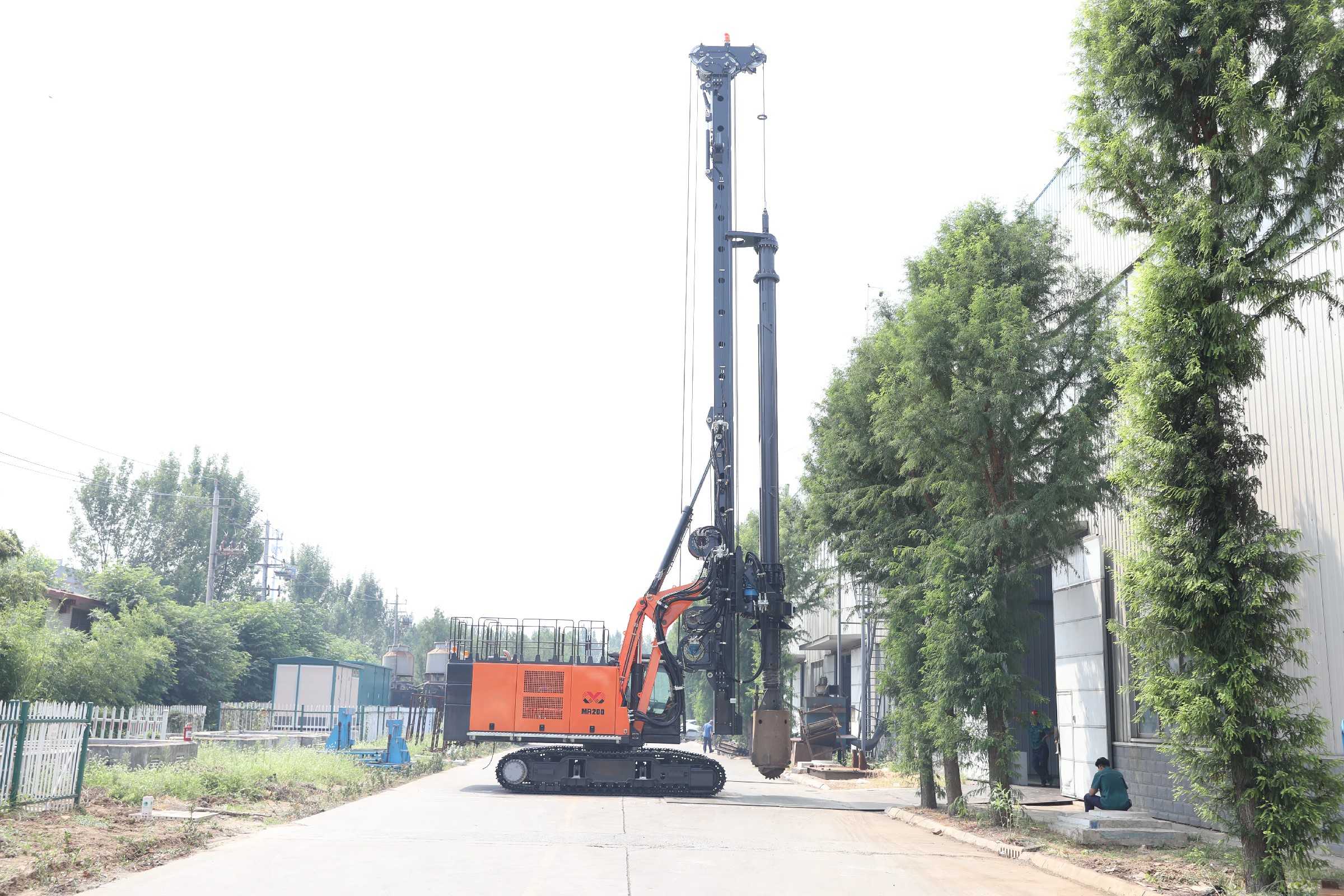
MAXPOWER publishes a 2,000 mm maximum drilling diameter and 58/73 m maximum drilling depth for the MR240. The public table does not explain the configuration associated with each of the two depth figures.
That needs clarification before purchase acceptance.
Ask which Kelly bar arrangement and associated equipment are included in the offer, and obtain confirmation of the applicable drilling depth. Describe your required pile diameter and ground conditions at the same time.
A maximum figure in a catalog is not a substitute for a configuration-specific agreement.
Where a quotation refers to optional equipment, establish whether it is included, supplied separately, or excluded. Resolve that distinction before the rig is packed.
Ask the inspector to work through the actual machine rather than reviewing only promotional photographs.
Have accessible structural areas, hydraulic lines, protective components, control labels, and supplied working equipment examined against the manufacturer’s instructions. Record observations clearly, including the location of any concern.
A visual inspection has limits. It cannot, by itself, verify maximum rotary torque, internal component condition, or performance at the required drilling depth.
Where closer examination requires access near moving parts or stored hydraulic energy, use qualified personnel and the prescribed safe procedure. HSE’s maintenance guidance stresses competent work, isolation of energy sources, and proper support for components that could move or fall.
Do not turn an acceptance visit into an improvised repair or overload test.
Choose the question first, then design the demonstration around it.
Suppose your concern is whether the offered configuration can sustain the drilling sequence required by your project. Watching the rotary head turn without drilling does not answer that question.
Request evidence from a representative task. Record the tool, bore diameter, depth interval, available ground information, operating settings, and elapsed time. Separate penetration from tool extraction, emptying, and waiting.
If representative ground is unavailable at the factory, acknowledge that limitation in the report. Factory functional testing and site production verification can be treated as different acceptance stages.
The important distinction is between what was observed and what remains to be demonstrated.
Yes. For your purchasing assessment, ask to see the agreed sequence rather than only the fastest movement.
Follow the preparation, positioning, drilling, tool handling, and return to a ready condition. Record interruptions and their explanations. Do not discard an interrupted sequence simply because a later attempt looks better on video.
Agree the demonstration duration and operating conditions with the manufacturer. There is no reason to invent a universal test length or demand continuous maximum-output operation.
Use operators trained for the equipment and keep observers in an appropriate viewing area. HSE’s training and competence guidance explains that training needs depend on the equipment, task, existing competence, and circumstances of the work.
A credible demonstration should be controlled, documented, and relevant—not aggressive.
Ask how each important claim will be verified.
For a rated parameter, request the applicable manufacturer test record or agreed measurement method. For project productivity, request observations from a defined drilling task. For supplied equipment, use identification records and the packing list.
Keep those forms of evidence separate.
A video showing a completed bore may support a statement about that particular demonstration. It does not automatically verify every catalog maximum or establish output in a different formation.
Where specialist measurements are required, agree who will perform them and which procedure applies. HSE notes that equipment inspection can require testing or more extensive examination, depending on the risks and manufacturer recommendations.
The acceptance report should identify the evidence behind a result, not simply mark it “passed.”
Give the drilling package the same attention as the base machine.
Identify the Kelly bar, drilling tools, adapters, and other items actually included in the offer. Ask the supplier to show how the proposed package corresponds to your approved configuration.
Do not assume that everything visible during a factory demonstration will be shipped with your order. Mark demonstration-only equipment separately.
For an importer, a useful packing record connects each separate item to its description, identification, and destination package. Keep photographs with that record so the receiving team can verify the shipment without reconstructing the purchasing discussion.
This also gives distributors a clearer basis for explaining exactly what their customer is receiving.
Agree a process for recording findings before inspection begins.
For each unresolved item, write down what was observed, what information is missing, who will respond, and what evidence will close the issue. Avoid descriptions such as “check later” without defining the required action.
An incorrect identification record needs a different response from an operating concern. A missing document should not be confused with a verified mechanical defect.
Do not accept an unexplained deviation simply because the rig completed another part of the demonstration. Equally, do not demand replacement of a component before qualified assessment establishes the problem.
The aim is a clear resolution record that both parties understand.
Use the inspection period to test the service conversation as well as the machine.
Ask for operating instructions, maintenance information, component identification, and the process for reporting a fault. Clarify which work your own team can undertake and when specialist assistance is required.
HSE’s maintenance guidance emphasizes providing competent personnel with sufficient information and instructions, particularly for complex equipment.
Discuss your project location and service arrangements through MAXPOWER’s repair and maintenance contact. Request written clarification of the support available for your order rather than assuming a particular local stock level or response time.
For a distributor, make sure the same information can be passed to the eventual operator and maintenance team.
No. Keep the two stages distinct in your purchasing plan.
Factory acceptance concerns the machine and tests presented before dispatch. The receiving site must also address delivery condition, assembly where applicable, installation conditions, and readiness for use.
In Great Britain, HSE explains that equipment whose safety depends on installation conditions requires inspection after installation and before first use, and after reassembly at a new location. Requirements elsewhere should be checked for the destination.
Agree who will perform the destination checks and what documentation they need. Do not leave the receiving crew to decide those responsibilities when the shipment arrives.
A useful piling rig inspection turns a technical offer into evidence the buyer can evaluate.
For the MR240, confirm the supplied configuration, clarify the applicable drilling-depth arrangement, witness relevant functions, and document what the demonstration does—and does not—establish.
Then close outstanding findings and prepare the receiving team for commissioning.
The strongest purchasing decision is not based on the most impressive video. It is based on a clearly identified machine, a defined scope of testing, and an agreement that matches the work ahead.
Check the ordered configuration, machine identification, supplied equipment, agreed functional tests, documentation, and unresolved findings.
No. Each claimed result needs an appropriate verification method. A demonstration establishes only what was observed under its recorded conditions.
The public page does not establish that. Confirm which configuration corresponds to each published depth before ordering.
They can review commercial and configuration details, but technical safety inspection requires suitable knowledge and experience.
Confirm the packing record, resolve outstanding items, provide the required documents, and arrange receiving and commissioning responsibilities.
Share your pile dimensions, ground information, project location, and inspection requirements with MAXPOWER. Use the MR240 product inquiry to request a configuration-specific offer and discuss an acceptance process suited to your project.