Jining Maxpower Machinery Co., Ltd.




Before buying an electric excavator, put one question to your workshop manager: who will look after it when the delivery technician has left?
A successful digging demonstration answers whether the machine can perform the task shown. It does not establish whether your team has the instructions, training, replacement parts, and technical support needed to keep it available.
For contractors considering the MAXPOWER ME60EV, electric excavator maintenance should therefore be part of the purchasing discussion. The aim is not to turn every mechanic into an electrical specialist. It is to establish which work your team can undertake, which work requires outside assistance, and how that assistance will be arranged.
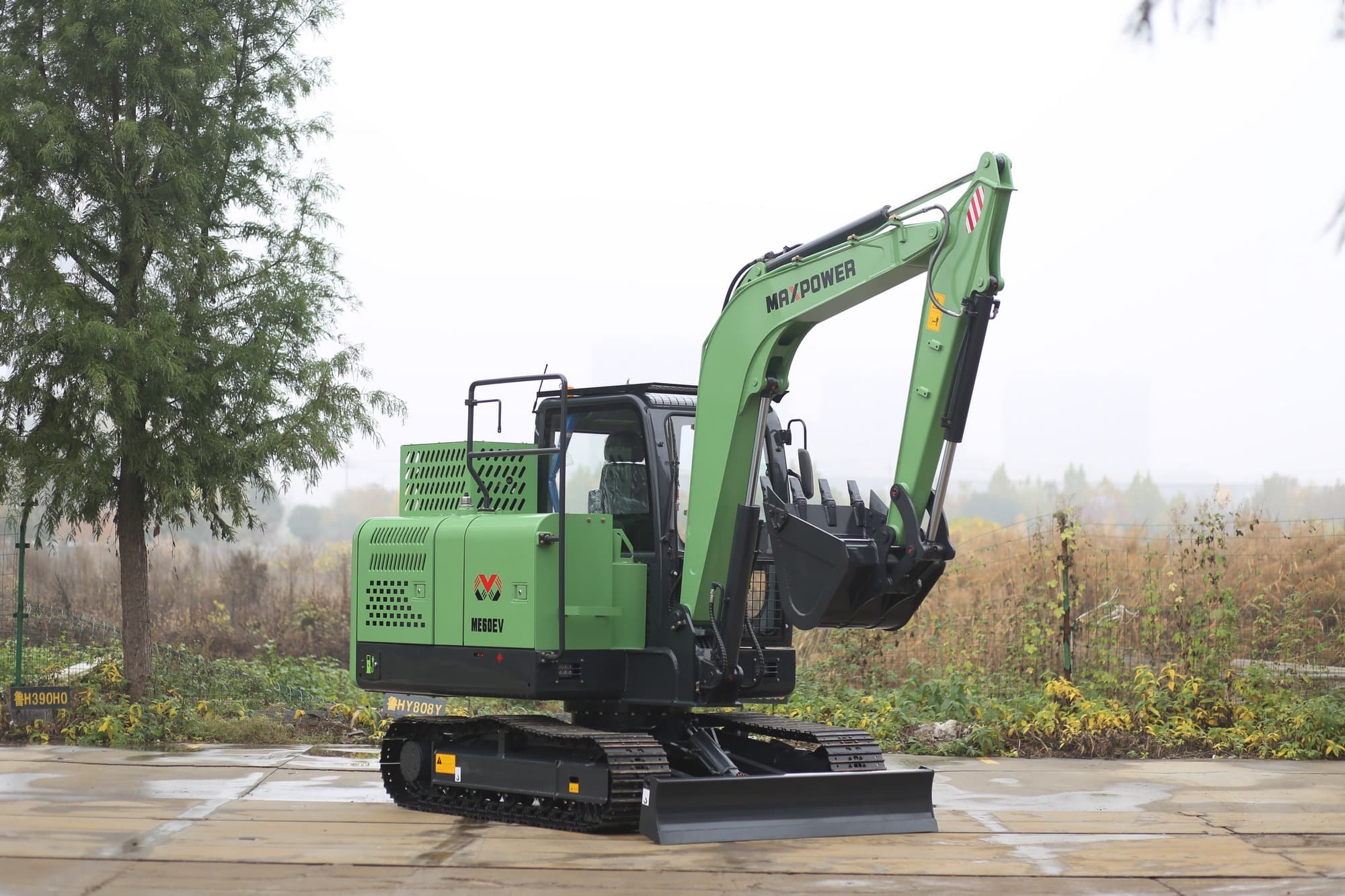
MAXPOWER publishes the ME60EV electric excavator with a 6-tonne operating weight, a 0.22 m³ bucket, and rated motor power of 22 kW at 2,000 rpm. These figures identify the machine being considered; they are not maintenance intervals or charging specifications.
Start the service discussion with the exact configuration in your quotation. Request the corresponding manuals and component identification information.
Keep those documents with the machine’s serial-number record. When a technician later requests a replacement component, the reference should be the delivered machine—not a photograph of another excavator or a shortened model name.
Existing mechanical experience remains useful, but it should not automatically be treated as authorization to work on electrical drive systems.
HSE’s guidance on electric-vehicle maintenance distinguishes routine activities from work involving high-voltage systems and emphasizes manufacturer-specific information. Although that guidance concerns vehicles rather than the ME60EV specifically, the distinction is useful when discussing workshop responsibilities with MAXPOWER.
Ask the supplier to identify which maintenance tasks can be completed by your personnel after suitable training. Then establish which tasks require a specialist.
For a small contractor, the practical arrangement may involve an in-house mechanic for approved routine work and an external service provider for electrical diagnosis. The important point is to agree that arrangement before the first fault occurs.
Do not approve an electric excavator on the assumption that maintenance disappears with the diesel engine.
The supplied maintenance schedule should still explain how to inspect and care for the machine’s working equipment and other serviceable systems. HSE’s work-equipment maintenance guidance recommends planned maintenance based on manufacturer instructions, carried out by competent personnel.
Request the ME60EV schedule and review it with your workshop manager. Identify the required service materials, access arrangements, and tasks that need outside support.
Do not copy intervals from a diesel excavator of similar weight. Likewise, avoid assuming that a filter, lubricant, or inspection procedure is interchangeable simply because the machines perform similar work.
The operator needs a clear boundary between checking the machine and attempting to repair it.
A handover should explain which observations form part of the approved daily inspection, how to report damage or warnings, and when the machine must be withdrawn from use. It should also identify activities that are outside the operator’s responsibilities.
Switching equipment off does not necessarily remove all electrical hazards. HSE warns that electric-vehicle batteries and some components can retain dangerous energy after shutdown. The ME60EV’s own instructions must govern how qualified personnel make the machine safe for maintenance.
Do not make opening battery enclosures, probing electrical connections, or clearing unexplained faults part of an informal operator checklist.
Yes. Treat the charging arrangement as part of the equipment package you are evaluating.
Ask who supplies the charger, which equipment is approved for the delivered machine, and who handles a charger-related service problem. Clarify whether the machine and charging equipment have different support contacts or warranty arrangements.
Have a competent electrical professional assess the proposed installation and maintenance responsibilities. HSE emphasizes that maintenance work requires suitable competence, information, and safe isolation arrangements.
For the purchase record, keep the charger identification and relevant instructions alongside the excavator documentation. Do not assume that a charger already available in your yard is compatible.
The public ME60EV product page provides headline parameters, but it does not provide a complete maintenance schedule, diagnostic procedure, or detailed service manual. Those documents need to be requested separately.
Ask for them early enough that your team can review the service requirements before finalizing the order.
The useful package should connect operating instructions, inspection requirements, service materials, and parts identification to the supplied configuration. Where access to diagnostic information requires additional tools, training, or permissions, clarify those conditions in writing.
A brochure explains the product. Your workshop needs information that supports the actual maintenance tasks it will be expected to perform.
Ask MAXPOWER to recommend an initial service-parts package based on your expected operating hours and project location. Then review the recommendation item by item.
For each proposed part, establish its identification, purpose, replacement basis, and storage requirements. Separate routine service items from components that should only be replaced following specialist diagnosis.
Avoid buying a large collection of unfamiliar electrical components simply to feel prepared. A spare component has limited value when nobody has established whether it is needed or who is qualified to install it.
For overseas buyers, also ask how future orders will be checked against the machine’s serial number. This is particularly important when several similar machines are supplied over time.
Agree on a reporting process during handover.
Ask the supplier to demonstrate the process using an approved example or existing training material. There is no need to create an actual fault to test whether your team understands the reporting procedure.
Your operator should know how to describe what happened and whom to contact. The service team should explain which information it needs, such as the displayed message, machine identification, operating conditions, and recent maintenance history.
Do not encourage repeated restarts or attempts to bypass a warning. HSE recommends a clear reporting procedure for faulty equipment and cautions against continuing to use damaged or unsafe machinery.
The first objective is safe, accurate reporting—not a quick guess at the failed component.
Move beyond the general question, “Do you provide after-sales service?”
Describe your actual situation. The ME60EV will operate at a particular location, your workshop has a particular level of experience, and the project has a defined working schedule.
Then ask how a problem would be handled. Who receives the report? Who decides whether local inspection is needed? How are replacement parts identified? What support is available when the issue cannot be resolved remotely?
Use MAXPOWER’s service and support contact to discuss those arrangements before dispatch. Request written clarification for your order rather than assuming a local technician, spare-parts stock, or guaranteed response time.
Give the operator and maintenance representative different roles during handover.
The operator should demonstrate the approved start-up checks, normal operation, charging procedure, shutdown, and warning-reporting process. The maintenance representative should review the service schedule, identify permitted service points, and confirm the support arrangements.
HSE’s training and competence guidance emphasizes training appropriate to the equipment and the work people are expected to perform. A brief driving demonstration is not equivalent to maintenance competence.
Record unanswered questions before accepting the handover as complete. A clearly documented gap is easier to resolve than an assumption that everyone understood the same instruction.
Use the first assignment to check whether the agreed support plan works in practice.
Record productive operating time, charging interruptions, scheduled maintenance, and time lost while awaiting advice or parts. Keep these categories separate.
For example, a delayed start caused by an unavailable charging connection should not be recorded as a mechanical breakdown. A scheduled inspection should not be confused with an unresolved fault.
Also record whether technicians had the correct documents when needed. This turns the first deployment into useful purchasing evidence for later orders.
For distributors, the same approach helps identify which instructions or service arrangements need improvement before supplying more machines to customers.
Before approving the purchase, your team should be able to explain how the ME60EV will be inspected, maintained, and supported.
If nobody can identify who is responsible for electrical diagnosis, resolve that gap. If the first maintenance interval is approaching but the required service materials are still unknown, obtain the schedule and parts information before delivery.
This does not mean every repair must be possible in your own workshop. A specialist service arrangement can be practical when its scope and responsibilities are clear.
The purchasing objective is dependable access to competent support—not the claim that the machine will never need it.
Electric excavator maintenance belongs in the equipment-selection process, not at the end of it.
For the ME60EV, confirm the supplied configuration, obtain its maintenance documentation, define your workshop’s responsibilities, and establish how specialist support will be provided. Include charging equipment and operator training in that discussion.
A machine that meets the digging requirement still needs a workable service arrangement. Put both into the purchase decision before the excavator arrives.
Yes. Follow the maintenance and inspection requirements for the supplied machine rather than assuming electric equipment is maintenance-free.
Not automatically. Electrical-system work requires suitable competence, training, and machine-specific information.
MAXPOWER lists 22 kW at 2,000 rpm. This is not a charger-power specification.
Request the confirmed configuration, operating and maintenance manuals, parts information, charging instructions, and agreed service contacts.
Not unless specifically qualified and authorized for that work. Follow the manufacturer’s reporting and safety instructions.
Share your project location, expected operating hours, and workshop capabilities with MAXPOWER. Request the ME60EV configuration and service documentation so your purchasing and maintenance teams can review the machine together.