Jining Maxpower Machinery Co., Ltd.




When ordering an excavator, buyers often focus on operating weight, engine power, and bucket capacity. These figures are important, but they do not fully explain whether a machine can reach the required excavation area from its planned working position.
Arm length is another specification worth checking carefully. It affects the excavator’s working geometry and needs to be considered alongside the boom, bucket, and required digging range.
For contractors, equipment distributors, and rental companies, excavator arm length vs digging depth is a practical purchasing question. Choosing the wrong configuration may make a machine less suitable for a particular task, even when its headline specifications appear appropriate.
The goal is not to choose the longest arm available. It is to identify a working configuration that suits the excavation profile, material, and site layout.
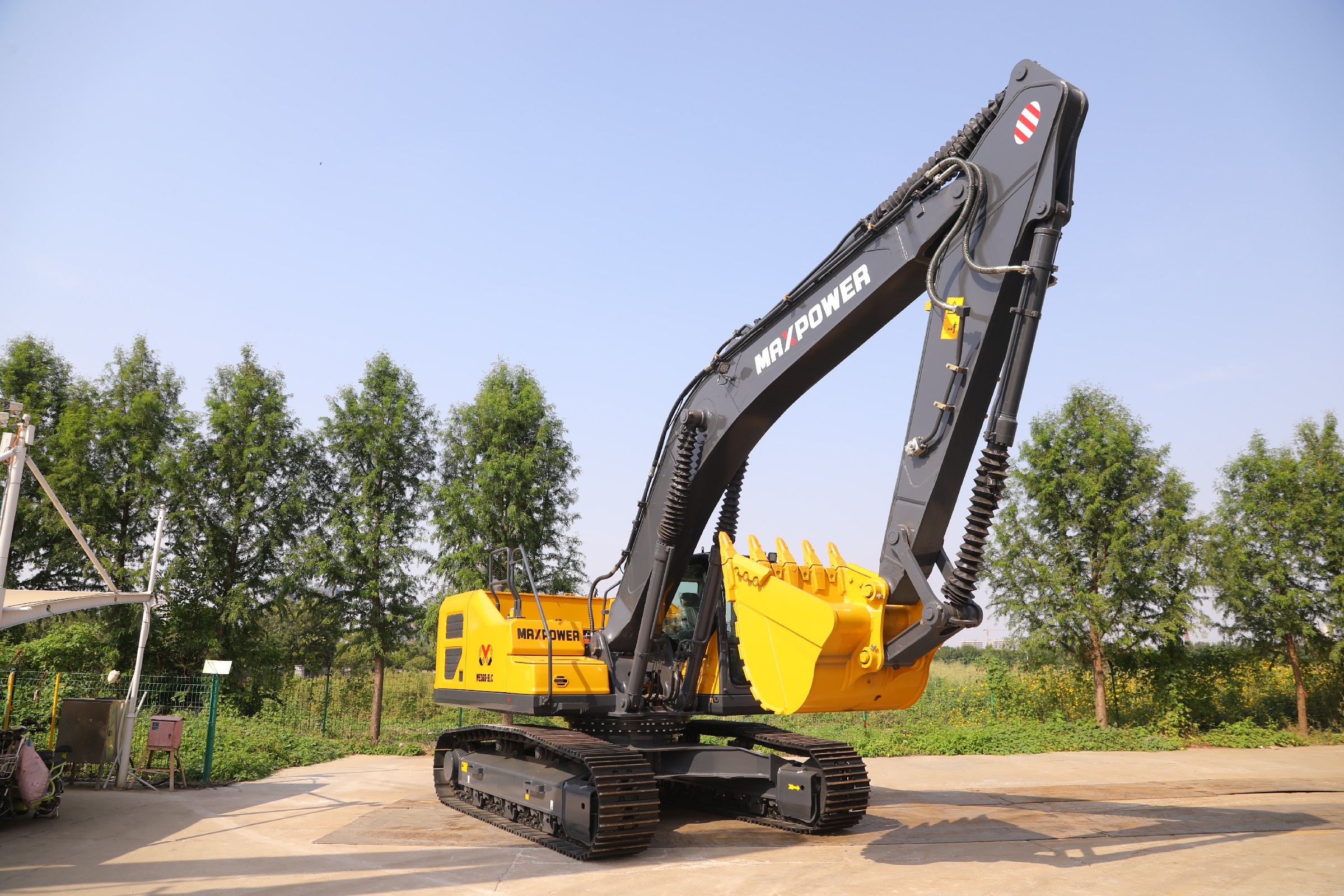
The boom is the main articulated structure connected to the excavator’s upper body. The arm, sometimes called the stick or dipper, connects the boom to the bucket.
Together, these components determine much of the excavator’s working geometry. Their lengths influence how the bucket moves through the working area, but neither measurement independently establishes the machine’s maximum digging depth.
For purchasing purposes, request the complete working-range drawing for the proposed machine. It should identify the relevant configuration and show the published digging depth, reach, and dumping height.
This matters because two excavators can have similar operating weights but different working ranges. Even within a product family, the arm and boom configuration should be confirmed rather than assumed from the model name.
No. A longer arm can change the machine’s reach and working geometry, but it does not automatically guarantee a greater maximum digging depth in every configuration.
The result depends on the complete combination of boom length, arm length, bucket geometry, and the manufacturer’s design.
A longer arm may also change the leverage involved in digging and lifting. Buyers should therefore avoid treating additional reach as an unconditional performance improvement.
Consider a contractor excavating a trench beside an existing structure. The machine needs to reach the required depth while remaining in a suitable position, with enough room for the upper structure and a safe working arrangement.
The correct question is whether the complete machine can perform that task within its approved operating limits—not whether one component is longer than another.
Arm length is one of the dimensions used to establish the bucket’s working envelope.
A buyer should examine several measurements together: maximum digging depth, maximum digging reach, maximum dumping height, and the height and position of the machine during the intended task.
These measurements answer different questions. Maximum digging depth indicates how far below the applicable reference ground level the bucket can dig under the manufacturer’s stated conditions. Maximum reach describes a horizontal working distance, while dumping height relates to placing material at an elevated position.
Do not substitute one measurement for another.
For example, a machine with sufficient reach to extend across a trench may still require a different position to achieve the required depth. A contractor loading a truck may care more about the relevant dumping height and loading arrangement than about maximum digging depth.
Ask the manufacturer to identify the exact working-range values for the offered configuration before comparing quotations.
Trenching requirements vary with the intended depth, width, soil conditions, and location of the excavator.
A drainage contractor may need to maintain a consistent trench profile along a narrow route. A utility contractor may need to work around existing infrastructure. A foundation project may require excavation at a defined distance from the machine’s operating position.
Before requesting a quotation, prepare a simple site sketch. Mark the ground level, required trench depth, trench width, machine position, and any obstacles that restrict movement.
Use this information to ask MAXPOWER which published configuration can meet the working-range requirement. If the project involves lifting pipes or other suspended loads, request the applicable lifting information separately. Digging-range figures do not establish lifting capacity.
The more accurately the task is described, the easier it becomes to assess whether the proposed machine is suitable.
Maximum digging depth should be checked against the actual excavation requirement, but depth alone is not a complete selection criterion.
The site may restrict where the excavator can stand. The ground may need additional assessment, and underground services may limit the permissible excavation method or working position.
For trenching projects, review the excavation plan and relevant local safety requirements before choosing equipment. OSHA’s Trenching and Excavation Safety guidance covers hazards such as cave-ins, underground utilities, and access to excavations. Requirements depend on the jurisdiction and project.
Ask the manufacturer for the applicable working-range drawing, then have the site team assess whether the proposed machine can complete the task from a suitable position.
Never treat a published maximum depth as permission to excavate beyond the limits of the project’s safety plan.
Loading work places different demands on the working geometry.
A contractor transferring excavated material into a truck needs to consider the loading position, truck-body height, distance between the excavator and truck, and the movement required to fill the body.
The correct arm and boom arrangement should allow the required work to be completed within the manufacturer’s operating limits. The buyer should not assume that a longer arm automatically improves loading efficiency.
Provide the truck’s relevant dimensions and the planned loading layout when requesting technical advice. Ask for the applicable dumping-height and working-range information for the exact machine configuration.
A representative demonstration can then help establish whether the proposed arrangement works in practice. Keep the working equipment and task consistent when comparing alternative configurations.
Arm length changes the geometry through which the excavator applies force. Consequently, buyers should not assume that greater reach and greater digging force increase together.
Actual performance depends on the machine’s design, hydraulic system, bucket configuration, working position, and material conditions.
For demanding excavation, request the published digging-force figures applicable to the offered configuration, along with the working-range information. Do not transfer force values from another model or configuration simply because the operating weight is similar.
A demonstration should use material and tasks representative of the intended application. It should also be conducted by a competent operator under controlled conditions.
The purpose is to determine whether the machine can perform the required work—not to prove that one arm length is universally better.
Attachment requirements should be discussed before the excavator order is finalized.
A bucket, hydraulic attachment, or other working tool can affect the complete configuration and the work the machine is expected to perform. Compatibility should be confirmed using the manufacturer’s technical information rather than inferred from the arm length alone.
Tell MAXPOWER which attachments you intend to use and describe their purpose. Ask the supplier to confirm compatibility, the required hydraulic arrangements where applicable, and any relevant operating restrictions.
If the attachment changes the intended working geometry or load, request the corresponding technical information before approving the configuration.
This is especially important for buyers purchasing several machines for different projects. A configuration suitable for general excavation may not automatically meet every specialized application.
The purchase specification should identify the exact model, boom and arm configuration, supplied bucket, and included equipment.
Request the manufacturer’s working-range drawing and verify that the required digging depth, reach, and dumping height are documented for that configuration. Where the offer contains alternatives, ask the supplier to identify which option is included in the final quotation.
Also check transportation dimensions, maintenance documentation, and the availability of relevant technical support for your destination.
Do not approve a configuration based solely on a product photograph or a general statement that the machine is suitable for deep excavation. A clear technical offer reduces the risk of receiving equipment that does not match the project requirements.
Start with the job rather than the model name.
MAXPOWER’s excavator range includes different machine classes and configurations. When reviewing a candidate, use the product page to identify the model, then request any configuration-specific information needed to assess the application.
Prepare the same task description for each candidate. Include the required excavation profile, available working space, material, loading arrangement, and attachment requirements.
Compare the published working-range values and other relevant specifications only when they apply to the exact configuration being offered. If a required value is not available in the public specification, ask the manufacturer to confirm it in writing.
This approach produces a more useful comparison than choosing a machine because its arm appears longer or its operating weight seems appropriate.
Excavator arm length and digging depth are closely related, but they are not interchangeable specifications.
Arm length influences working geometry, while the manufacturer’s working-range data establishes the published depth, reach, and dumping height for the complete configuration. Buyers should consider these measurements together with the intended task, material, attachments, and site layout.
Before ordering, provide MAXPOWER with the actual excavation requirements and request the technical information for the proposed machine. The right configuration is the one that meets the project’s needs within its approved operating limits—not simply the one with the longest arm.
No. Digging depth depends on the complete boom, arm, bucket, and machine configuration. Check the manufacturer’s working-range drawing.
Digging depth describes the vertical excavation range below the applicable reference level. Digging reach describes the horizontal working distance. They are different measurements.
No. Compare arm and boom configuration, digging depth, reach, dumping height, bucket, hydraulic requirements, and the intended application.
No. Digging depth does not establish rated lifting capacity. Request the applicable lifting chart and operating information for lifting work.
Provide the required excavation depth and width, material conditions, site dimensions, machine access, loading arrangement, and any required attachments.
Before selecting a configuration, share your project layout, required digging profile, and intended working equipment with MAXPOWER. Request the relevant working-range drawing and confirmed specifications for the proposed excavator so your purchase matches the work the machine will be expected to perform.