Maxpower Construction Machinery Manufacturer




An excavator can start the day working normally and gradually feel weaker as the job continues.
The operator may notice that the bucket takes longer to penetrate the ground, the boom moves more slowly, or the machine struggles with material that it previously handled without difficulty. Sometimes the problem is obvious. In other cases, the excavator still operates, but productivity has clearly declined.
For contractors, this kind of performance loss can be frustrating because the machine has not necessarily suffered a major breakdown.
The good news is that excavator loss of digging power is often related to identifiable causes. Hydraulic performance, engine output, attachments, working conditions, maintenance, and operator practices can all influence digging capability.
Understanding where the problem comes from can help contractors avoid unnecessary repairs and determine when professional service is required.
"Losing power" can describe several different problems.
The engine may not produce its normal output. The hydraulic system may fail to deliver sufficient pressure or flow. The bucket may have difficulty penetrating material. The machine may perform normally when cold but become weaker after several hours of operation.
These symptoms can look similar from the operator's seat, but they do not necessarily have the same cause.
For example, an excavator struggling to dig compacted clay may simply be working in material that requires more digging force than the current bucket configuration can provide.
On the other hand, if the same machine suddenly becomes weak while digging material it normally handles easily, a hydraulic, engine, or maintenance issue may need investigation.
The first step is therefore to determine when and how the loss of power occurs.
This is one of the most important questions when diagnosing excavator performance.
An excavator relies on the engine or electric power system to provide energy, while the hydraulic system converts that energy into movement and working force.
If engine output is reduced, hydraulic functions can also be affected.
But the reverse can happen as well. The engine may sound normal while the hydraulic system fails to deliver the required working performance.
A useful first observation is whether the machine experiences a general reduction in performance or whether only certain hydraulic functions appear weak.
If travel, swing, boom, arm, and bucket functions are all affected, the problem may be broader.
If one particular function behaves abnormally, the cause may be more localized.
This distinction can help technicians narrow down the problem before replacing components unnecessarily.
Yes.
Hydraulic oil plays a critical role in excavator performance.
If the oil is contaminated, degraded, incorrect for the application, or maintained improperly, hydraulic performance can suffer.
Contamination is particularly important because hydraulic systems contain precision components that depend on clean fluid.
A contractor may notice slower movement, inconsistent hydraulic response, or reduced working force.
Oil temperature can also affect performance.
When hydraulic oil becomes excessively hot, its viscosity changes and the hydraulic system may not operate as efficiently as it should.
This is why contractors should follow the manufacturer's recommended hydraulic fluid specifications and maintenance intervals rather than treating hydraulic oil as a generic consumable.
A restricted filter can affect hydraulic performance by limiting the movement of fluid through the system.
The exact symptoms depend on the machine and system design, but reduced hydraulic responsiveness can be one indication that the filtration system needs attention.
Filters should be replaced according to the manufacturer's maintenance recommendations and operating conditions.
Machines working in dusty environments or under demanding conditions may require particularly careful maintenance.
Replacing a filter is generally far less expensive and disruptive than allowing contamination or restricted flow to contribute to damage elsewhere in the hydraulic system.
Yes.
External leaks are usually easier to identify because oil may be visible around hoses, fittings, cylinders, or other hydraulic components.
Internal leakage can be more difficult to detect.
A hydraulic component may allow fluid to bypass internally without producing an obvious external leak. The machine can continue operating, but working force or speed may gradually decline.
If an excavator becomes noticeably weaker without an obvious change in the operating conditions, hydraulic testing may be necessary.
Contractors should avoid attempting to diagnose high-pressure hydraulic systems without appropriate equipment and training.
Hydraulic systems can store significant energy, and repairs should be performed according to proper safety procedures.
Sometimes the machine is not the problem at all.
The bucket and cutting edge directly affect how easily an excavator penetrates the ground.
A worn cutting edge can make excavation less efficient. The wrong bucket configuration can also make a machine appear weaker than it actually is.
Consider two jobs.
The first involves loose soil.
The second involves compacted clay or abrasive material.
Using exactly the same bucket for both applications may not produce the best results.
Contractors should select buckets and other attachments according to the material and working conditions rather than treating attachments as interchangeable accessories.
Very significantly.
Excavation performance depends heavily on the resistance of the material.
Loose soil is relatively easy to penetrate.
Compacted clay can require considerably more force.
Gravel, dense material, and rock create different challenges again.
If an excavator performs normally in ordinary soil but struggles significantly in harder material, that does not automatically mean the machine has a mechanical problem.
The machine may simply need a different attachment or operating technique.
For contractors working across different regions, this is particularly relevant because ground conditions can vary substantially from one project to another.
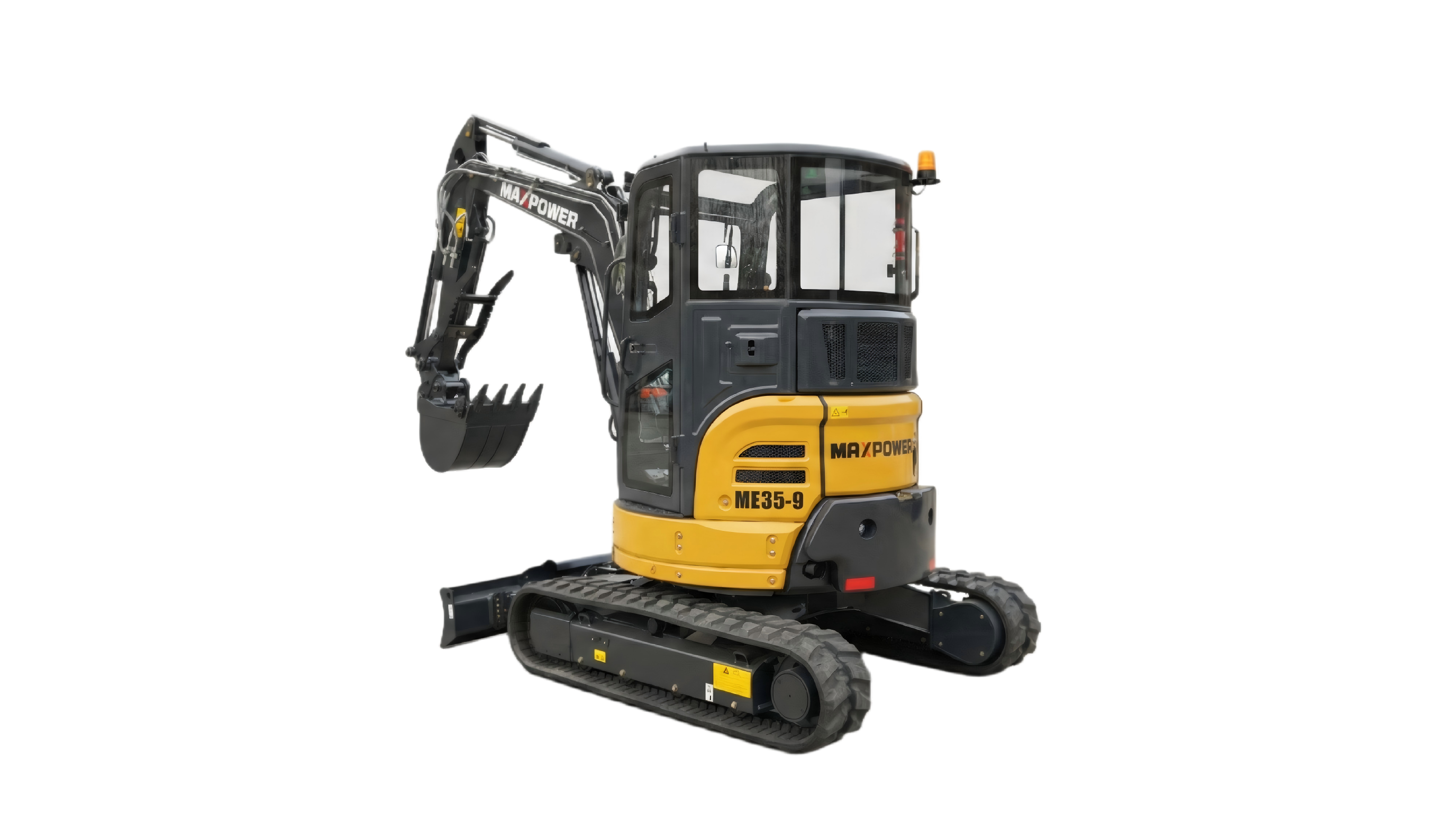
Absolutely.
An undersized excavator can perform a task without being the right machine for it.
This commonly happens when contractors attempt to use one machine across too many applications.
A compact excavator may be ideal for landscaping and utility work but inefficient when continuously excavating hard material or handling large volumes of soil.
When a machine operates close to its maximum capability for long periods, productivity can decrease and component wear may increase.
This is why equipment selection should be based on the contractor's normal workload rather than simply choosing the smallest machine capable of technically completing the job.
MAXPOWER offers excavators across different operating classes, including mini, small, medium, and large excavators, allowing equipment selection to be matched more closely to project requirements.
Oversizing creates a different problem.
A larger excavator generally provides greater digging and material-handling capacity, but that additional capability does not automatically translate into higher productivity on every site.
A large machine may be difficult to position on restricted jobsites.
It may also require more complex transportation and have higher operating costs.
For contractors working primarily on residential projects, small utility installations, or confined urban sites, a compact or small excavator may deliver better overall productivity because it can access the work area more efficiently.
The best machine is the one that can perform the required work comfortably.
This is an important symptom.
If an excavator performs normally during the first part of the day but becomes noticeably weaker after extended operation, heat-related issues should be considered.
Hydraulic oil temperature, cooling system performance, engine temperature, and component condition can all affect machine behavior.
A cooling system that cannot remove heat effectively may allow operating temperatures to rise beyond the ideal range.
The operator may then notice reduced performance even though the machine initially worked normally.
This type of problem should not be ignored.
Repeated operation under excessive temperatures can contribute to accelerated wear and more serious component problems.
Yes.
The hydraulic system depends on the energy supplied by the engine in conventional diesel excavators.
If the engine is not producing its expected output, the machine's working performance may also suffer.
Air filtration is one area worth monitoring.
A heavily restricted air filter can affect engine performance, particularly in dusty environments.
Fuel quality and fuel filtration also matter.
A machine that lacks sufficient engine output may appear to have a hydraulic problem when the underlying issue is actually related to engine operation.
For this reason, diagnosing power loss should consider both sides of the machine rather than immediately assuming the hydraulic system is responsible.
Electric excavators require a somewhat different approach to power diagnosis.
Instead of an internal combustion engine, the machine depends on an electric drive system and battery or external power arrangement, depending on the equipment design.
If performance decreases, factors such as battery state, electrical system condition, thermal management, hydraulic performance, and control systems may need to be evaluated.
MAXPOWER's electric excavator range includes machines in different size classes, including the ME18EV, ME240EV, and ME360EV, allowing electric equipment to be considered for applications ranging from compact work to larger excavation projects.
For contractors evaluating electric excavators, it is important to consider not only rated machine performance but also the project's daily operating hours and charging conditions.
It can make a significant difference.
Excavator operators develop different working habits, and some techniques are more efficient than others.
For example, attacking material at an unsuitable angle can make penetration more difficult.
Repeatedly forcing the bucket into material beyond the machine's practical capability can also place unnecessary stress on the equipment.
Experienced operators learn to work with the machine rather than simply demanding maximum force from it.
Bucket positioning, boom and arm coordination, machine placement, and digging sequence can all affect cycle efficiency.
This is particularly important when working in hard material.
Sometimes improving the operating technique can produce a noticeable productivity improvement without changing the machine.
Not every reduction in performance means the excavator must immediately stop.
However, certain symptoms should not be ignored.
If the machine develops a sudden and significant loss of hydraulic power, unusual noises, severe overheating, visible hydraulic leaks, abnormal vibration, warning indicators, or other major changes in behavior, continued operation may increase the risk of damage.
The safest approach is to follow the manufacturer's operating and maintenance instructions and have qualified technicians inspect the machine when a serious fault is suspected.
A small diagnostic delay is usually much less expensive than turning a developing problem into a major component failure.
Preventive maintenance is the most effective starting point.
Follow the manufacturer's service intervals.
Use the recommended fluids and filters.
Inspect hydraulic hoses and fittings regularly.
Monitor operating temperatures.
Keep cooling systems clean.
Check the condition of buckets and cutting edges.
Train operators to identify unusual machine behavior.
Most importantly, keep maintenance records.
If an excavator gradually loses performance over several weeks, service records can help identify when the change began and what maintenance was performed around that period.
That information can be extremely useful when diagnosing recurring problems.
Before assuming that a major component has failed, contractors can document the symptoms carefully.
Record when the problem occurs.
Does the machine lose power immediately after starting, or only after several hours?
Does the problem affect all hydraulic functions or only one?
Does it happen under heavy load or even during light work?
Does the machine behave differently with another attachment?
Has the working environment changed?
Has recent maintenance been performed?
This information can save diagnostic time because it gives the technician a clearer picture of the problem.
It is much more useful than simply reporting that "the excavator has no power."
Not every performance problem means the machine needs replacement.
A hydraulic component, filter, hose, bucket, or other service item may be responsible.
However, contractors should consider replacement when an older excavator repeatedly suffers from downtime, requires increasingly expensive repairs, or no longer matches the company's workload.
Equipment utilization is important here.
If a machine is working almost every day, improving reliability and productivity can justify replacing an aging unit even when the existing machine can still operate.
A newer excavator may also provide improvements in fuel efficiency, operator comfort, emissions, hydraulic performance, and technology.
Preventing power loss starts before the excavator arrives at the jobsite.
The machine should be selected according to the material, excavation depth, production requirements, working environment, and expected operating hours.
MAXPOWER provides a range of Excavators across different size classes, as well as Electric Excavators for applications where electric power may be more appropriate.
For restricted or unusual working conditions, Specialty Excavators provide another equipment option.
This broader approach to equipment selection helps contractors avoid using a machine that is consistently too small, too large, or poorly matched to the application.
When an excavator starts losing digging power, replacing the machine should not be the first response.
Start by identifying the pattern.
Check whether the problem is related to the engine, hydraulic system, operating temperature, attachment, material, machine size, or operating technique.
Some problems can be addressed through routine maintenance or a change in working equipment. Others require professional hydraulic or mechanical diagnosis.
For contractors, the most effective strategy is to combine preventive maintenance with proper equipment selection.
A well-maintained excavator that is correctly matched to its application should deliver consistent performance without being pushed beyond its practical limits.
And when the job requires a different level of excavation capacity, selecting the right machine class from the beginning is often far more economical than trying to make an unsuitable excavator do work it was never designed to handle.
Possible causes include hydraulic problems, contaminated or overheated hydraulic oil, restricted filters, worn components, engine performance issues, unsuitable attachments, or working conditions that exceed the machine's practical capability.
Excessive hydraulic or engine temperature can affect machine performance. Cooling system problems, hydraulic oil issues, or component wear may contribute to overheating and reduced performance.
Yes. A worn cutting edge or unsuitable bucket configuration can make it more difficult to penetrate the material, creating the impression that the excavator lacks digging power.
Insufficient hydraulic fluid can affect hydraulic system operation and potentially cause serious damage. Fluid levels should be checked and maintained according to the manufacturer's instructions.
The engine may be operating normally while the hydraulic system has a problem involving pressure, flow, valves, pumps, contamination, or another component. Professional hydraulic testing may be required.
Yes. Attachments should match the machine's hydraulic capacity and the material being handled. An unsuitable attachment can reduce digging efficiency and place additional stress on the machine.
Not necessarily. The cause should be diagnosed first. If repairs become frequent and operating costs continue to rise, however, replacing an older machine may make better economic sense.







