Maxpower Construction Machinery Manufacturer




Choosing the right construction equipment is critical for productivity, project efficiency, and long-term operational success. Among the most commonly compared machines are backhoe loaders and excavators. While both are designed for digging and earthmoving, they serve different purposes and excel in different environments.
For contractors, fleet managers, and equipment buyers, understanding the differences between a backhoe loader and an excavator is essential before making an investment decision. Selecting the wrong machine can lead to lower productivity, unnecessary operating costs, and project delays.
This guide compares backhoe loaders and excavators from a practical construction perspective to help buyers determine which machine best suits their operational needs.
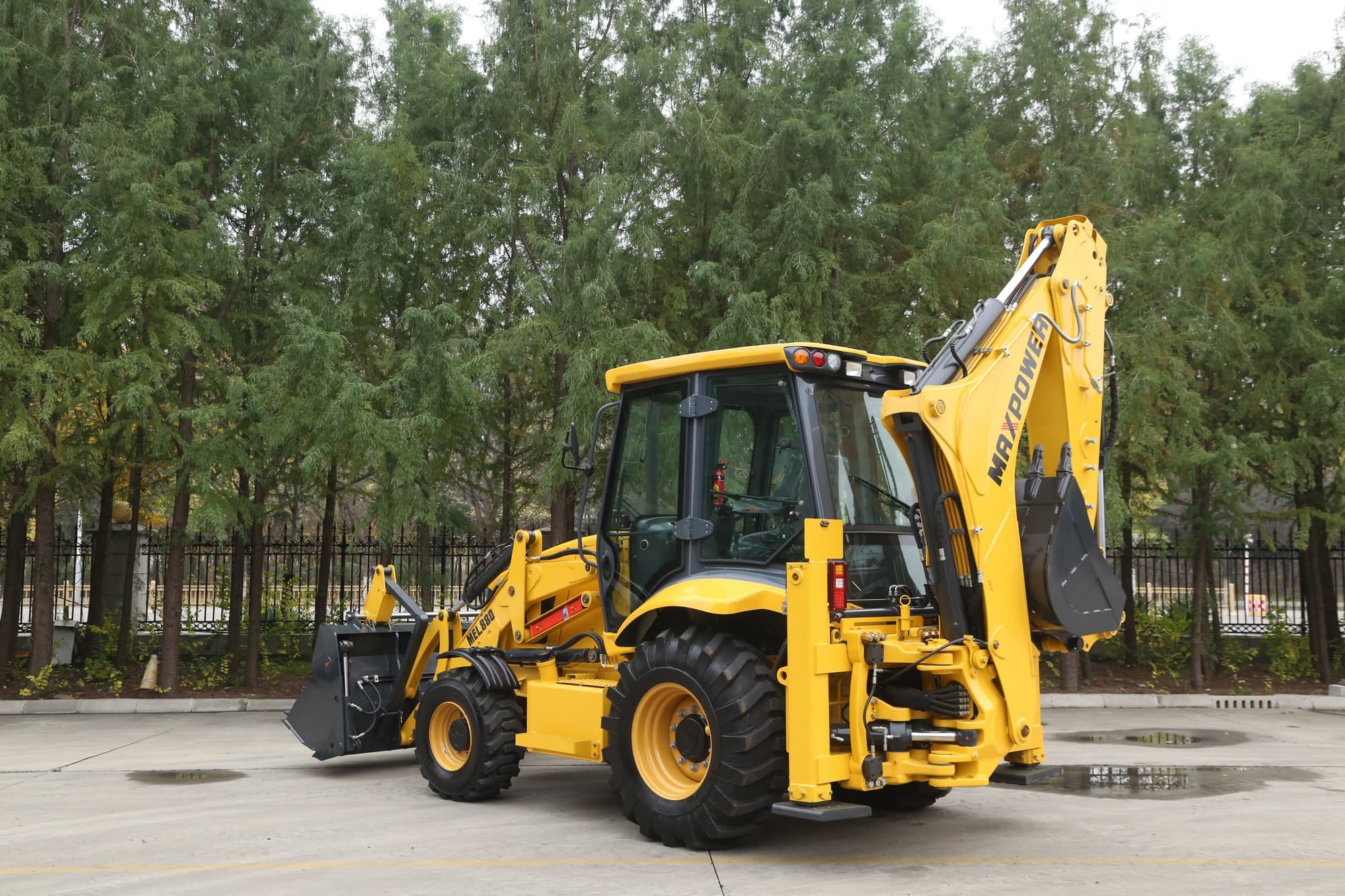
A backhoe loader is a multi-purpose construction machine equipped with:
A front loader bucket for loading and material handling
A rear backhoe arm for digging and trenching
Its biggest advantage is versatility. A single machine can perform multiple functions without requiring separate equipment.
Backhoe loaders are widely used in:
Municipal engineering
Utility installation
Small-to-medium construction projects
Agricultural and road maintenance work
Because of their wheeled design, they are also easy to transport between job sites.
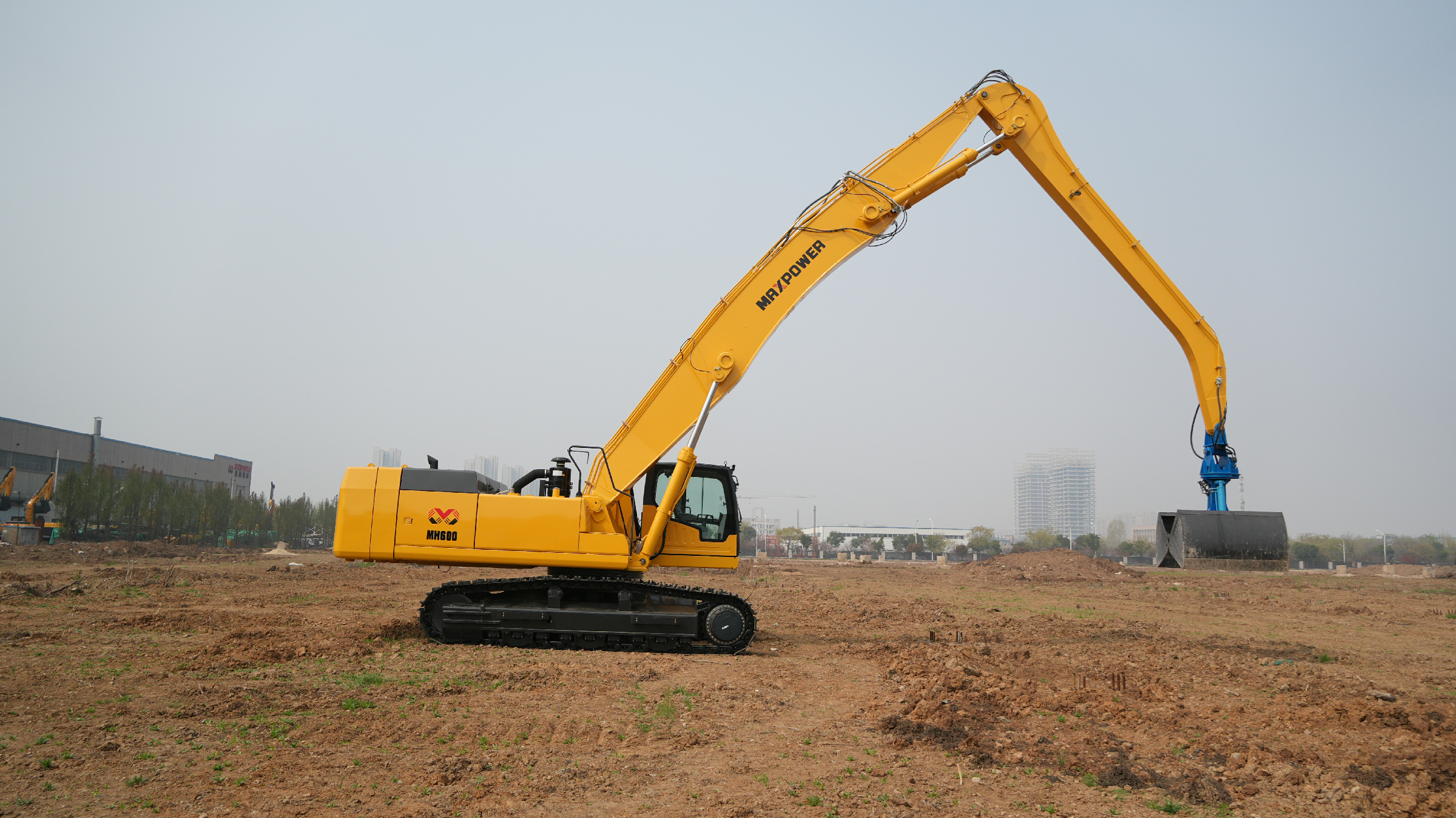
An excavator is a dedicated digging machine designed primarily for excavation, lifting, and heavy-duty earthmoving.
Unlike a backhoe loader, an excavator typically features:
A rotating upper structure (360° rotation)
A boom, arm, and bucket system
Tracked undercarriage for stability
Excavators are commonly used for:
Large-scale earthmoving
Foundation excavation
Mining and quarry operations
Demolition projects
Heavy construction environments
Their specialized design makes them more powerful for excavation-focused work.
Although these machines may appear similar at first glance, their capabilities and applications differ significantly.
| Feature | Backhoe Loader | Excavator |
| Main Function | Multi-purpose | Dedicated excavation |
| Mobility | Wheeled, road travel | Tracked mobility |
| Rotation | Limited swing | 360° rotation |
| Digging Power | Moderate | High |
| Best Site Size | Small to medium | Medium to large |
| Loading Function | Yes | Limited |
| Versatility | High | Specialized |
Understanding these differences helps contractors choose equipment based on operational priorities rather than assumptions.
In many projects, versatility matters more than maximum digging force.
Backhoe loaders are ideal for:
Residential construction
Small commercial developments
Utility maintenance
Because one machine can dig, load, and transport materials, contractors reduce equipment dependency.
Space restrictions often make compact, mobile machines more practical.
Backhoe loaders perform well in:
Narrow streets
Urban maintenance projects
Municipal infrastructure work
Their mobility allows operators to move quickly without requiring additional transportation equipment.
For trenching applications involving:
Water systems
Electrical cables
Drainage systems
Gas pipelines
Backhoe loaders offer the flexibility needed for repeated excavation and backfilling.
Because they can travel on roads, backhoe loaders are highly efficient for contractors managing multiple nearby sites.
Some projects require specialized digging performance.
Excavators outperform backhoe loaders in:
Deep trenching
Large-scale digging
Hard soil excavation
Their hydraulic power and stability support demanding workloads.
For projects such as:
Highway construction
Bridge foundations
Industrial site preparation
Excavators provide greater efficiency and productivity.
Excavators support specialized demolition attachments, making them more suitable for:
Concrete breaking
Structural demolition
Heavy material handling
Excavators are designed for sustained heavy-duty operations with minimal compromise in digging efficiency.
The productivity difference between these machines depends largely on project type.
Strengths:
Multi-function capability
Quick switching between tasks
Lower fleet requirements
Limitations:
Lower digging force
Smaller bucket capacity
Strengths:
Faster excavation speed
Greater digging depth
Strong lifting capacity
Limitations:
Less flexibility outside excavation tasks
The most productive machine is the one that aligns with project demands.
Professional buyers should evaluate total operational value, not only purchase decisions.
One machine performs multiple functions
Reduced transportation complexity
Lower fleet size requirements
Higher output for excavation-heavy work
Better efficiency in large projects
Greater attachment specialization
The best investment depends on workload intensity and job type.
Ask these questions before choosing:
If your work includes digging, loading, and transportation, a backhoe loader may be more efficient.
If excavation is the main priority, an excavator is usually the better choice.
Small and urban projects favor backhoe loaders.
Large construction sites favor excavators.
Backhoe loaders offer faster movement between sites.
Excavators require transport equipment for relocation.
MAXPOWER offers both backhoe loaders and excavators designed to meet diverse construction requirements.
Ideal for:
Municipal work
Utility trenching
Multi-purpose construction tasks
Ideal for:
Heavy excavation
Infrastructure development
Demolition and earthmoving
With reliable engineering, durable structures, and efficient hydraulic systems, MAXPOWER machines are designed to support real-world productivity across different industries.
The choice between a backhoe loader and an excavator ultimately depends on your project requirements.
If flexibility, mobility, and multi-purpose functionality are your priorities, a backhoe loader is often the smarter choice.
If maximum digging power, large-scale earthmoving, and specialized excavation are essential, an excavator provides superior performance.
By evaluating project size, workload, and operational requirements, contractors can make a more informed equipment decision and improve overall efficiency.
Is a backhoe loader better than an excavator?
It depends on the project. Backhoe loaders are more versatile, while excavators are more powerful for digging.
Can a backhoe loader replace an excavator?
For small and medium projects, yes. For heavy excavation, an excavator is better.
Which machine is better for urban construction?
Backhoe loaders are often more practical due to mobility and compact operation.
Are excavators stronger than backhoe loaders?
Yes, excavators generally provide higher digging force and lifting capability.
Why choose MAXPOWER equipment?
MAXPOWER offers reliable machines tailored for different construction needs.
MAXPOWER provides reliable solutions for both multi-purpose construction work and heavy excavation projects. Our team can help you compare models, evaluate project requirements, and choose the equipment that best fits your operation. Contact MAXPOWER today to find the right machine for higher productivity and long-term performance.







