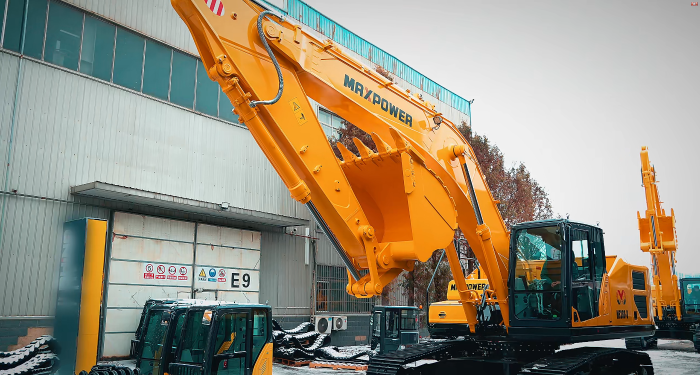
Bridge foundation construction represents one of the most demanding applications for rotary drilling equipment. Unlike standard piling work, bridge foundations are long-term load-bearing structures that must meet strict requirements for vertical accuracy, durability, and safety under complex geological conditions. As a result, selecting the right rotary drilling rig is not a routine procurement decision, but a critical engineering judgment that directly affects project success.
In many bridge projects, contractors rely on a limited set of technical parameters when comparing rotary drilling rigs. However, real-world construction conditions often expose performance gaps that are not immediately visible in specification sheets. Sustained torque output, structural stability during deep drilling, and operational efficiency over long working cycles become decisive factors in practice.
This article provides a detailed, experience-driven guide for contractors and project engineers who are evaluating rotary drilling rigs for bridge foundation construction.
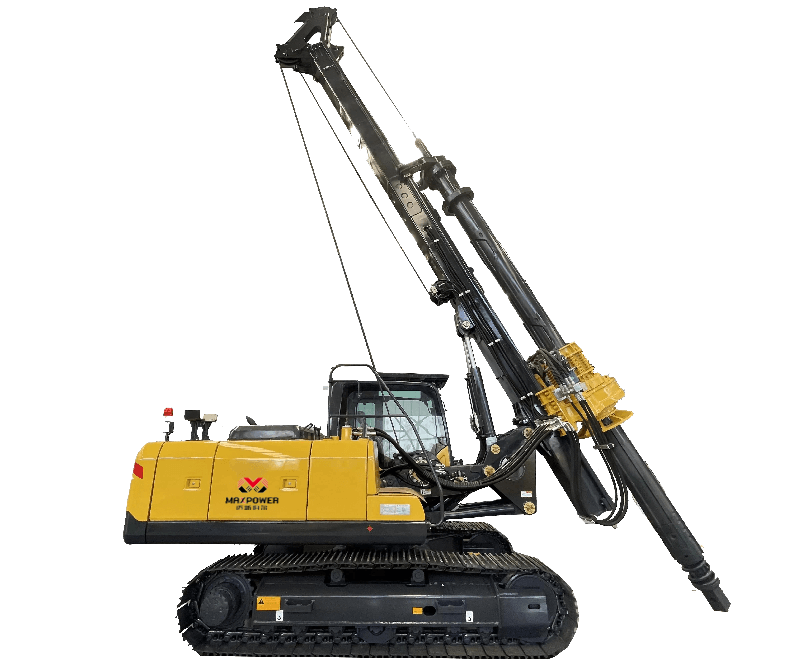
Bridge foundation piles transfer vertical and horizontal loads from the superstructure to deep bearing strata. Any deviation in pile alignment or integrity can compromise the structural safety of the entire bridge. For this reason, bridge foundation drilling requires higher precision and reliability than many other foundation applications.
In practice, bridge foundation projects often involve large-diameter bored piles, extended drilling depths, and continuous operation over long periods. Rotary drilling rigs used in these projects must maintain stable performance not only at peak output, but throughout the entire construction cycle.
Bridge foundations are frequently constructed in riverbeds, floodplains, coastal zones, or transportation corridors where geological conditions change rapidly. A single borehole may pass through soft clay, loose sand, dense gravel, cobbles, and weathered rock.
In one multi-span bridge project, the contractor encountered alternating layers of silt and gravel within the same pile. MAXPOWER's MR series and other models of rotary drilling rigs (listed on the rotary drilling rig product page) were chosen because they can maintain stable drilling performance in mixed strata without requiring frequent shutdowns or tool changes.
Maximum drilling depth is often used as a headline parameter, but it provides limited insight into actual performance. In bridge foundation construction, the ability to maintain stable torque and penetration speed under variable load conditions is far more important.
For example, a rotary drilling rig used for bridge foundations must deliver consistent torque output when drilling through dense gravel layers at depth. In real projects, models such as MR-type rotary drilling rigs are often selected not because of peak torque values, but because their torque delivery remains stable during prolonged operation.
When evaluating drilling capability, engineers should assess the combined effect of several parameters rather than focusing on a single figure.
| Parameter | Practical Impact in Bridge Projects |
|---|---|
| Rated torque | Determines penetration ability in dense layers |
| Continuous torque output | Affects drilling stability at depth |
| Crowd force | Influences drilling efficiency in deep piles |
| Pull-back force | Reduces risk during tool extraction |
| Hydraulic response | Impacts operational smoothness |
Structural stability directly affects drilling accuracy. As drilling depth increases, even minor mast deflection or chassis movement can lead to measurable deviation at the pile bottom.
Bridge foundation drilling rigs must remain stable while operating on temporary platforms, embankments, or uneven ground. For this reason, contractors often favor rotary drilling rigs with reinforced masts and wide-track chassis designs.
Bridge foundation construction often requires rotary drilling rigs to operate continuously for extended periods. Under these conditions, power system reliability becomes more important than short-term output capacity.
Efficient power systems reduce fuel consumption, stabilize hydraulic temperatures, and minimize unplanned downtime. In long-duration bridge projects, these factors have a direct impact on total operating cost.
| Aspect | Stable Power System | Unstable Power System |
|---|---|---|
| Fuel consumption | Predictable | Fluctuating |
| Hydraulic temperature | Controlled | Frequent overheating |
| Downtime | Minimal | Recurrent |
| Maintenance frequency | Scheduled | Reactive |
In one foundation package, rotary drilling rigs from the MR-series maintained consistent hydraulic performance during extended shifts, while less optimized systems required frequent cooling interruptions.
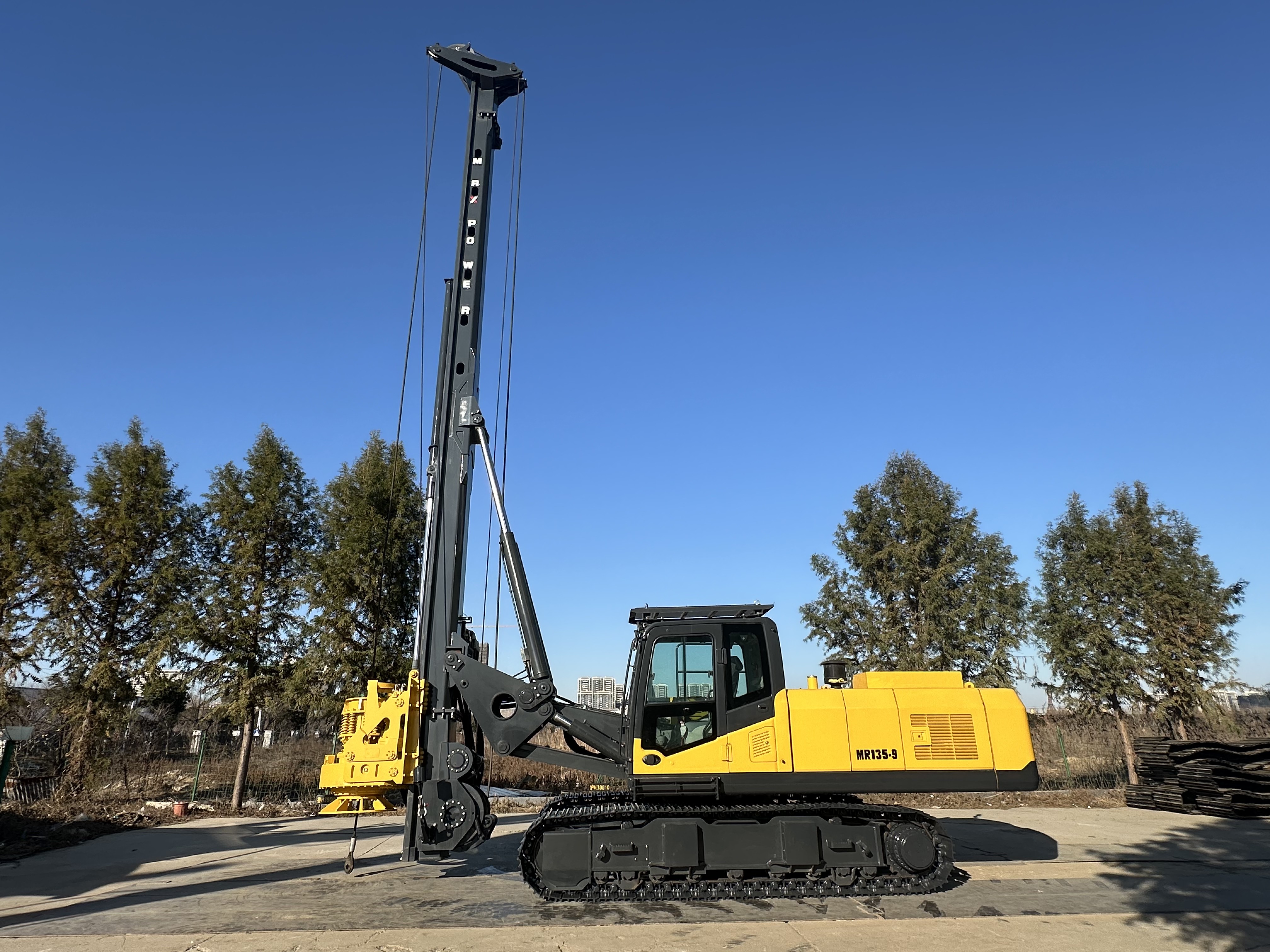
Even high-capacity equipment can underperform if it is difficult to operate. Bridge foundation projects often rely on experienced operators who work long shifts under demanding conditions. Intuitive controls, clear feedback systems, and logical operation sequences reduce fatigue and improve consistency.
Rotary drilling rig models used in bridge projects are typically evaluated not only by engineers but also by operators who assess day-to-day usability.
Routine maintenance tasks such as lubrication, inspection, and component replacement should be fast and straightforward. In several bridge projects, rigs with centralized lubrication systems and accessible service points achieved higher cumulative output over the project lifecycle.
Contractors reported that MR-type rotary drilling rigs required less downtime for routine servicing, which helped maintain project schedules during peak construction periods.
Bridge foundation projects often require different drilling techniques depending on pile diameter, depth, and geological conditions. A versatile rotary drilling rig should support various drilling tools and methods without extensive modification.
Commonly required methods include kelly bar drilling, rock auger drilling, and core barrel drilling. Rotary drilling rigs selected for bridge work are often chosen for their compatibility with a wide range of drilling tools.
Adaptable rigs can be redeployed across multiple projects, increasing utilization rates. Contractors using MR-series rotary drilling rigs reported that the same equipment could be used for river bridges, overpass foundations, and urban infrastructure projects with minimal reconfiguration.
Most bridge foundation piles range between thirty and eighty meters, depending on geological conditions and structural design.
Stable, continuous torque delivery is more important than peak torque values.
Extremely important. Vertical deviation increases inspection risk and corrective costs.
Yes, if it supports multiple drilling methods and tool configurations.
Overheating, hydraulic inefficiency, and poor maintenance accessibility are common causes.
Selecting a rotary drilling rig for bridge foundation construction requires a comprehensive understanding of real construction conditions. By focusing on sustained drilling capability, structural stability, power system reliability, operational usability, and adaptability, contractors can make informed decisions that reduce risk and improve long-term project outcomes.
Rotary drilling rigs that have been successfully applied in bridge foundation projects, including MR-series models listed on professional equipment platforms, demonstrate that real-world performance is built on engineering balance rather than isolated specifications.