Maxpower Construction Machinery Manufacturer




Mini excavator transport weight is the weight of the machine in the configuration that actually travels to the next job. To choose a suitable trailer, you also need to include every separate attachment and item of equipment carried on it, then add the trailer's own weight when checking the loaded trailer total.
A model described as a 2-ton mini excavator does not automatically create a 2-ton trailer load. Its published specification may describe operating weight, while the delivery configuration, bucket package, quick coupler, fuel condition, and extra tools can change the figures you need for transport planning.
The useful question is therefore, “What will this complete load weigh when it leaves the yard?” Answering it before you order helps you compare excavators, select a workable delivery arrangement, and avoid discovering that an extra attachment changes your transport requirements.
This guide explains the terms, shows a worked calculation, and provides questions to ask when comparing MAXPOWER mini excavators. The calculation uses an illustrative load, while the model comparison identifies published operating weights separately.
Operating weight is a published reference for a machine configured for work, based on the manufacturer's stated conditions. Those conditions may account for a particular attachment, fluids, and an operator, so the specification notes matter as much as the headline number.
Machine transport weight describes the excavator in the configuration prepared for movement. Confirm which components remain installed and which items are excluded before using it in your loading calculation.
Shipping weight refers to the configuration covered by a supplier's shipping information, and the included items must be checked. A factory shipment, a crated attachment package, and a fully assembled machine moving between jobs can have different weight boundaries.
Net weight identifies the goods within a shipment, while gross package weight also includes the packaging assigned to them. Ask the supplier to explain both figures on the packing list, particularly when attachments travel in separate crates.
Dry weight excludes fluids or other items according to the manufacturer's definition. It is unsuitable as a complete transport figure unless the actual shipping condition matches that definition and all other carried items have been accounted for.
A label such as “1.8-ton” or “3.5-ton” helps organize machines into broad size classes. It does not replace the specification for the exact model and configuration being purchased.
The following comparison helps separate the questions each number answers.
| Weight description | What it helps you understand | What to confirm before transport |
|---|---|---|
| Nominal machine class | The general size category | The actual model specification |
| Published operating weight | A defined working configuration | Included equipment, fluids, and operator assumptions |
| Confirmed machine transport weight | The machine prepared for the journey | Installed bucket, coupler, options, and fuel condition |
| Total cargo weight | Everything carried on the trailer | Separate attachments, tools, and restraint equipment |
| Loaded trailer weight | Trailer plus all cargo | Actual trailer weight and applicable capacity limits |
For a practical mini excavator transport weight check, record the number and its definition together. An unexplained weight copied into a quotation leaves the buyer and transporter to make assumptions that may not match.
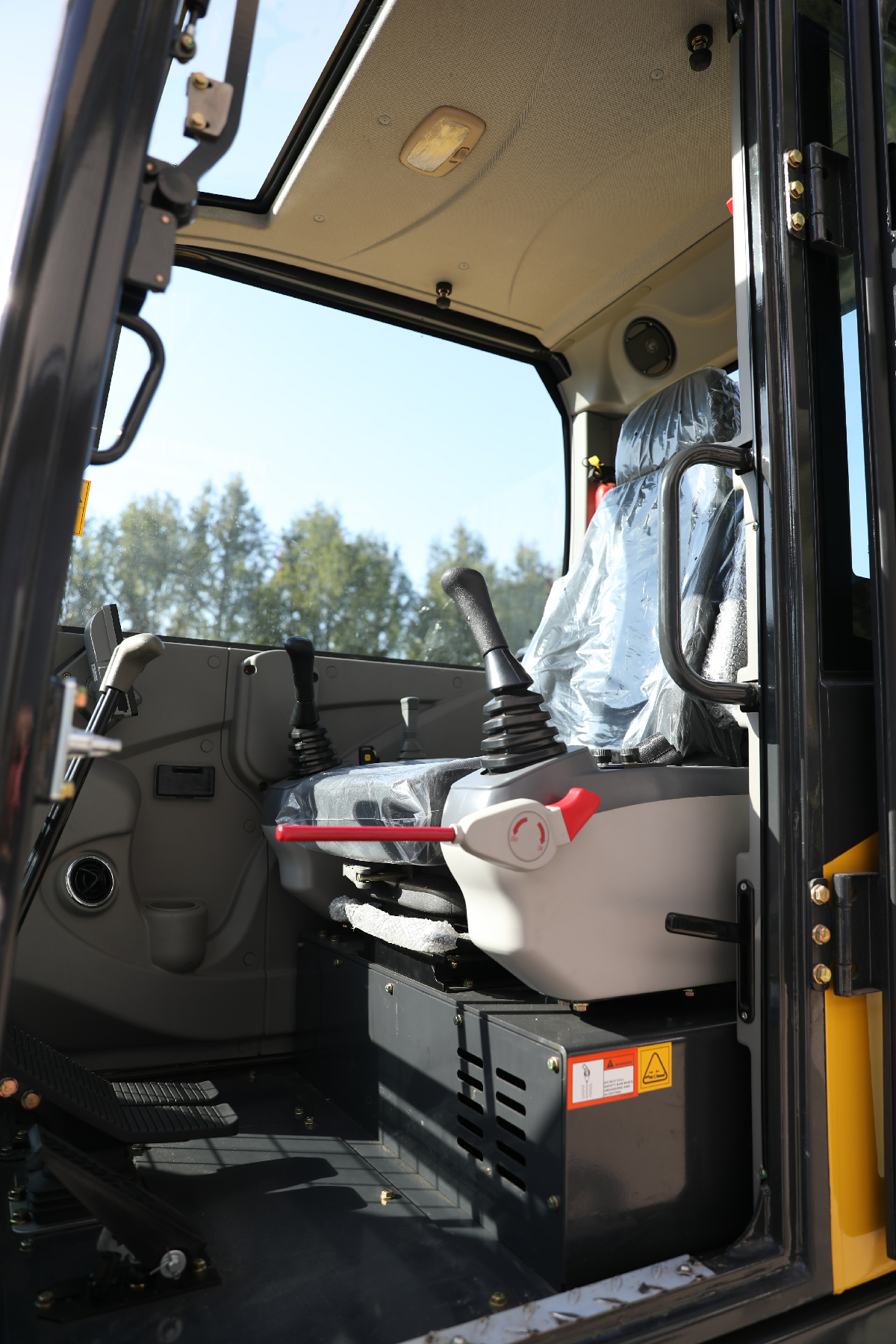
A cab and a canopy are different equipment configurations, so confirm the quoted weight for the version you will receive. Do not assume that a specification shown beside a product photograph covers every available enclosure option.
Guards, air-conditioning equipment, tool storage, and other fitted options can change the delivered configuration. Ask for the complete ordered specification rather than estimating each difference from photographs.
Track assemblies can differ in mass between approved configurations. Use the supplier's configuration-specific figures when comparing them, and confirm any additional pads or other fitted parts.
The bucket and coupler contribute to machine weight when installed, but they may already be included in the stated figure. Adding their weight again would overstate the load, while assuming they are included without checking could understate it.
An attachment may need a mounting bracket, pins, hoses, or an adapter to work with the excavator. Request the weight of the complete assembly you are buying, because a bare attachment figure may not cover everything that travels.
The actual fuel condition should match the basis used in the calculation, and required service fluids must also be accounted for. Ask for the transport preparation instructions instead of treating fluid removal as a general way to make a machine fit a trailer.
A second bucket, breaker, auger, or toolbox remains cargo even when it is detached from the excavator. Include each item on the vehicle where it will actually travel.
Soil, stones, and material retained in a bucket or undercarriage add to the load. Clean the machine and empty attachments before establishing a repeatable transport baseline.
These details explain why mini excavator transport weight should be checked against an order configuration rather than a model name alone. They also explain why a delivery load and a later service-trip load may need separate calculations.
Start with a documented machine weight, identify what that number already includes, and build a separate list of additional cargo. Keep the machine calculation distinct from the trailer calculation so that every item appears once.
Ask for the weight of the exact excavator as prepared for transport, including its installed equipment and stated fuel condition. Where the supplied documents do not resolve the figure, arrange an appropriate weighing of the actual configuration.
A useful entry could read, “Machine with the installed digging bucket, quick coupler, and recorded fluid condition.” The wording makes it clear which components must not be added again.
Create a cargo list covering loose attachments, spare parts, tools, and restraint equipment that are not already included in the machine or trailer baseline. Record both the quantity and weight of each item, especially when a quotation contains several similar buckets.
Total cargo weight equals confirmed machine transport weight plus all additional items carried on the trailer. This is the load you compare with the trailer's available cargo capacity, subject to its other limits.
Loaded trailer weight equals the actual empty trailer weight plus total cargo weight. This total must then be checked against the applicable trailer rating and the towing combination's other constraints.
Before the trip, compare the finished load with the list used for the calculation. If the attachment package, trailer equipment, or carried supplies change, update the figures before relying on the earlier result.
A reliable mini excavator transport weight record should therefore answer three questions: what was weighed, what was included, and what was added afterward. Keeping those answers with the machine documents makes repeat movements easier to plan.
The trailer's gross vehicle weight rating, or GVWR, applies to the loaded trailer rather than just its cargo. A first calculation of available payload is the applicable gross rating minus the trailer's actual empty weight; other component or operating limits can reduce what is usable. NHTSA
The National Association of Trailer Manufacturers explains this distinction in its guidance on gross vehicle weight ratings. For buying decisions, always establish whether an advertised “capacity” means gross trailer weight or cargo capacity. National Association of Trailer Manufacturers
Use the trailer as it is equipped for the trip, including permanently fitted items such as a toolbox or winch. If removable ramps or restraint equipment are already part of that measured baseline, do not add them again as separate cargo.
If 3,500 kg is the permitted gross figure used for your trailer calculation and the trailer itself weighs 900 kg, the initial cargo allowance is 2,600 kg. A 3,500 kg machine would already exceed that allowance before you added any separate attachments.
Remaining capacity is the difference between the relevant limit and the actual load checked against it. It helps you see whether another planned tool can be carried, but it does not override axle, tire, hitch, or vehicle limits.
There is no single extra-capacity percentage that proves every transport combination suitable. Base the decision on verified equipment ratings, the actual load, and the requirements that apply to the route and vehicle combination.
Mini excavator transport weight is therefore only one input when selecting a trailer. The useful buying comparison includes the excavator, its regular attachment package, the trailer's own mass, and the towing vehicle available to your business.
Consider the following hypothetical equipment move. These figures demonstrate the calculation and are not transport specifications for a MAXPOWER model or approval of a particular towing combination.
The machine's confirmed transport figure includes the installed digging bucket and quick coupler. The empty trailer figure includes its fixed equipment, while the loose items below have not been counted anywhere else.
| Item | Illustrative weight | How it is counted |
|---|---|---|
| Excavator in confirmed transport configuration | 1,950 kg | Includes installed bucket and coupler |
| Additional bucket | 85 kg | Separate cargo |
| Complete hydraulic breaker assembly | 160 kg | Separate cargo |
| Loose chains and binders | 45 kg | Separate cargo |
| Portable toolbox | 20 kg | Separate cargo |
| Total cargo weight | 2,260 kg | Machine plus separate cargo |
| Actual empty trailer | 900 kg | Includes its fixed equipment |
| Loaded trailer weight | 3,160 kg | Trailer plus total cargo |
If the trailer's applicable gross limit is 3,500 kg, the first payload calculation is 3,500 minus 900, giving 2,600 kg. The 2,260 kg cargo load is 340 kg below that particular limit, and the loaded trailer total is 3,160 kg.
Adding another 350 kg of separately carried equipment would increase cargo weight to 2,610 kg and the loaded trailer total to 3,510 kg. The revised load would exceed the assumed 3,500 kg gross limit by 10 kg, even though the excavator itself had not changed.
No, it only shows that the initial example is below the stated gross-weight limit. Axle loading, tires, ramps, couplings, towing capacity, and other applicable requirements still need their own checks.
Detaching the bucket changes the machine's individual weight, but it does not reduce total trailer cargo if the bucket stays on the same trailer. A different transport arrangement requires a new calculation for every vehicle carrying part of the load.
This example shows why checking mini excavator transport weight without the attachment list can produce a misleading answer. It also shows why a successful calculation should be saved with a description of the load, not just a final total.
A trailer can be suitable for the equipment while the complete towing combination still needs attention. The following terms refer to different parts of the same arrangement, and passing one limit does not establish that all the others are satisfied.
GVWR and GCWR are common U.S. rating terms. Terminology differs between markets, so use the definitions provided in the documents for the actual vehicle and trailer.
Towing capacity is the vehicle manufacturer's limit for the trailer it can tow under the specified conditions. Check the exact vehicle configuration and its towing guide rather than using a maximum figure advertised for an entire vehicle range.
Vehicle payload covers the load carried by the towing vehicle itself, subject to the manufacturer's definition and rating. Passengers, tools, fitted accessories, and the load imposed through the coupling need to be considered in the relevant checks.
The gross combination weight rating, or GCWR, concerns the towing vehicle and trailer together with their loads. Use a consistent weighing method so that weight transferred through the hitch is not counted twice in the combined total.
Axle loads and the vertical load at the coupling depend on how the equipment is positioned. A satisfactory overall total does not prove that each axle or connection is within its own rating.
These distinctions are covered in NHTSA's towing safety guide. The vehicle and trailer instructions remain the relevant starting points for the exact equipment you intend to use. dmna.ny.gov
When a trailer is coupled, part of its weight is supported through the towing connection. A reading that covers only the trailer axles therefore may not represent the full trailer weight. NHTSA
Ramps need to suit the machine and the intended loading arrangement, including their rated capacity and the manufacturer's conditions of use. A trailer's payload figure does not automatically establish the capacity of every ramp or deck component.
For a buyer, the practical next step is to give the transport provider the complete load information and have the proposed arrangement checked. Guessing a suitable truck from the excavator's size category leaves too many important variables unresolved.
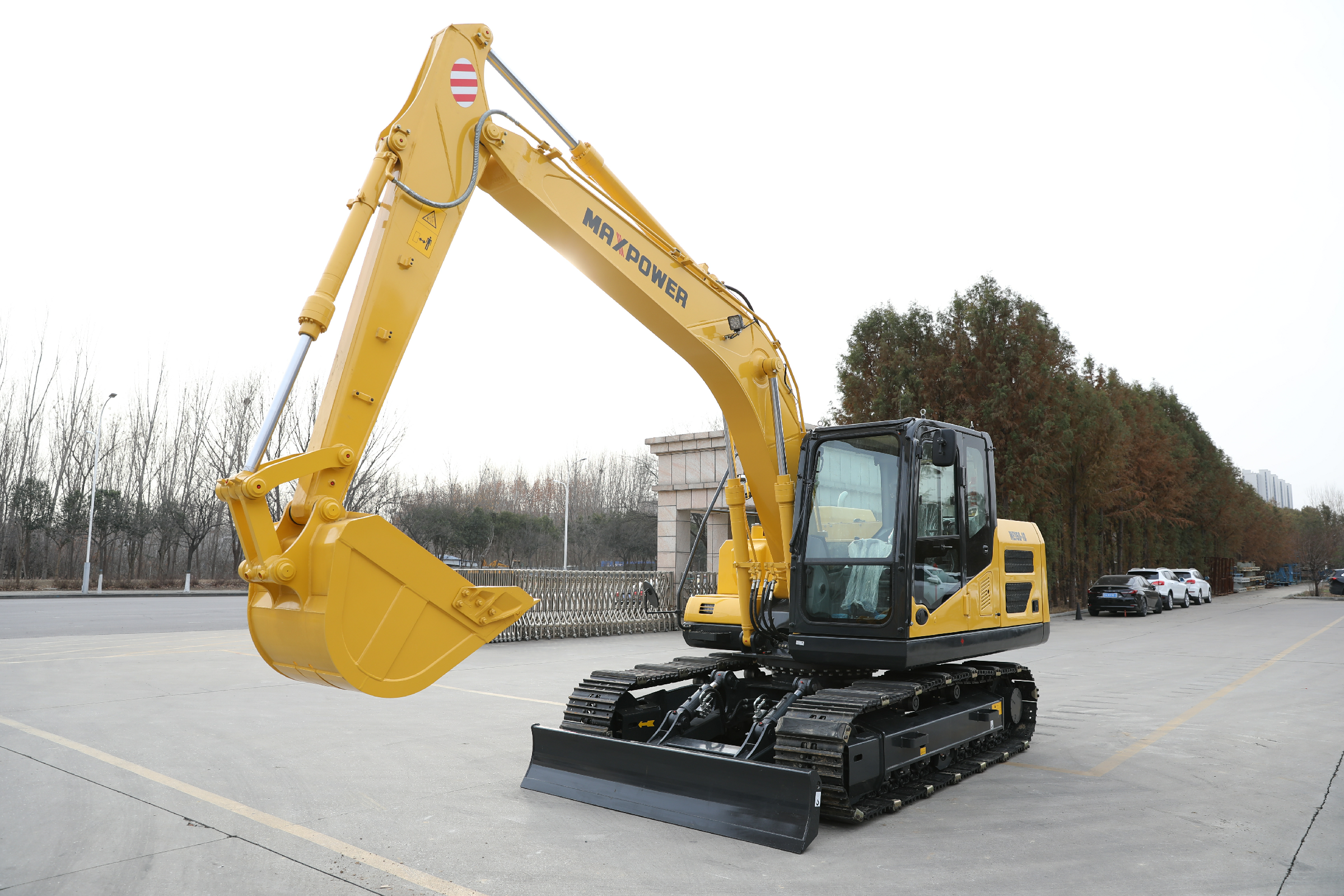
The MAXPOWER excavator range includes several compact models that buyers may compare for different jobs and transport arrangements. The figures below are published operating weights, not confirmed mini excavator transport weight specifications.
| Model and listed version | Published operating weight | Equivalent in kilograms | What the buyer should request |
|---|---|---|---|
| ME18.9 Stage V | 1.8 metric tonnes | 1,800 kg | Weight of the exact ordered transport configuration |
| ME20.9 Stage V | 2.0 metric tonnes | 2,000 kg | Confirmation of enclosure, bucket, coupler, and included items |
| ME35.9 Stage V | 3.75 metric tonnes | 3,750 kg | Transport drawing and complete machine and attachment weights |
These figures appear on the official product pages for ME18.9, ME20.9, and ME35.9. Request the current configuration details for the machine in your quotation before selecting transport equipment. maxpower-group.com
If frequent movement between jobs is central to your business, compare each candidate against your existing transport equipment and regular tool package. A lighter verified load may offer more transport flexibility, provided the excavator still meets the actual digging and attachment requirements.
If a larger excavator better matches the project, include its delivery arrangement in the purchasing decision from the beginning. Compare the complete work-and-transport plan rather than expecting the heavier model to use the same trailer as a smaller machine.
Using an existing trailer makes its verified capacity an early constraint on the shortlist. Purchasing or contracting a different transport solution gives you a different set of options, but the full combination still needs to be checked against the chosen machine.
The right mini excavator transport weight target depends on how you will move and use the equipment. It should be established alongside the attachment package and job requirements, rather than treated as an isolated specification.
Request a drawing showing the machine in its approved transport position, including the relevant boom, arm, and attachment arrangement. Overall dimensions in a general brochure may need clarification before they can be used for a particular loading plan.
Confirm the machine's width in the configuration specified for transport and loading. For a separate discussion of narrow-site access, see MAXPOWER's mini excavator width and access guide.
Use the machine's designated transport and restraint information together with the trailer instructions. The transport provider needs the relevant dimensions, weight distribution information, and approved securing points to plan the load.
A detached tool still needs a suitable location and restraint arrangement on the vehicle carrying it. Making room on the deck is only part of the decision; its weight and position also affect the completed load.
A factory shipment may include packaging or separately packed components that are absent during routine site moves. Record both arrangements when necessary, so that an import packing list is not mistaken for the later trailer-loading plan.
A useful mini excavator transport weight inquiry gives the supplier a specific configuration to confirm. Send the intended model, attachment package, delivery destination, and details of the transport arrangement you are considering.
Ask these questions before finalizing the purchase:
What is the machine's weight in the exact configuration prepared for transport?
Does that figure include the installed bucket and quick coupler?
What fuel and fluid conditions does the stated weight assume?
Does the published operating weight include an operator allowance?
What are the complete weights of the additional attachments, including their mounting parts?
Can you provide a transport drawing showing length, width, and height?
Which transport and restraint instructions apply to the ordered machine?
Will packaging, spare parts, or separately shipped equipment change the delivery load?
Is the information based on a standard configuration or the specific machine being supplied?
Keep the confirmed weight information with the quotation and attachment list. This gives the buyer, supplier, and transport provider a shared reference when reviewing the proposed arrangement.
A different bucket, additional attachment, or revised machine specification can change the load. Recheck the calculation when changes are agreed, rather than carrying the original figure through to dispatch without review.
Not necessarily, because the two figures can describe different configurations and inclusions. Check the manufacturer's definition, including its treatment of attachments, fluids, and any operator allowance, before using an operating figure for transport.
Possibly, but the machine's nominal size alone cannot answer the question. Compare the fully loaded trailer with the exact pickup's towing, payload, axle, hitch, and combination limits, then confirm the requirements for the intended journey.
Choose it from the verified machine weight, separate cargo, transport dimensions, and required loading arrangement. The trailer's own weight and other equipment limits must also be included before its advertised capacity becomes useful.
It depends on the stated configuration, so ask whether the fitted bucket is included. If it is already part of a measured machine figure, count it once; an additional loose bucket needs its own entry in the cargo list.
If 3.5 tonnes is the trailer's gross limit and the machine actually weighs 3.5 tonnes in transport condition, the trailer's own weight would put the loaded trailer above that gross limit. Establish whether the advertised figure means gross weight or payload before comparing it with the equipment.
It reduces the machine's individual weight if the attachment is detached, but total cargo remains the same when both travel on the same trailer. Carrying the attachment elsewhere requires a separate load check for the receiving vehicle.
No, a model name or nominal size category does not identify every installed option or weight assumption. Use the current specification and obtain confirmation of the exact configuration that will travel.
Check the actual load and every relevant rating before deciding the arrangement is suitable. A small difference in one calculation does not resolve uncertainty about other limits or leave automatic capacity for equipment added later.
Documented configuration weights support planning, while weighing the actual load helps resolve uncertainty about what is being carried. Use a weighing method that captures the required total and axle or coupling information, rather than relying on a partial reading.
The answer depends on the model, ordered configuration, and items included in the figure. Ask MAXPOWER to confirm that information for your quotation; the published operating weights of ME18.9, ME20.9, and ME35.9 should not be relabeled as verified transport weights.
Start with the excavator's confirmed transport configuration, then include the attachments and equipment that will travel with it. Add the trailer's actual weight and have the complete arrangement checked against the relevant vehicle, trailer, and component limits.
For a MAXPOWER quotation, identify the model you are considering and the tools you expect to carry on a normal working day. Request the corresponding weight information and transport drawing so that you can compare machine suitability and delivery requirements together.
That turns mini excavator transport weight into a usable purchasing figure: a documented load that the supplier, buyer, and transport provider can all evaluate.