Jining Maxpower Machinery Co., Ltd.




Choosing the right mini excavator size is one of the most important decisions before starting a construction, landscaping, utility, or agricultural project.
Many buyers focus only on machine price or operating weight, but the correct mini excavator selection depends on much more than size. Digging depth, working space, lifting requirements, attachments, transportation, soil conditions, and daily workload all influence whether a machine will perform efficiently.
So, what size mini excavator do I need?
The answer depends on the type of work you plan to complete.
A compact machine may be ideal for residential landscaping and narrow utility projects, while a larger mini excavator may be necessary for deeper excavation, heavier materials, and commercial construction tasks.
This guide explains how to choose the right mini excavator size and what factors professional buyers should evaluate before purchasing.
Before selecting a model, evaluate:
Project application
Required digging depth
Machine operating weight
Jobsite access
Bucket capacity
Lifting requirements
Attachment compatibility
Transportation limitations
Soil and terrain conditions
Expected working hours
Choosing the correct size helps avoid two common problems:
An undersized machine that cannot complete the job efficiently
An oversized machine that increases costs and reduces flexibility
Mini excavators are generally classified by operating weight.
Different manufacturers may use slightly different category definitions, but the following classification provides a practical reference.
| Mini Excavator Class | Approximate Weight Range | Common Applications |
|---|---|---|
| Micro Mini Excavator | Under 1.5 tons | Indoor work, landscaping, small repairs |
| Small Mini Excavator | 1.5–3 tons | Residential projects, utilities, agriculture |
| Medium Mini Excavator | 3–6 tons | Construction, drainage, commercial work |
| Large Mini Excavator | 6–10 tons | Heavy excavation, larger construction tasks |
The actual machine capability depends on more than operating weight. Buyers should also compare:
Engine or motor power
Hydraulic system
Digging force
Boom design
Bucket capacity
Maximum digging depth
Stability
Different applications require different levels of digging power and mobility.
For landscaping projects, a smaller mini excavator is often the preferred option.
Typical tasks include:
Tree planting
Garden preparation
Soil removal
Small grading work
Pond preparation
Irrigation trenches
Fence installation
A compact machine offers advantages such as:
Easier movement around existing structures
Lower surface damage
Simple transportation
Better operation in narrow areas
A smaller mini excavator is usually enough when the project involves light soil movement rather than deep excavation or heavy lifting.
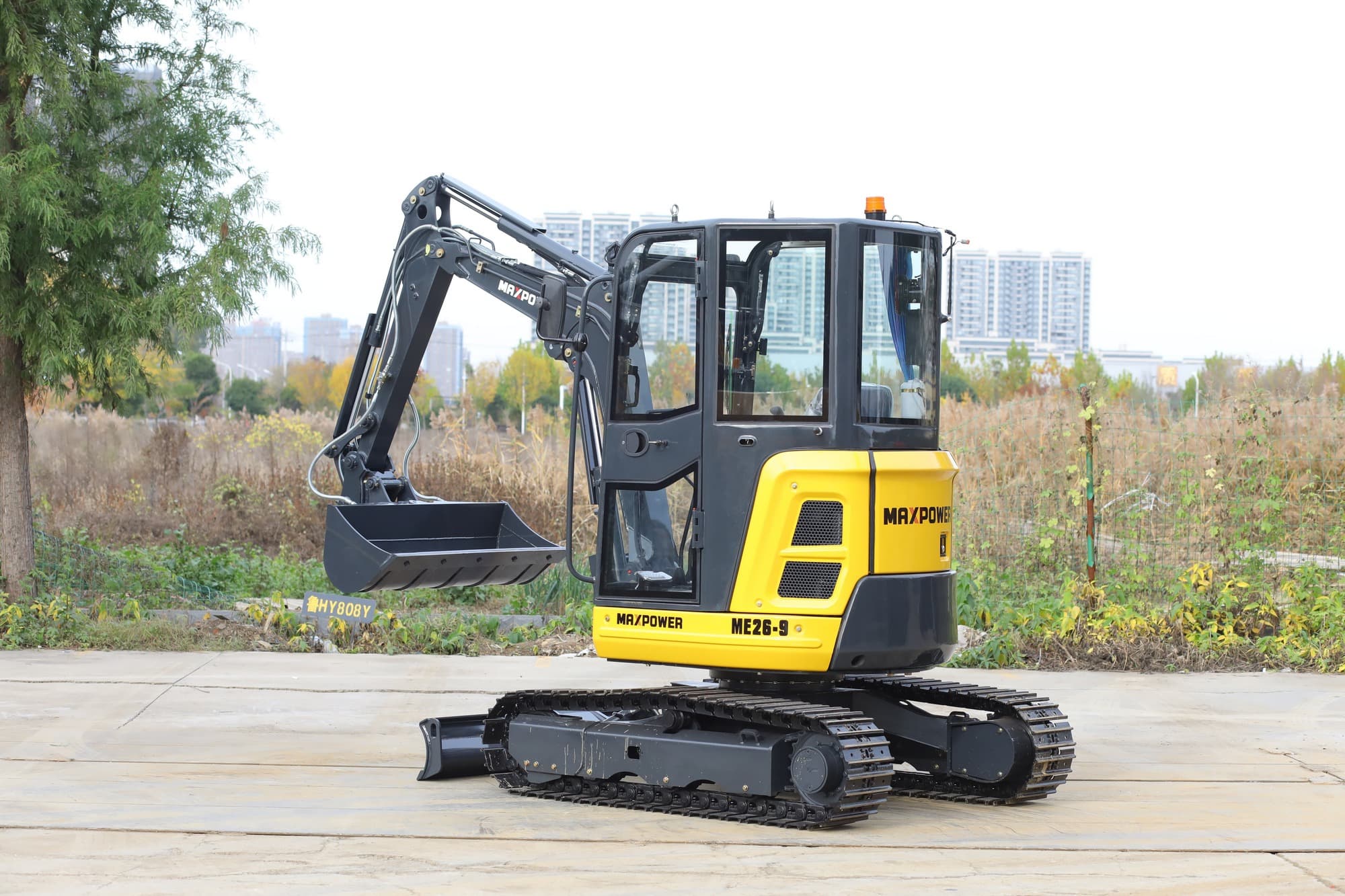
Residential construction often requires a balance between compact size and digging performance.
Common applications include:
House foundations
Drainage systems
Pool excavation
Driveway preparation
Utility installation
Site cleanup
For small residential projects, a 2–5 ton mini excavator is often considered because it provides more capacity while maintaining good maneuverability.
However, the correct choice depends on:
Foundation depth
Soil conditions
Available space
Required bucket size
Material volume
A larger machine is not always better if the site has restricted access.
Utility projects often require careful equipment selection because working areas may be narrow.
Typical applications include:
Water pipes
Electrical cables
Drainage systems
Telecommunications installation
Important factors include:
Required trench depth
Trench width
Pipe size
Soil condition
Spoil handling requirements
A smaller mini excavator may work well for shallow utility installation.
For deeper trenches or heavier pipe handling, a larger compact excavator may provide better productivity.
Excavation safety should always be considered. OSHA provides guidance regarding trenching and excavation safety, including hazards related to cave-ins, underground utilities and protective systems.
Agricultural users often need equipment that can perform multiple tasks.
Mini excavators are commonly used for:
Drainage improvement
Farm road repair
Irrigation installation
Fence preparation
Land maintenance
A compact model is valuable because it can move between different areas of a farm without requiring large transport equipment.
For farms with heavier earthmoving requirements, a larger mini excavator or small excavator may provide better productivity.
Commercial construction generally requires more performance than basic residential work.
Applications may include:
Site preparation
Foundation support work
Material handling
Drainage installation
General excavation
A larger mini excavator can provide:
Greater digging depth
Higher lifting capacity
Larger bucket options
Better productivity
For contractors handling multiple commercial projects, choosing a versatile machine size can improve equipment utilization.
Operating weight is one of the most common ways buyers compare mini excavators.
However, weight affects more than transportation.
It influences:
A heavier machine usually provides better stability when digging or lifting.
A lighter machine may create less impact on finished surfaces.
Larger machines usually have stronger hydraulic systems and greater digging capability.
A heavier excavator may require:
Larger trailers
Different towing equipment
Additional permits depending on location
The correct weight depends on the project, not simply the maximum available budget.
Digging depth is one of the most important specifications.
Before choosing a machine, determine:
Maximum trench depth
Required digging reach
Loading height
Working radius
A mini excavator that reaches the required depth comfortably is usually more efficient than a smaller machine operating continuously at its limit.
| Project Requirement | Recommended Mini Excavator Consideration |
| Small garden trenches | Compact mini excavator |
| Residential drainage | 2–4 ton class |
| Utility installation | 3–6 ton class depending on depth |
| Small foundations | 4–8 ton class depending on requirements |
| Heavy excavation | Larger compact or small excavator |
Attachments can significantly change the machine requirements.
Common mini excavator attachments include:
Buckets
Hydraulic breakers
Augers
Grapples
Rippers
Compaction wheels
Hydraulic thumbs
A machine suitable for a standard bucket may not be suitable for a heavier attachment.
For example:
A hydraulic breaker requires:
Suitable hydraulic flow
Proper pressure
Adequate machine stability
Correct attachment weight
Before purchasing, buyers should decide which attachments they will use most frequently.
| Project Type | Suggested Size Consideration | Reason |
|---|---|---|
| Landscaping | 1–3 tons | Easy access and low disturbance |
| Residential maintenance | 2–5 tons | Good balance of mobility and power |
| Utility installation | 3–6 tons | Better trenching capability |
| Small construction | 4–8 tons | Higher productivity |
| Heavy compact excavation | 6–10 tons | Greater capacity |
These recommendations are general. Actual requirements depend on the jobsite and machine specifications.
A cheaper machine may not always reduce total project costs.
An undersized excavator may result in:
Longer working hours
Lower productivity
More machine stress
Delayed projects
Equipment should be evaluated based on total value rather than purchase price alone.
Many contractors purchase equipment expecting future growth.
A machine that only completes current small projects may become limiting as business requirements expand.
Consider:
Expected future contracts
Common project types
Attachment requirements
Annual operating hours
A mini excavator may still require proper transport planning.
Consider:
Machine weight
Trailer capacity
Towing vehicle
Delivery distance
Local regulations
Two machines with similar weight can have different productivity because hydraulic systems vary.
Compare:
Hydraulic flow
Hydraulic pressure
Digging force
Cycle speed
Attachment compatibility
A mini excavator is usually better when:
Space is limited
Transportation flexibility matters
Projects are smaller
Ground disturbance must be minimized
Precision work is required
A small excavator is usually better when:
Excavation volume is higher
Digging depth is greater
Heavy lifting is required
Larger attachments are needed
Continuous production is important
For a detailed comparison, read:
Mini Excavator vs Small Excavator: What Is the Difference?
For international buyers, choosing the correct machine also means selecting a reliable supplier.
Important evaluation points include:
A manufacturer with different excavator sizes can provide better recommendations as project requirements change.
Check whether the supplier provides:
Technical documents
Spare parts support
Operation guidance
Maintenance information
Different markets may require:
Engine options
Cab configurations
Attachments
Electrical systems
Climate adaptations
A manufacturer should understand different working environments and provide solutions based on application rather than only selling standard models.
MAXPOWER provides construction equipment solutions including compact excavators designed for different project requirements.
Explore the MAXPOWER mini excavator range to compare available models.
Before requesting a quotation, prepare:
Application type
Soil condition
Working environment
Expected operating hours
Digging depth
Required reach
Bucket size
Lifting requirements
Attachment needs
Available space
Access width
Ground condition
Transportation limitations
Destination country
Certification requirements
Spare parts needs
After-sales support expectations
Providing detailed information allows manufacturers to recommend a machine that matches your actual needs.
Selecting a mini excavator is not only about choosing a weight category.
Professional buyers need equipment that matches:
Project requirements
Operating environment
Attachment needs
Maintenance expectations
Long-term utilization plans
MAXPOWER develops and supplies construction machinery for different applications, helping customers select suitable equipment configurations.
Whether you need a compact machine for restricted spaces or a higher-capacity mini excavator for demanding construction work, choosing the correct specification is the key to better productivity.
Visit the MAXPOWER excavator product range or contact the MAXPOWER team with your project details.
So, what size mini excavator do I need?
The answer depends on your actual work.
Choose a smaller mini excavator when you need:
Easy access
Simple transportation
Low ground disturbance
Precision operation
Choose a larger mini excavator when you need:
Greater digging depth
More lifting capacity
Larger attachments
Higher productivity
The best mini excavator is not the largest machine available. It is the machine that provides enough performance while remaining efficient for your specific projects.
A 2–5 ton mini excavator is commonly considered for many residential applications because it balances access and digging capability. The final choice depends on project requirements.
No. Larger machines provide more capacity but may create transportation and access challenges. The right size depends on the jobsite.
The required size depends on trench depth, width, soil conditions and pipe requirements. Small trenches may require compact models, while deeper utility work may need larger machines.
Yes, some mini excavators can handle small foundation projects. Larger foundations may require a higher-capacity mini excavator or small excavator.
Signs include slow production, insufficient digging depth, poor lifting ability, frequent operation at maximum capacity and inability to use required attachments.
There is no universal best size. Many contractors choose mid-range compact excavators because they provide a balance between transportation, access and productivity.
Yes. Many mini excavators support buckets, breakers, augers, grapples and other attachments, provided hydraulic and weight requirements are compatible.
Frequent users may benefit from purchasing, while occasional users may find rental more practical. Businesses should compare utilization, maintenance and project frequency.







