Maxpower Construction Machinery Manufacturer




Electric excavators are becoming a practical alternative to conventional diesel equipment in selected construction, municipal, industrial and underground applications.
However, this does not mean electric machines are automatically better for every project.
A diesel excavator still offers clear advantages when equipment must operate for long hours in remote locations with limited charging infrastructure. An electric excavator may be more suitable when low noise, zero exhaust emissions at the point of use, reduced routine powertrain maintenance and indoor operation are priorities.
The right choice depends on the working environment, daily operating schedule, required performance, energy availability, transportation plan and total cost of ownership.
This electric excavator vs diesel excavator guide compares the two power systems to help contractors, equipment distributors and international buyers choose a machine that fits their actual project requirements.
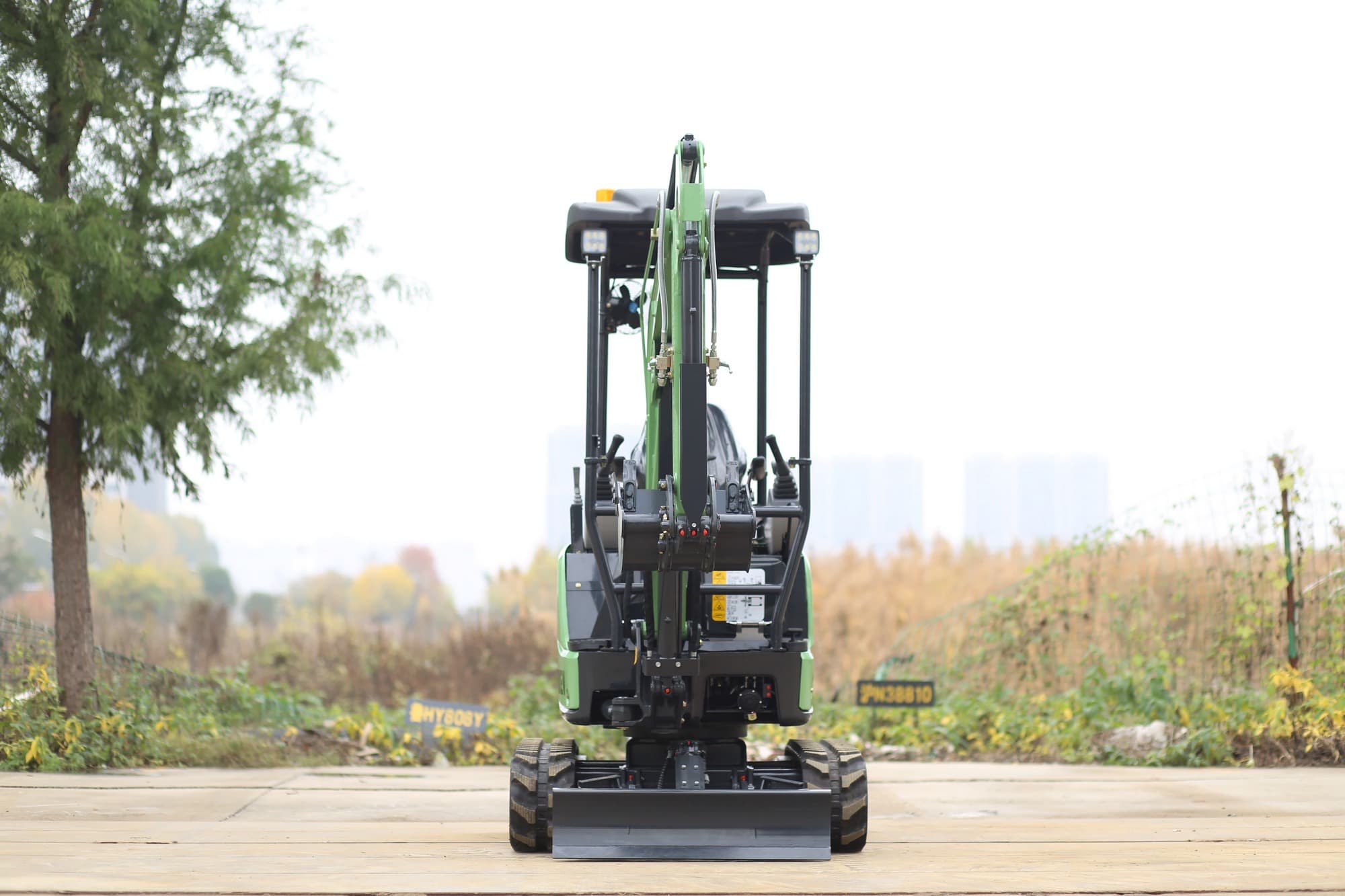
An electric excavator replaces the conventional diesel engine with an electric drive system.
The electricity may come from:
An onboard battery pack
A fixed cable connection
A mobile external power supply
A hybrid or specialized power arrangement
The electric motor supplies power to the hydraulic system, which operates the boom, arm, bucket, travel motors and other functions.
From the operator’s perspective, the basic working functions remain familiar. The main differences involve energy supply, noise, charging or cable management, maintenance and project planning.
A battery electric excavator stores energy in an onboard battery pack.
This configuration allows the machine to move without a permanent cable connection. It can be useful for urban construction, municipal work, indoor projects and jobsites where charging can be planned around operating shifts.
Battery-powered equipment must be evaluated according to:
Battery capacity
Expected working time
Charging duration
Charger type
Available electrical supply
Ambient temperature
Work intensity
Auxiliary power consumption
Published operating time should not be treated as a guaranteed result for every project. Heavy digging, frequent travel, hydraulic attachment use and extreme temperatures can affect energy consumption.
A cable electric excavator receives continuous power through an external connection.
This arrangement can support longer operating periods without stopping to recharge. It may be considered for mines, material-handling sites, fixed industrial areas and other projects where the machine operates within a defined working zone.
The main limitation is cable management.
The project must consider:
Cable length
Cable protection
Machine travel routes
Connection location
Voltage compatibility
Site electrical safety
Risk of cable damage
Cable-powered equipment can be highly effective in the correct environment, but it is not as flexible as battery or diesel equipment on widely dispersed jobsites.
A diesel excavator uses a compression-ignition engine to power its hydraulic system.
Diesel equipment has been widely used in construction because fuel can be stored, transported and added quickly. This gives diesel excavators strong flexibility on remote sites and projects without reliable electrical infrastructure.
Common advantages include:
Established technology
Widespread fuel availability
Rapid refueling
Long operating shifts
Extensive service networks
Broad model selection
Strong remote-site suitability
The MAXPOWER excavator range includes machines for different operating weights, project types and construction environments.
Modern diesel equipment may use increasingly advanced engine-management and emissions-control systems. Buyers should verify which engine and emissions configuration is suitable for the destination market.
An electric excavator does not produce diesel engine exhaust at the point of operation.
This can be a major advantage in:
Indoor construction
Tunnels
Underground facilities
Warehouses
Factories
Urban projects
Areas with strict local emissions requirements
A diesel excavator produces exhaust gases and particulate matter through fuel combustion. When diesel-powered equipment is used in enclosed or poorly ventilated areas, air quality and worker exposure require careful management.
OSHA provides information about diesel exhaust hazards and construction ventilation requirements. Local occupational safety and environmental rules should also be reviewed before equipment is selected.
It is important to distinguish between zero exhaust at the point of use and zero overall environmental impact.
Electricity generation, battery manufacturing, fuel production, machine manufacturing and transportation all affect the complete lifecycle footprint. The actual environmental comparison depends partly on how the electricity is generated.
Electric motors generally create less powertrain noise than diesel engines.
Lower noise can be valuable for:
Night construction
Residential areas
Hospitals and schools
Indoor projects
Communication-intensive worksites
Municipal maintenance
Noise-sensitive industrial facilities
Reduced engine noise may improve communication between operators and ground personnel. However, the excavator is not silent.
Hydraulic systems, tracks, buckets, breakers, alarms and contact with materials still produce noise.
A hydraulic breaker working on concrete, for example, may remain the dominant noise source regardless of whether the carrier is electric or diesel.
Electric excavators can provide strong low-speed torque and responsive power delivery.
However, buyers should not assume that an electric machine is automatically more or less powerful than a diesel machine.
Digging performance depends on:
Motor or engine output
Hydraulic pump capacity
System pressure
Hydraulic flow
Machine weight
Boom and arm geometry
Bucket configuration
Control strategy
Ground conditions
When comparing an electric excavator with a diesel model, review the actual:
Bucket digging force
Arm digging force
Travel speed
Gradeability
Swing speed
Lifting chart
Maximum digging depth
Hydraulic attachment capacity
Power source is only one part of machine performance.
Runtime is one of the most important factors in the electric excavator vs diesel excavator decision.
A diesel machine can normally return to work soon after refueling. This makes it practical for long shifts, unpredictable workloads and remote projects.
A battery electric excavator requires a charging plan.
Buyers should ask:
How many hours will the machine work per shift?
How intensive is the work cycle?
Can charging take place during breaks?
Is overnight charging available?
Is fast charging supported?
Is an additional battery required?
Is sufficient electrical capacity available on site?
A cable electric excavator avoids battery-runtime limits but introduces restrictions on movement.
For predictable shifts with reliable charging, a battery machine may fit the project well. For continuous remote work with no dependable power supply, diesel may remain the more practical option.
Electricity can cost less than diesel per unit of useful energy in some markets, but it is not possible to make a universal cost claim.
Actual operating cost depends on:
Local electricity price
Diesel price
Charging efficiency
Work intensity
Idle time
Machine efficiency
Demand charges
Generator use
Maintenance cost
Battery condition
Electric motors can avoid fuel use during conventional engine idling, although auxiliary systems and machine electronics still consume power.
A proper comparison should calculate cost per productive hour or cost per completed cubic metre of work rather than simply comparing electricity and diesel prices.
Use the following approach:
Electric operating-energy cost
Electricity consumed per shift × local electricity rate
Diesel operating-fuel cost
Fuel consumed per shift × local diesel price
Then add relevant costs for:
Routine maintenance
Charging equipment
Generator operation, when applicable
Fuel delivery
Downtime
Battery or engine lifecycle
Financing
Resale value
This creates a more meaningful total-cost comparison.
An electric powertrain generally has fewer engine-related service items.
An electric excavator does not require routine replacement of components such as:
Engine oil
Engine oil filters
Diesel fuel filters
Certain belts
Certain exhaust-treatment components
However, an electric excavator still requires regular maintenance.
Service items may include:
Hydraulic oil
Hydraulic filters
Final drives
Swing system
Undercarriage
Pins and bushings
Cooling system
Electrical connections
Battery thermal management
Charger and cable inspection
Attachment maintenance
A diesel excavator requires maintenance of both the hydraulic machine and the engine-related systems.
Its service plan may include:
Engine oil and filters
Fuel filters
Air filters
Cooling system
Fuel system
Emissions-control system
Hydraulic system
Undercarriage
Electrical system
Electric equipment may reduce certain routine service tasks, but it also requires technicians with appropriate high-voltage knowledge and diagnostic capability.
Diesel fuel infrastructure is already established across many construction markets.
Fuel can often be delivered to the site and stored in approved systems, making diesel equipment practical for remote or temporary projects.
Electric excavators require suitable electrical infrastructure.
The buyer may need to confirm:
Grid connection capacity
Voltage and frequency
Charger compatibility
Connector standards
Charging location
Cable length
Protection from water and impact
Charging schedule
Local electrical regulations
Charging from a diesel generator may reduce some of the intended environmental and operating-cost advantages. It may still be operationally useful in certain situations, but its fuel use should be included in the comparison.
A diesel excavator has strong location flexibility as long as fuel is available.
A battery electric excavator also moves independently, but its operating radius may be influenced by access to charging infrastructure.
A cable electric excavator is best suited to a controlled working area.
For projects that move across:
Large road corridors
Remote agricultural land
Widely distributed utility sites
Large undeveloped areas
diesel equipment may be easier to support.
For fixed or compact projects such as factories, tunnels, recycling facilities and urban construction zones, electric equipment may be easier to integrate.
Electric excavators may have a higher initial cost because of battery packs, power electronics and charging equipment.
However, the purchase price alone does not determine long-term value.
A complete financial comparison should include:
Energy or fuel cost
Scheduled maintenance
Unscheduled repairs
Charging infrastructure
Fuel storage and delivery
Expected annual hours
Downtime
Battery replacement assumptions
Machine service life
Available incentives
Resale market
A machine with a higher purchase price may still be economical when it operates many hours in an application that benefits from lower energy and maintenance costs.
Conversely, the investment may be difficult to justify when annual utilization is low or charging infrastructure is expensive.
An electric excavator is generally the stronger candidate for indoor work because it does not produce combustion exhaust at the operating location.
Potential applications include:
Factory renovation
Warehouse construction
Indoor demolition
Basement excavation
Industrial maintenance
Enclosed material handling
Diesel engines can create indoor air-quality concerns when exhaust is not adequately controlled. OSHA’s guidance for powered equipment warns that internal-combustion equipment can present hazards in enclosed areas and that ventilation must be properly assessed.
Electric power does not eliminate every safety issue.
Indoor projects must still consider:
Ventilation for dust and other contaminants
Battery and charging safety
Fire planning
Working-space restrictions
Machine visibility
Ground-bearing capacity
Noise from attachments
Emergency access
Equipment selection should be part of a complete site risk assessment.
Electric excavators can offer advantages on urban projects because of lower powertrain noise and no diesel exhaust at the point of operation.
They may be useful for:
Municipal utility work
Road repairs
Residential developments
Night projects
Parks
Projects near schools or hospitals
However, charging access must be available.
A diesel excavator may remain preferable when the machine moves frequently between locations or when the local power supply cannot support the required charger.
The answer depends on the type of mining operation.
Electric excavators may provide important advantages underground because reducing diesel exhaust can reduce the burden placed on ventilation systems.
Cable electric equipment can be particularly relevant where:
Working routes are controlled
Power infrastructure is permanent
Long operating shifts are required
Ventilation is expensive
The machine remains within a defined area
Battery equipment may offer greater movement flexibility, but runtime and charging must be matched to the shift.
Diesel excavators remain widely practical for large, changing and remote open-pit environments.
Electric equipment may still be suitable where:
High-capacity electricity is available
The machine works in a fixed loading area
Cable management is practical
The project has long-term electrification goals
Mining buyers should compare the full site energy system rather than evaluating the excavator in isolation.
Diesel is usually easier to support on remote sites because fuel can be transported and stored.
Electric equipment may be practical when the project has:
Reliable grid power
On-site renewable energy
Battery storage
Suitable generators
Permanent charging infrastructure
For short-term work in an undeveloped area, installing electrical infrastructure may not be economical.
For a long-term mine, industrial facility or infrastructure project, the investment may be easier to justify.
An electric excavator may be the better choice when the project needs:
No diesel exhaust at the point of use
Lower powertrain noise
Indoor operation
Predictable daily shifts
Reliable charging access
Reduced engine-related maintenance
Strong low-speed response
Compliance with strict site environmental requirements
The largest benefits usually appear when the machine is matched to a repeatable and well-planned application.
A diesel excavator may be the better choice when the project needs:
Long or unpredictable working shifts
Fast refueling
Remote-site operation
Frequent relocation
Widely available service support
No dependence on grid electricity
Broad model and attachment availability
Diesel remains a practical solution for many heavy construction and earthmoving projects.
Before purchasing an electric excavator, review the following potential limitations.
Charging may interrupt production unless it is planned around breaks, shift changes or overnight periods.
The existing site connection may not support the charger without an upgrade.
Runtime can change with workload, temperature, battery condition and attachment use.
High-voltage systems require trained service personnel and appropriate safety procedures.
The resale market for electric construction machinery is still developing in many regions.
Battery shipping, long-term storage and transport requirements should be discussed with the supplier.
Diesel equipment also presents several challenges.
Fuel prices can change significantly and affect operating budgets.
Diesel engines require regular oil, filter, fuel-system and cooling-system maintenance.
Indoor or underground operation may require substantial ventilation and exhaust controls.
Engine noise may restrict working hours in residential or sensitive locations.
Engine emissions standards vary by country and region. Buyers should confirm that the selected machine is suitable for its intended destination.
A useful excavator comparison should cover the entire expected ownership period.
Include:
Machine price
Attachments
Charger
Electrical installation
Fuel storage equipment
Transportation
Import duties
Commissioning
Include:
Electricity or diesel
Maintenance parts
Labour
Inspections
Insurance
Downtime
Attachment wear
Undercarriage wear
Include:
Battery replacement assumptions
Engine overhaul
Major hydraulic repairs
Charging equipment replacement
Residual value
Disposal or recycling requirements
Total cost of ownership should be calculated using local prices and the actual expected workload.
Before requesting a quotation, ask:
What is the battery capacity?
What runtime can be expected under my application?
Which charger is included?
What voltage and electrical supply are required?
How long does standard and fast charging take?
How does cold or hot weather affect operation?
What battery warranty is provided?
What is the expected battery service life?
Which attachments are compatible?
Is high-voltage service training available?
Which spare parts should be kept locally?
Does the configuration meet destination-market requirements?
Runtime answers should be based on a defined operating cycle rather than a general marketing estimate.
Buyers should confirm:
Which engine brand and model are installed?
Which emissions standard does the engine meet?
What is the expected fuel consumption under the intended workload?
Are engine and maintenance parts available locally?
Which fuel quality is required?
Does the machine use DEF or other after-treatment systems?
What maintenance intervals apply?
Which attachments are supported?
What cold-start or high-temperature options are available?
What after-sales support is provided?
Choose an electric excavator when:
The machine works indoors or underground
Low noise is important
Local exhaust emissions must be minimized
Charging infrastructure is reliable
Work shifts are predictable
The machine has high annual utilization in a suitable application
Choose a diesel excavator when:
The site is remote
Working hours are long or unpredictable
Fast refueling is essential
Charging infrastructure is unavailable
The machine frequently changes location
Established diesel service support is important
For a broader equipment-sizing decision, read How to Choose the Right Excavator Size for Your Project.
Buyers comparing compact equipment can also review Mini Excavator vs Small Excavator.
MAXPOWER develops and manufactures construction machinery for different project conditions, including conventional and electric excavator solutions.
Equipment buyers may need different configurations according to:
Working environment
Operating weight
Energy supply
Digging requirements
Attachment use
Climate
Destination-market standards
OEM requirements
Instead of selecting a machine based only on the power source, buyers should evaluate the entire equipment configuration.
Explore the MAXPOWER excavator range or visit the MAXPOWER company profile to learn more about its manufacturing and development capabilities.
Neither power system is universally better.
An electric excavator is often better for indoor, underground, urban and noise-sensitive projects with reliable electrical infrastructure.
A diesel excavator is often better for remote, mobile and long-shift operations where rapid refueling and energy independence are essential.
Before choosing, compare:
Worksite environment
Daily operating hours
Digging and lifting requirements
Charging or fuel availability
Noise restrictions
Ventilation requirements
Maintenance support
Transportation
Local regulations
Total cost of ownership
The most effective machine is the one that provides the required performance within the actual operating conditions.
Contact MAXPOWER with your project type, expected working hours, energy conditions, attachments and destination market to discuss a suitable excavator configuration.
They can provide comparable performance when the motor, hydraulic system, machine weight and configuration are designed for the same application. Buyers should compare digging force, hydraulic flow, reach and lifting data rather than power source alone.
Runtime depends on battery capacity, workload, temperature, travel, attachments and operator behaviour. The manufacturer should provide an estimate based on a defined working cycle.
It may be able to support a full working schedule through sufficient battery capacity, planned charging, fast charging, battery exchange or cable power. The correct arrangement depends on the project.
They can be well suited to indoor projects because they do not produce diesel exhaust at the operating point. Dust, charging, fire safety, access and other site risks still need to be controlled.
Yes. They still require hydraulic, undercarriage, structural, cooling, electrical and attachment maintenance, although they generally avoid several diesel-engine service items.
They may have lower energy and routine powertrain maintenance costs in some markets. The result depends on electricity prices, diesel prices, utilization, charging infrastructure and lifecycle costs.
Yes, provided the machine supplies the required hydraulic pressure and flow and the breaker is suitable for the carrier weight. Breaker use can increase energy consumption and reduce battery runtime.
Electric excavators are expanding into applications where their operating characteristics provide clear advantages. Diesel machines remain practical for many remote, mobile and continuous-duty projects.
Provide the application, soil or material type, operating hours, digging depth, required attachments, jobsite conditions, available electricity, destination country and preferred machine size.







