Maxpower Construction Machinery Manufacturer




The rapid expansion of renewable energy projects has created new opportunities for contractors specializing in heavy construction and infrastructure development. Wind farms require extensive site preparation, foundation excavation, access road construction, underground cable installation, and ongoing maintenance throughout the project lifecycle.
Among all construction equipment used on wind energy projects, excavators remain one of the most versatile and valuable machines. They support nearly every phase of development, from preparing turbine foundations to restoring the surrounding landscape after installation.
MAXPOWER excavators are engineered to meet the demanding requirements of wind farm construction. Their reliable hydraulic performance, durable structural design, and application versatility help contractors improve productivity while working in remote and challenging environments.
Unlike conventional construction projects, wind farms are often located in mountainous regions, deserts, coastal areas, or agricultural land where terrain conditions are unpredictable.
Excavators perform multiple tasks throughout construction, including:
Site clearing
Earthmoving
Foundation excavation
Cable trenching
Drainage installation
Material handling
Road maintenance
Site restoration
Using one versatile machine across multiple stages helps contractors reduce fleet costs and improve equipment utilization.
Before wind turbines can be erected, contractors must prepare stable working platforms capable of supporting heavy cranes and transport vehicles.
Excavators remove vegetation, strip topsoil, excavate unstable ground, and shape construction areas to engineering specifications.
Proper preparation ensures safer operations and reduces the risk of settlement after construction.
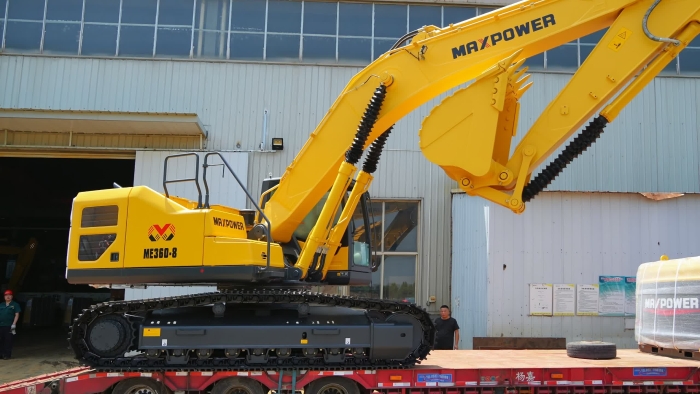
Every wind turbine depends on a precisely engineered concrete foundation.
Foundation excavation requires:
Accurate digging depth
Stable side slopes
Consistent hydraulic performance
Efficient spoil removal
Excavators play an essential role in preparing these large foundation pits while maintaining project schedules.
Electricity generated by wind turbines must be transmitted through underground cable systems connecting each turbine to substations.
Excavators are widely used for:
Cable trench excavation
Backfilling operations
Drainage improvements
Utility crossings
Reliable hydraulic control allows operators to excavate safely while minimizing disturbance to surrounding ground conditions.
Wind farms require permanent and temporary roads capable of supporting oversized transport vehicles.
Excavators assist with:
Earthmoving
Slope grading
Culvert installation
Drainage channel construction
Material loading
Well-built access roads improve transportation efficiency throughout construction and future maintenance activities.
Many wind energy projects are located far from urban centers.
Equipment operating in these environments must provide:
High reliability
Excellent fuel efficiency
Easy maintenance
Strong climbing ability
Stable operation on uneven terrain
Reducing unexpected downtime is especially important because replacement equipment may not be readily available.
Wind farm construction often combines excavation, lifting, grading, and attachment work within the same project.
A responsive hydraulic system allows operators to switch tasks efficiently while maintaining precise machine control.
Improved hydraulic efficiency also contributes to lower fuel consumption and higher daily productivity.
MAXPOWER excavators are developed for demanding infrastructure applications where durability and reliability are essential.
Key advantages include:
Durable heavy-duty structures
Reliable hydraulic systems
Excellent digging performance
Compatibility with multiple attachments
Stable operation in difficult terrain
These features make MAXPOWER excavators suitable for renewable energy construction, utility projects, road building, and other infrastructure developments.
Governments worldwide continue investing in renewable energy infrastructure to reduce carbon emissions and strengthen energy security.
As wind farm projects become larger and more complex, contractors increasingly require equipment that combines productivity with long-term reliability.
MAXPOWER continues to provide construction equipment solutions that help contractors meet these evolving industry demands.
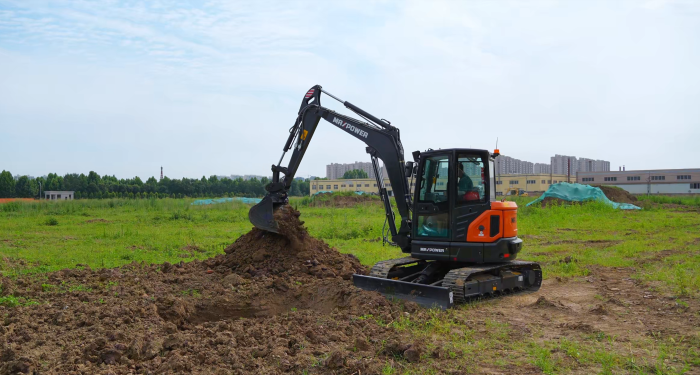
Before selecting equipment, contractors should evaluate:
Turbine foundation size
Ground conditions
Haul road requirements
Cable trench length
Transportation logistics
Working environment
Long-term utilization plans
Choosing the right excavator improves project efficiency while reducing operating costs over the equipment lifecycle.
Wind farm construction requires equipment capable of performing multiple tasks efficiently across large and often remote project sites.
From site preparation and foundation excavation to cable installation and access road construction, excavators remain essential throughout every phase of development.
MAXPOWER excavators provide the durability, hydraulic performance, and operational flexibility contractors need to complete renewable energy projects safely and efficiently.
They support foundation excavation, cable trenching, earthmoving, drainage work, and road construction.
Medium and large excavators are commonly selected depending on turbine size and site conditions.
Efficient hydraulic systems improve digging accuracy, reduce fuel consumption, and increase productivity.
Yes. Excavators are widely used on challenging terrain when properly matched to site conditions.
MAXPOWER excavators combine reliable performance, durable construction, and versatile applications for demanding infrastructure projects.







