Jining Maxpower Machinery Co., Ltd.




Choosing between a backhoe loader and an excavator is a common challenge for construction contractors, utility companies, municipalities, agricultural operators, and equipment buyers. Both
machines are designed for excavation, but their working configurations and strengths are very different.
A backhoe loader combines a rear-mounted excavator with a front loader, allowing one machine to perform digging, loading, material handling, and site maintenance. A dedicated excavator is primarily designed for excavation and heavy-duty digging, with a stronger focus on reach, digging depth, hydraulic performance, and continuous excavation.
So, is a backhoe loader better than an excavator?
There is no universal answer. The right machine depends on the type of work, jobsite conditions, required excavation depth, material handling needs, transportation requirements, and expected operating hours.
For contractors looking for versatile equipment, MAXPOWER Backhoe Loaders can provide an efficient solution for projects that require multiple functions from a single machine.
The biggest difference is machine configuration.
A backhoe loader has two primary working ends. The rear-mounted backhoe is designed for excavation, trenching, and digging, while the front loader bucket handles loading, lifting, and material movement.
An excavator generally uses a boom, arm, and bucket mounted on a dedicated upper structure. Its design focuses heavily on excavation performance.
This difference affects how each machine performs on a construction site.
A backhoe loader is usually more versatile.
An excavator is generally more specialized.
For projects requiring frequent switching between excavation and loading, a backhoe loader can be highly practical. For projects dominated by deep excavation and heavy earthmoving, a dedicated excavator may provide greater productivity.
This is probably the most important question for equipment buyers.
The answer depends on the project.
A backhoe loader may be the better choice if your work involves:
Utility trenching
Road maintenance
Drainage construction
Material loading
Small construction sites
Municipal maintenance
Agricultural work
General site preparation
An excavator may be the better choice when the project requires:
Deep excavation
Large-scale earthmoving
Heavy digging
Long working reach
High-volume excavation
Large foundations
Mining or quarry applications
Instead of asking which machine is universally better, contractors should ask which machine is better for their specific workload.
For small and medium construction projects, a backhoe loader can offer a major advantage because it combines multiple functions.
A contractor may need to excavate a foundation, move soil, load aggregate, clean the work area, and prepare trenches during the same project.
Using separate machines for every task may increase transportation requirements and complicate jobsite management.
A backhoe loader can perform several of these operations using one machine.
This makes it particularly useful for:
Residential construction
Small commercial projects
Farm construction
Local infrastructure work
Landscaping
Utility installation
For smaller contractors, versatility can be more valuable than maximum excavation capacity.
When deep excavation is the primary requirement, a dedicated excavator generally has the advantage.
Excavators are designed around their boom, arm, and bucket configuration, allowing them to achieve significant digging depth and reach depending on the machine class.
They are commonly used for:
Deep foundations
Large trenches
Basement excavation
Heavy earthmoving
Mining
Large infrastructure projects
A backhoe loader can perform excavation effectively, but contractors requiring continuous deep digging should evaluate a dedicated excavator instead.
This is an important distinction because choosing equipment based only on purchase flexibility can result in lower productivity if the machine is not suited to the primary workload.
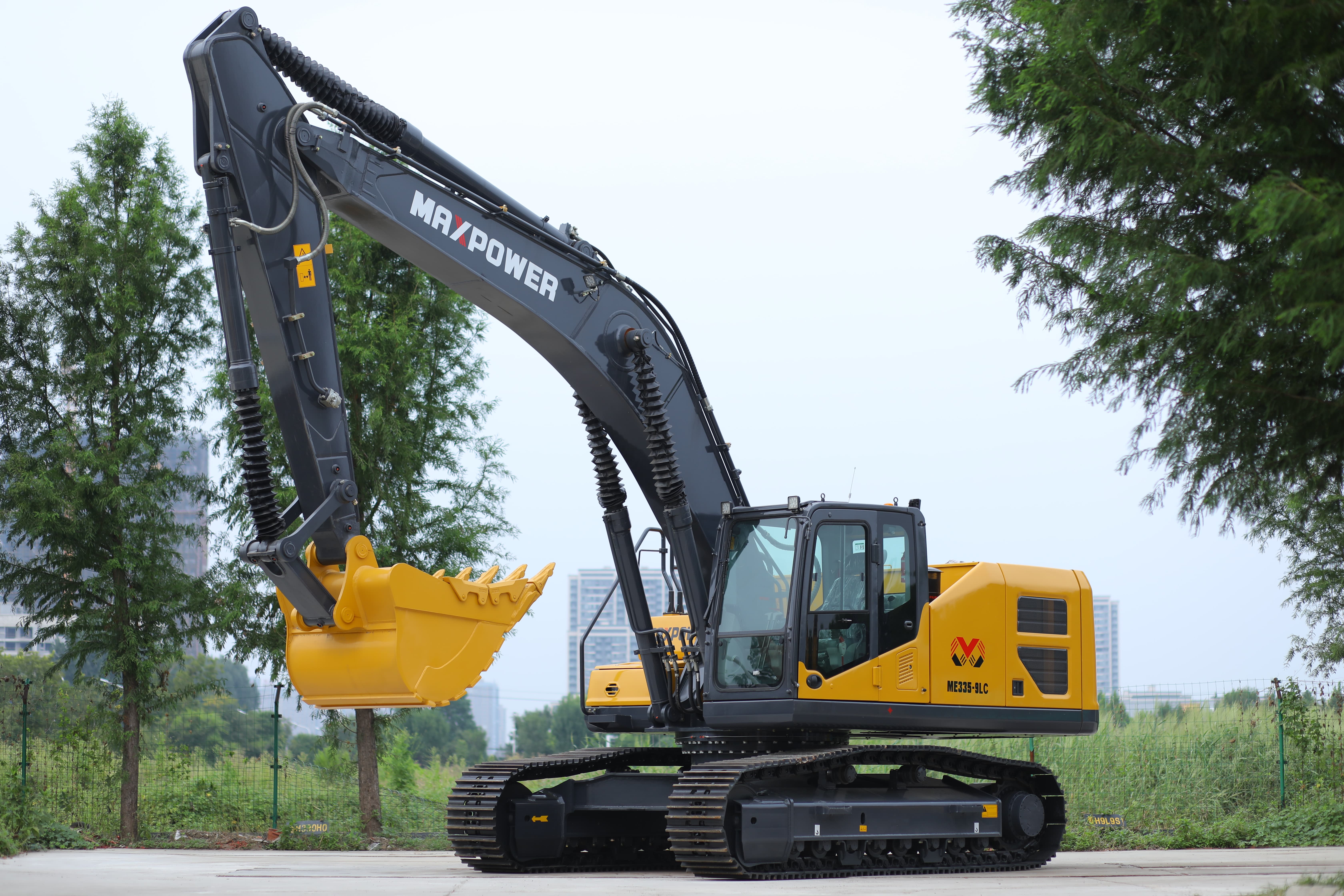
Both machines can be used for trenching, but the better choice depends on the scale of the work.
Backhoe loaders are particularly useful for utility trenching because they can excavate the trench and then use the front loader for material handling and backfilling.
This is valuable for projects involving:
Water pipelines
Sewer systems
Electrical cables
Communication infrastructure
Drainage systems
For large pipeline projects requiring continuous excavation over long distances, a dedicated excavator may provide higher excavation productivity.
For smaller utility projects where multiple tasks are performed in the same area, a backhoe loader can be more practical.
In some applications, yes.
A backhoe loader can replace a dedicated excavator when the project does not require continuous heavy excavation.
For example, a municipal contractor repairing water pipelines may need to dig a trench, move excavated soil, load materials, backfill the trench, and clean the site.
A backhoe loader can perform many of these tasks using the same machine.
However, replacing an excavator completely is not practical for every business.
Contractors involved in large infrastructure, mining, quarrying, deep excavation, or high-volume earthmoving may still require dedicated excavators.
The important consideration is equipment utilization.
If most of your work involves multi-purpose construction and maintenance, a backhoe loader can be highly efficient.
If excavation represents the majority of your operating hours, a dedicated excavator may provide better productivity.
Transportation requirements can also influence equipment selection.
Backhoe loaders are designed to provide mobility between different work areas and are often used for projects where contractors need to move equipment frequently.
This can be useful for municipal maintenance teams and contractors handling multiple small projects.
Excavators vary significantly in size. Compact excavators can be relatively easy to transport, while larger excavators may require dedicated transportation arrangements.
For contractors managing multiple short-duration projects, equipment mobility can have a direct impact on project efficiency.
This is one area where the backhoe loader has a clear advantage.
A backhoe loader essentially combines two major machine functions:
Rear excavator + front loader
The rear attachment handles excavation.
The front attachment handles loading and material movement.
This configuration allows one machine to perform a wide range of tasks.
A backhoe loader can therefore be used for:
Excavation
Trenching
Loading
Backfilling
Material handling
Drainage work
Road maintenance
Site cleanup
An excavator can also use different hydraulic attachments, which makes it highly versatile within excavation-focused applications. However, it does not provide the same integrated front-loader function as a backhoe loader.
Municipal contractors frequently deal with smaller and more varied projects.
One week may involve drainage maintenance. The next project may require water pipeline repairs or roadside excavation.
This type of work favors equipment versatility.
A backhoe loader can be deployed across different municipal applications without requiring a separate loading machine for every job.
Common applications include:
Water infrastructure
Sewer maintenance
Drainage systems
Roadside repairs
Utility trenching
Landscaping
Public facility maintenance
For this reason, backhoe loaders remain an important equipment option for municipal and public works contractors.
Road construction can require both backhoe loaders and excavators.
A dedicated excavator may be used for major excavation and earthmoving, while a backhoe loader can support drainage, utility work, roadside excavation, and material handling.
For smaller road projects, the versatility of a backhoe loader can reduce the number of machines required.
For large highway projects, contractors may need a combination of excavators, loaders, graders, compactors, and other specialized machinery.
The correct equipment strategy depends on project scale rather than choosing one machine for every application.
A backhoe loader has an integrated front loader bucket, giving it a natural advantage in material handling.
The front bucket can be used to move:
Soil
Gravel
Sand
Aggregate
Construction debris
Landscaping materials
An excavator can also handle materials using its bucket or specialized attachments, but it is primarily optimized for excavation.
If loading and material movement represent a significant portion of the daily workload, contractors should carefully consider the productivity benefits of a backhoe loader.
Before choosing between a backhoe loader and an excavator, buyers should evaluate the actual work performed by their business.
Ask these questions:
If most projects require deep excavation, a dedicated excavator may be more appropriate.
Frequent loading and material movement can favor a backhoe loader.
If equipment moves frequently between small jobsites, versatility and mobility become more important.
Backhoe loaders can be particularly useful when projects involve excavation, loading, trenching, and backfilling.
Large-scale earthmoving generally favors dedicated excavators and other heavy equipment.
Attachment compatibility should be evaluated according to actual applications rather than simply the number of available attachments.
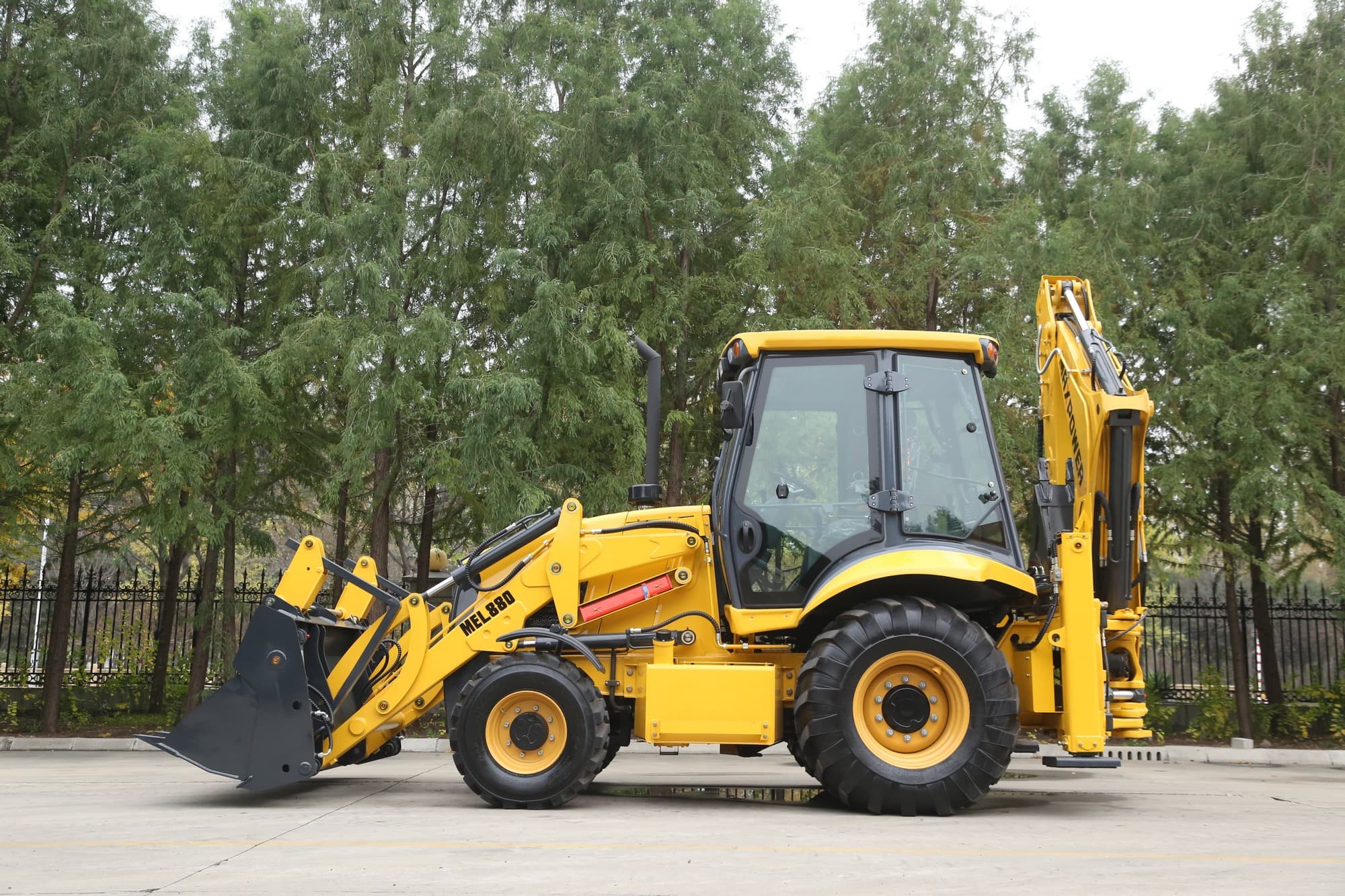
MAXPOWER Backhoe Loaders are designed for contractors who need versatile equipment capable of performing multiple construction tasks.
The combination of rear excavation and front loading functionality allows operators to transition between different operations without bringing separate machines to every jobsite.
MAXPOWER Backhoe Loaders can support applications such as:
General construction
Utility installation
Municipal maintenance
Drainage projects
Road maintenance
Agriculture
Site preparation
For contractors whose projects vary significantly from one job to another, this versatility can improve equipment utilization.
MAXPOWER also offers a broader range of construction equipment, including Excavators, Electric Excavators, Specialty Excavators, and Rotary Drilling Rigs.
The simplest way to make the decision is to identify your primary job.
Choose a backhoe loader if your business needs one machine to handle excavation, loading, trenching, material handling, and general maintenance.
Choose an excavator if your business primarily performs deep excavation, heavy earthmoving, large foundations, or continuous digging operations.
If your workload includes both types of projects, operating a mixed fleet may provide the greatest flexibility.
The goal should not be to find the machine with the highest specifications. The goal is to select equipment that matches the work your company actually performs.
The choice between a backhoe loader and an excavator depends on project requirements, rather than a simple question of which machine is better.
Backhoe loaders offer exceptional versatility by combining excavation and loading capabilities. They are particularly useful for municipal work, utility projects, road maintenance, small construction projects, agriculture, and general site preparation.
Excavators provide stronger specialization for deep excavation, heavy earthmoving, and large-scale construction.
MAXPOWER provides equipment solutions for both applications, allowing contractors to select machinery based on actual operating requirements.
For businesses that value flexibility and need one machine to perform multiple tasks, a MAXPOWER Backhoe Loader can be a practical addition to the equipment fleet.
Neither machine is universally better. A backhoe loader is generally better for multi-purpose work, while an excavator is more suitable for heavy and deep excavation.
A backhoe loader can perform many excavation tasks, but a dedicated excavator is generally more suitable for large-scale or deep excavation.
Both can perform trenching. Backhoe loaders are particularly useful when trenching is combined with loading, backfilling, and material handling.
A backhoe loader can be a strong choice because it combines excavation and loading functions in one machine.
It can perform some loading tasks, but a dedicated wheel loader is generally more suitable for high-volume material loading.
Yes. Its versatility makes it suitable for water, sewer, drainage, road maintenance, utility, and public works projects.
Consider digging requirements, loader capacity, hydraulic performance, operating environment, transportation needs, attachments, maintenance support, and expected annual operating hours.
MAXPOWER Backhoe Loaders are designed for versatile construction applications where contractors need both excavation and loading capability in one machine.







