Maxpower Construction Machinery Manufacturer




Agricultural operations often require much more than traditional farming machinery. Preparing land, maintaining farm roads, digging irrigation channels, clearing drainage systems, handling materials, and developing farm infrastructure can all require excavation and loading capabilities.
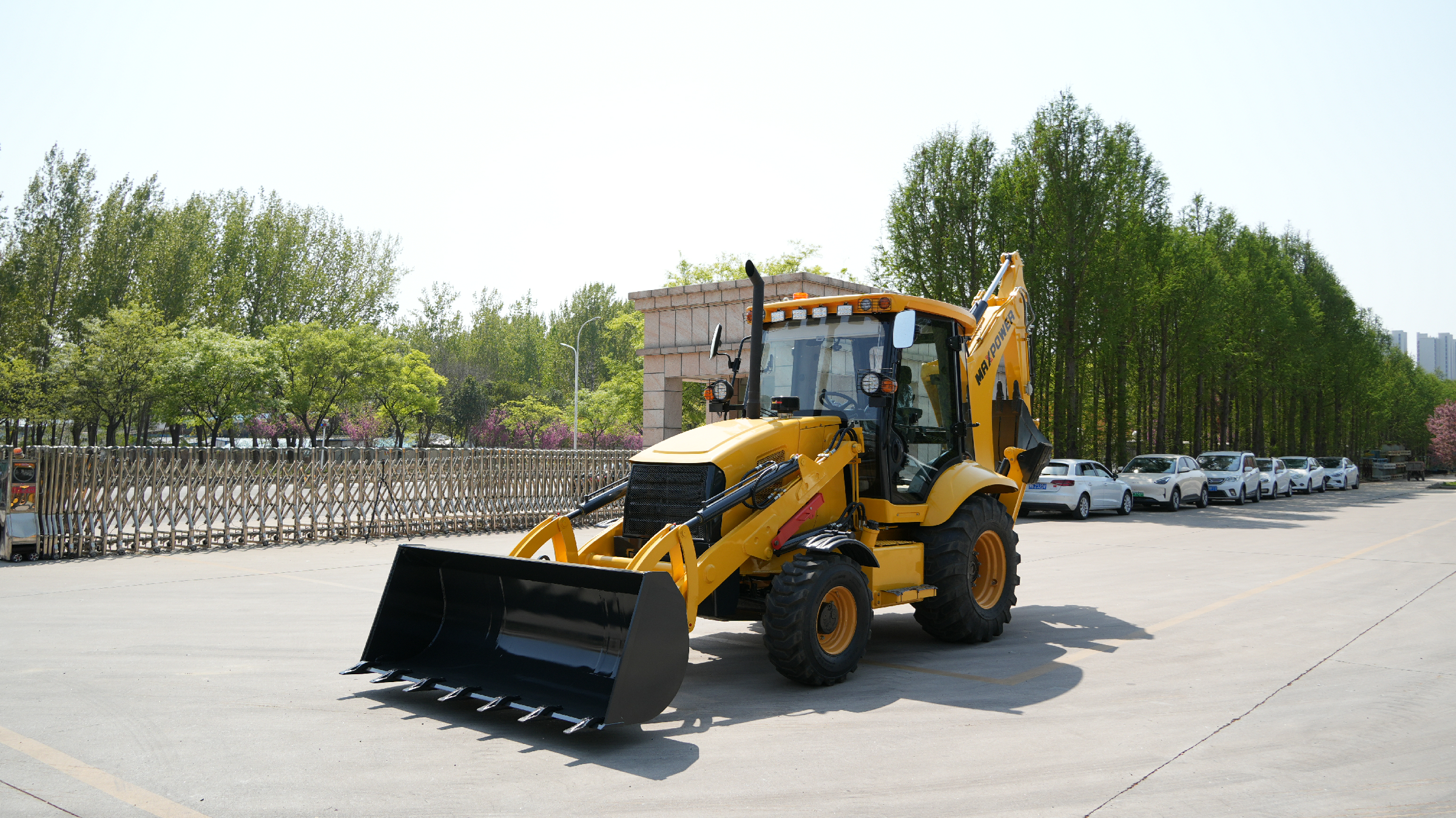
For many agricultural contractors and large farms, using a separate machine for every task is not practical. This is where Backhoe Loaders for Agriculture can provide a valuable advantage. A backhoe loader combines a rear excavating attachment with a front loader, allowing one machine to perform digging, loading, trenching, material handling, and site preparation.
For agricultural buyers, however, the important question is not simply whether a backhoe loader can be used on a farm. The real question is which agricultural jobs can it perform, and when does it make more sense than other construction equipment?
MAXPOWER Backhoe Loaders are designed for applications where versatility, mobility, and multi-purpose performance are important. For farms, agricultural contractors, land developers, and rural infrastructure projects, this type of equipment can support a wide range of demanding tasks.
A backhoe loader can perform many jobs that require excavation, loading, or material movement.
Typical agricultural applications include:
Irrigation trench excavation
Farm drainage construction
Land preparation
Farm road construction
Ditch maintenance
Soil and aggregate handling
Farm building preparation
Pond and water-channel work
Fence and utility installation
General farm maintenance
The main advantage is that the machine can switch between excavation and loading functions without requiring a second machine for every operation.
For example, a farm may need to excavate a drainage ditch and then move the excavated soil to another location. The rear backhoe can handle the excavation, while the front loader can help move the material.
This makes a backhoe loader particularly useful when agricultural work involves several different tasks within the same project.
Agricultural properties can cover large areas, but individual construction or maintenance jobs are often relatively small.
A farm may need to repair an irrigation line one day, improve a drainage ditch the next, and prepare a new access road later in the season.
Buying or renting specialized equipment for each task can create unnecessary complexity.
A backhoe loader offers a different approach.
Its multi-purpose design allows agricultural operators to use one machine for several types of work.
This can be especially useful for:
Large farms
Agricultural contractors
Livestock operations
Plant nurseries
Rural property developers
Irrigation contractors
Land management companies
Instead of treating the backhoe loader as a machine for one particular application, agricultural operators can integrate it into their broader property maintenance and development workflow.
Yes. Irrigation trenching is one of the most practical agricultural applications for a backhoe loader.
Modern farms may require extensive irrigation infrastructure, including water pipes, channels, pumps, and drainage systems.
Installing underground irrigation pipes usually requires excavation followed by pipe placement and backfilling.
A backhoe loader can support several stages of this process.
The rear attachment can excavate the trench, while the front loader can move soil, aggregate, and other materials around the work area.
After installation, the machine can also assist with backfilling.
This is particularly useful for farms where irrigation systems need to be expanded, repaired, or relocated.
However, buyers should always compare the required trench depth and width with the actual operating specifications of the selected machine.
Drainage is critical for agricultural productivity.
Excess water can damage crops, reduce soil quality, delay field operations, and contribute to erosion. Proper drainage systems help control water movement across agricultural land.
Backhoe loaders can be used for:
Drainage ditch excavation
Ditch cleaning
Culvert preparation
Water-channel construction
Drainage pipe installation
Erosion-control work
The machine's digging capability allows operators to reshape or maintain drainage channels, while the front loader can move soil and other materials.
For agricultural properties with recurring drainage requirements, having a versatile machine available can improve the speed of maintenance work.
Yes.
Farm roads and access routes need regular maintenance, particularly on large agricultural properties where heavy trucks, tractors, harvesters, and other machinery operate throughout the year.
A backhoe loader can support several aspects of farm road construction and maintenance.
It can help with:
Removing unsuitable soil
Excavating road foundations
Moving gravel
Preparing drainage
Repairing road shoulders
Filling damaged areas
Clearing debris
For a small farm access road, a backhoe loader may be capable of handling several supporting tasks without requiring a large construction fleet.
For major agricultural infrastructure projects, however, additional machinery such as graders, compactors, or dedicated excavators may be required.
Modern agricultural businesses often include significant infrastructure beyond crop production.
Examples include:
Barns
Storage facilities
Greenhouses
Irrigation systems
Water reservoirs
Fencing
Access roads
Drainage networks
Livestock facilities
Preparing these facilities may require excavation and material handling.
A backhoe loader can support foundation preparation, utility trenching, material movement, and site cleanup.
This makes it useful not only for daily farm maintenance but also for agricultural expansion projects.
Yes, although the exact application depends on the type of land preparation required.
A backhoe loader can help remove unwanted soil, clear small obstacles, excavate uneven areas, and move materials.
For example, when preparing an area for a farm building, storage facility, access road, or drainage system, excavation may be required before construction begins.
The backhoe loader can support these preliminary operations.
However, it should not be considered a universal replacement for specialized agricultural land-preparation equipment. Large-scale field grading or high-volume earthmoving may require dedicated machinery.
The value of a backhoe loader is its ability to handle multiple supporting tasks rather than specializing in one agricultural operation.
Farm construction often involves more excavation than expected.
Building a barn, livestock facility, warehouse, greenhouse, or equipment storage area may require:
Foundation excavation
Utility trenching
Drainage installation
Material handling
Site preparation
Backfilling
A backhoe loader can assist with many of these activities.
For smaller agricultural construction projects, this can reduce the need to bring several different machines onto the property.
The machine can excavate the required areas, move soil and aggregate, and assist with general site cleanup.
For larger buildings or deeper foundations, a dedicated excavator may be more appropriate.
Livestock operations frequently require infrastructure maintenance.
Examples include drainage channels around barns, water systems, manure-management infrastructure, access roads, fencing, and facility expansion.
A backhoe loader can support many of these projects.
For example, when installing a new water line to a livestock facility, the machine can excavate the trench, move soil, and assist with site restoration.
When improving drainage around a barn, it can excavate channels and move aggregate.
This versatility can be particularly valuable for large farms where infrastructure maintenance is performed continuously throughout the year.
Agricultural tractors and backhoe loaders may both be used on farms, but they are designed for different primary purposes.
A tractor is generally optimized for agricultural implements and field operations.
A backhoe loader is primarily designed for construction-oriented work such as excavation, trenching, loading, and material handling.
The choice therefore depends on the task.
A tractor may be the better option for:
Plowing
Planting
Tillage
Pulling agricultural implements
Field cultivation
A backhoe loader may be more appropriate for:
Excavation
Trenching
Drainage
Farm road work
Material loading
Construction preparation
For larger agricultural operations, these machines can complement each other rather than directly compete.
Agricultural buyers may also need to decide between a backhoe loader and a dedicated excavator.
An excavator is generally more suitable when excavation is the primary requirement.
For example, large ponds, deep drainage systems, major earthmoving projects, or extensive infrastructure construction may require an excavator.
A backhoe loader is more attractive when the work involves multiple functions.
It can excavate with the rear attachment and then switch to loading and material movement using the front bucket.
A backhoe loader may therefore be a strong choice for:
General farm maintenance
Irrigation projects
Drainage work
Farm road maintenance
Small construction projects
Utility installation
The decision should be based on actual annual workload rather than simply machine category.
Choosing equipment for agricultural use requires consideration of the working environment.
Start by identifying the jobs that require heavy equipment.
If most work involves trenching, drainage, loading, and site preparation, a backhoe loader may be suitable.
Irrigation and drainage projects can have very different excavation requirements.
Buyers should make sure the machine's digging capability matches the depths normally encountered.
If soil, gravel, manure-related materials, or aggregate must frequently be moved, front-loader capability becomes an important factor.
Farm roads, fields, slopes, muddy areas, and restricted spaces can all affect machine operation.
Agricultural operators may need to move equipment between fields or separate properties.
Transportation requirements should therefore be included in equipment planning.
A machine should not only solve today's problem.
If a farm is expanding its irrigation network, constructing new buildings, or developing additional land, a versatile backhoe loader may provide greater long-term utility.
Efficiency on a farm is not limited to crop production.
Infrastructure maintenance can also consume significant time and resources.
A machine that can perform several tasks may reduce the need for equipment changes.
For example, an agricultural contractor working on an irrigation project may need to excavate a trench, move soil, transport aggregate, and restore the area.
A backhoe loader can support multiple stages of this workflow.
This reduces equipment switching and can help crews maintain a more consistent working process.
For agricultural businesses with frequent construction and maintenance requirements, this versatility can make the machine useful throughout the year rather than only during one particular project.
The versatility of a backhoe loader can be further increased through appropriate attachments.
Depending on machine configuration and manufacturer support, different attachments can be used for specialized applications.
Potential applications include:
Excavation
Material handling
Ditch maintenance
Grading support
Site cleanup
Landscaping
Utility installation
However, attachments should be selected based on actual operating requirements.
Buying numerous attachments without a clear application can increase complexity without improving productivity.
Agricultural buyers should first identify their most frequent tasks and then select the attachment configuration accordingly.
MAXPOWER Backhoe Loaders provide a multi-purpose equipment solution for customers who need both excavation and loading capabilities.
For agricultural applications, this can include irrigation construction, drainage maintenance, farm road work, land preparation, building construction, and general property maintenance.
The machine can support different stages of a project without requiring contractors to bring separate excavation and loading equipment for every task.
MAXPOWER also offers a broader construction equipment portfolio, including Excavators, Electric Excavators, Specialty Excavators, Specialty Equipment, and Rotary Drilling Rigs.
This allows buyers to evaluate different equipment categories according to the scale and technical requirements of their agricultural projects.
A backhoe loader is not necessarily the best machine for every agricultural project.
A dedicated excavator may be more appropriate when the main requirement is heavy excavation.
Consider an excavator for applications such as:
Large farm ponds
Deep drainage systems
Major land excavation
Large-scale irrigation construction
Extensive earthmoving
Deep foundation work
If excavation is only one part of a broader project, however, a backhoe loader may provide greater versatility.
The right choice depends on how the machine will actually be used.
This depends on how frequently the machine will be used.
For a small farm with very limited excavation requirements, purchasing a dedicated construction machine may not always be necessary.
For larger agricultural businesses that regularly perform drainage, irrigation, road maintenance, construction, and material-handling work, the calculation can be different.
The more frequently the machine can be used across different tasks, the greater its practical value.
Farm operators should consider:
Annual operating hours
Number of construction projects
Irrigation requirements
Drainage maintenance
Farm road maintenance
Building expansion
Material handling requirements
This provides a better basis for equipment decisions than looking at one project in isolation.
Before contacting a manufacturer or supplier, buyers should prepare several key pieces of information.
What type of agricultural projects do you normally undertake?
This determines the machine's primary applications.
What is the typical digging depth?
This helps identify suitable excavation capability.
What materials need to be loaded or moved?
This affects the importance of front-loader performance.
Where will the machine operate?
Fields, farm roads, construction areas, and confined spaces create different operating conditions.
How many hours will the machine work each year?
Higher utilization places greater importance on durability, maintenance, and operator productivity.
Will the machine be used outside agriculture?
Agricultural contractors may also perform construction or infrastructure work. If so, a versatile backhoe loader can potentially serve several business segments.
Agricultural businesses increasingly require equipment capable of supporting both production and infrastructure development. Irrigation systems, drainage networks, farm roads, livestock facilities, storage buildings, and land improvement projects can all involve excavation and material handling.
A backhoe loader can provide an effective solution because it combines digging and loading functions in one machine.
For agricultural contractors and larger farms, this versatility can be particularly valuable. Instead of using separate equipment for every small construction or maintenance task, a backhoe loader can support multiple operations throughout the year.
MAXPOWER Backhoe Loaders are designed for customers looking for flexible construction equipment that can handle excavation, trenching, loading, material movement, and general site preparation.
The best equipment choice ultimately depends on the scale of the agricultural operation, the type of work performed, required digging capability, and expected machine utilization.







