Maxpower Construction Machinery Manufacturer




The excavator itself gets most of the attention when contractors compare construction equipment.
Engine power, operating weight, digging depth, hydraulic flow, and machine dimensions are usually the first specifications buyers look at. But once the excavator arrives on site, another component has a major influence on actual productivity: the bucket.
Choosing the wrong excavator bucket can make a capable machine work inefficiently.
A bucket that is too large may place unnecessary load on the excavator. A bucket that is too small may increase cycle times. A general-purpose bucket may work well in soil but perform poorly in abrasive rock.
For contractors, equipment distributors, and fleet managers, understanding how to choose the right excavator bucket can improve digging performance, reduce unnecessary wear, and make better use of the excavator already in the fleet.
An excavator bucket is the component that directly interacts with the material.
Every digging cycle depends on its ability to penetrate, fill, lift, and release the material efficiently.
The bucket therefore influences:
Digging efficiency
Cycle time
Payload
Hydraulic load
Wear rate
Fuel consumption
Overall productivity
A powerful excavator cannot compensate completely for an unsuitable bucket.
For example, a bucket designed for loose soil may not be appropriate for highly abrasive rock. The machine may have sufficient power, but the bucket can wear quickly or struggle to penetrate the material.
This is why bucket selection should be treated as part of excavator configuration rather than as an afterthought.
A general-purpose bucket is commonly used for everyday excavation.
It is suitable for applications such as:
Soil excavation
Sand
Loose gravel
General site preparation
Foundation work
Utility excavation
For contractors handling different types of ordinary excavation, a general-purpose bucket provides a useful balance between digging ability and capacity.
However, general-purpose does not mean suitable for everything.
If the job involves particularly dense, abrasive, or frozen material, a different bucket configuration may provide better performance.
Heavy-duty buckets are designed for more demanding working conditions.
They can be considered when the excavator regularly works with dense or abrasive materials where a standard bucket may experience excessive wear.
Typical applications can include:
Quarry work
Gravel excavation
Dense clay
Construction debris
Heavy-duty earthmoving
The exact bucket specification should correspond to the excavator's size and hydraulic capability.
Installing a heavy-duty bucket simply because it is stronger does not necessarily improve productivity.
The additional structural weight can affect the machine's working characteristics if the bucket is not properly matched to the excavator.
Rock excavation requires a different approach from ordinary soil digging.
Rock buckets generally feature stronger construction and wear protection to withstand abrasive material.
Depending on the application, contractors may also use hydraulic breakers before excavating the fragmented material with a suitable bucket.
This creates an important distinction.
If the material is too hard for direct bucket excavation, increasing bucket size is not necessarily the solution.
The correct combination may involve:
Breaking → Excavating → Loading
The attachment strategy should therefore be based on material conditions rather than simply selecting the largest available bucket.
Yes.
Bucket capacity directly influences how much material can be moved during each cycle.
A larger bucket can potentially increase production because more material is carried per cycle.
But the bucket must be compatible with the excavator.
An oversized bucket can increase:
Machine load
Hydraulic demand
Structural stress
Swing load
Cycle difficulty
It may also reduce productivity when working in dense material because the machine cannot efficiently fill the bucket.
A smaller bucket can penetrate difficult material more effectively in some applications but may require additional cycles.
The objective is therefore to find the right balance between bucket capacity and material resistance.
Bucket selection should begin with the excavator's specifications.
Important factors include:
Operating weight
Hydraulic capacity
Boom and arm configuration
Rated lifting capacity
Material density
Working conditions
A bucket suitable for a 20-ton excavator should not automatically be transferred to a smaller machine.
The excavator must have enough capacity to operate the bucket safely and efficiently.
For contractors managing several machines, maintaining a clear attachment strategy can also prevent operators from using unsuitable buckets simply because one happens to be available.
Yes.
The bucket influences the amount of work the excavator needs to perform during each cycle.
An oversized bucket filled with dense material can place a high load on the hydraulic system.
An undersized bucket may require many additional cycles to move the same amount of material.
Both situations can reduce overall efficiency.
This is why fuel efficiency should not be evaluated only at the engine level.
The complete excavation cycle matters.
A well-matched bucket can help the excavator move an appropriate amount of material without placing unnecessary load on the machine.
Bucket geometry affects how easily the bucket penetrates and fills.
A bucket designed for general soil excavation may have a different profile from one intended for rock or trenching.
The shape influences:
Penetration
Material retention
Filling characteristics
Dumping
Wear
For contractors performing precision trenching, a narrow bucket may be preferable because it allows the excavation width to remain controlled.
For bulk earthmoving, a larger-capacity configuration may be more productive.
The bucket should therefore match the geometry of the excavation as well as the material.
Trenching often requires more precision than general excavation.
The bucket should correspond closely to the required trench width.
Using an unnecessarily wide bucket can remove excess material and increase backfilling requirements.
A narrower bucket may allow the contractor to create a more controlled trench while reducing unnecessary excavation.
This is particularly important for:
Water pipelines
Sewer systems
Electrical cables
Telecommunications
Drainage
Utility contractors should consider the required trench dimensions before selecting the bucket rather than simply using the standard bucket already attached to the machine.
Digging is not the only application for an excavator.
Once the main excavation is complete, contractors may need to level, shape, or finish the working area.
A grading bucket can be useful for applications requiring a wider working profile and more controlled material movement.
Typical applications include:
Final grading
Slope finishing
Landscaping
Ditch shaping
Site cleanup
Using the correct attachment for finishing work can improve results and reduce the amount of manual correction required afterward.
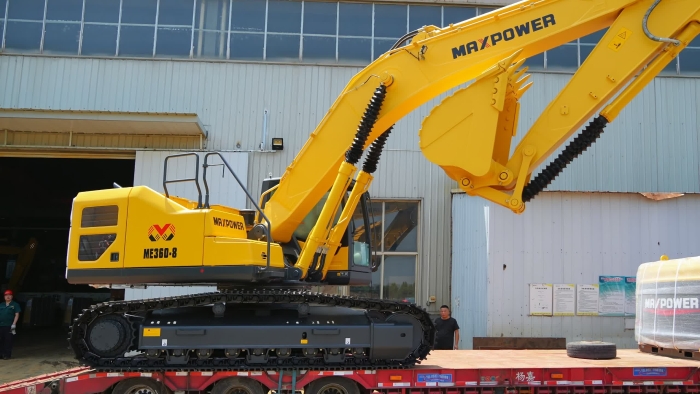
Material density should always be considered.
The same bucket capacity can represent very different payloads depending on the material.
A bucket filled with loose soil weighs much less than the same bucket filled with dense rock.
This affects the excavator's:
Hydraulic load
Stability
Lifting capability
Cycle performance
For this reason, contractors should not select buckets based solely on volume.
The expected material weight is equally important.
A bucket that appears suitable based on cubic capacity may become unsuitable when filled with significantly denser material.
Abrasive materials can rapidly wear cutting edges, teeth, side cutters, and other high-contact components.
For mining and quarry contractors, bucket wear can become a major operating cost.
A worn bucket can also reduce digging efficiency.
The cutting edge may no longer penetrate material effectively, forcing the operator to apply more force or make additional attempts.
Regular inspection can identify wear before it significantly affects productivity.
For high-wear applications, contractors should also consider bucket construction and wear protection when specifying the machine.
The choice depends on the application.
Bucket teeth can improve penetration into difficult materials and are particularly useful when digging requires concentrated force.
A cutting edge may be more appropriate for certain grading and material-handling applications where a smoother profile is preferred.
Different tooth configurations can also be selected according to material and application.
There is no single tooth configuration that is ideal for every excavator.
The correct choice should consider what the machine will actually be digging.
Yes, and this is one of the advantages of hydraulic excavators.
A contractor may use one excavator for several applications by changing attachments.
For example, the same machine might use:
General-purpose bucket for ordinary excavation.
Narrow bucket for utility trenching.
Heavy-duty bucket for abrasive material.
Grading bucket for finishing work.
This flexibility can increase equipment utilization and allow contractors to adapt the excavator to different projects.
However, each attachment should remain within the machine manufacturer's recommended operating limits.
There is no universal replacement interval.
Bucket life depends heavily on:
Material abrasiveness
Operating hours
Bucket design
Operator technique
Maintenance
Digging method
A bucket used in loose soil may last considerably longer than one used in abrasive rock.
Rather than replacing a bucket based only on operating hours, contractors should inspect its actual condition.
Pay particular attention to:
Cutting edges
Teeth
Side cutters
Wear plates
Cracks
Deformation
Replacing worn components before they cause secondary damage can help maintain digging performance.
Yes.
Operator behavior has a direct impact on attachment wear.
Forcing the bucket into material from an unsuitable angle can increase stress on teeth and cutting edges.
Dragging the bucket unnecessarily across hard surfaces can also accelerate wear.
Experienced operators understand how to position the machine and use the boom, arm, and bucket together.
Proper technique allows the bucket to penetrate material rather than simply forcing the attachment against resistance.
Operator training is therefore an important part of attachment management.
Bucket compatibility should be considered before purchasing the excavator.
Instead of asking only:
"What bucket comes with this excavator?"
Ask:
"What range of applications will this excavator need to handle?"
If the machine will perform utility trenching, heavy excavation, grading, and material handling, attachment flexibility should be part of the purchasing decision.
Hydraulic flow and attachment compatibility can determine how useful the excavator remains as project requirements change.
This is particularly important for contractors who want to maximize the utilization of one machine across multiple projects.
Hydraulic attachments require specific flow and pressure ranges.
If the excavator cannot provide the required hydraulic performance, the attachment may not operate correctly.
This applies especially to powered attachments such as hydraulic breakers and other specialized tools.
Before purchasing an attachment, contractors should confirm:
Required hydraulic flow
Operating pressure
Coupler compatibility
Attachment weight
Excavator capacity
Matching the attachment to the hydraulic system helps protect both the machine and the attachment.
MAXPOWER provides excavator solutions for different working environments and project requirements.
The company's Excavators range covers different machine classes, allowing contractors to select equipment according to operating weight, working requirements, and application.
For projects requiring specialized working configurations, Specialty Excavators provide another option.
Contractors considering reduced-emission equipment can also explore Electric Excavators.
The right excavator configuration should be considered together with the attachments the machine will use throughout its working life.
Before ordering an excavator or bucket, provide the manufacturer with information about the actual application.
Useful information includes:
Excavator model
Material type
Material density
Digging depth
Required trench width
Daily operating hours
Expected production volume
Attachment requirements
If the excavator will be used across several applications, explain all of them.
This allows the manufacturer to recommend a more appropriate bucket configuration rather than simply supplying a standard attachment.
Excavator performance does not depend on the machine alone.
The bucket determines how effectively the machine interacts with the material, and the wrong configuration can reduce the productivity of an otherwise capable excavator.
For contractors, the most important principle is simple:
Choose the bucket according to the material, application, and excavator capacity.
A general-purpose bucket may be ideal for everyday construction.
A narrow bucket may be better for utility trenching.
A heavy-duty bucket can be more appropriate for abrasive materials.
A grading bucket may provide better control during finishing work.
When these choices are matched correctly, contractors can get more useful work from the same excavator while controlling unnecessary wear and operating costs.
Choosing an excavator bucket should not be an afterthought.
Bucket capacity, shape, teeth, construction, and application all affect excavation performance.
The right bucket can improve cycle efficiency, reduce unnecessary machine load, and help contractors maintain productivity across different materials and jobsite conditions.
Before selecting an attachment, consider what the excavator will actually be used for.
Then match the bucket to the material, working conditions, and machine specifications.
For contractors and equipment buyers, this approach can be much more valuable than simply choosing the largest or strongest bucket available.
It depends on the application. General-purpose buckets work well for ordinary soil, while heavy-duty, rock, trenching, and grading buckets are designed for more specific conditions.
Only if the bucket's weight and capacity are within the excavator manufacturer's recommended operating limits. An oversized bucket can increase machine load and reduce efficiency.
A narrow trenching bucket is generally suitable when the excavation needs to follow a specific trench width, particularly for utility and pipeline projects.
Rock or heavy-duty buckets are generally more suitable for abrasive materials. Extremely hard rock may require a hydraulic breaker before excavation.
Yes. A bucket that is too large or too small can reduce overall efficiency. The best bucket balances payload, material resistance, and excavator capacity.
Replacement depends on material, operating hours, digging technique, and wear. Teeth should be inspected regularly and replaced when wear begins to affect penetration or bucket performance.
Yes. Using multiple buckets allows contractors to adapt the same excavator to different excavation, trenching, grading, and material-handling applications.







