Maxpower Construction Machinery Manufacturer




The construction industry includes many challenging projects that cannot always be completed efficiently with standard excavation equipment. From restricted urban sites to specialized infrastructure projects, contractors often require machines designed for specific working conditions.
This is where Specialty Excavators become valuable.
Unlike standard excavators designed for general digging tasks, specialty excavators are developed for applications that require unique configurations, improved flexibility, enhanced working capability, or specialized attachments.
For contractors, engineering companies, and equipment distributors, choosing the right specialty excavation equipment can directly influence productivity, project efficiency, and operating costs.
MAXPOWER provides construction machinery solutions for different applications, including Specialty Excavators, Excavators, Electric Excavators, and Backhoe Loaders.
Understanding when to use specialty excavators and how to select the right configuration helps contractors make better equipment investment decisions.
Specialty excavators are construction machines designed for specific applications where standard excavators may not provide the ideal solution.
While conventional excavators are widely used for digging, loading, and earthmoving, specialty excavators focus on solving more demanding jobsite challenges.
These machines may be designed for:
Limited-access construction sites
Complex terrain conditions
Special excavation requirements
Infrastructure projects
Environmental applications
Heavy-duty or precision operations
The exact configuration depends on the intended application.
A specialty excavator may include modifications related to:
Machine size
Working reach
Stability system
Attachment compatibility
Hydraulic performance
Operating environment
For contractors working in specialized fields, the right machine configuration can provide significant advantages compared with using standard equipment.
Many construction projects involve conditions where standard equipment has limitations.
For example, a contractor may face:
Narrow working spaces
Difficult terrain
Strict environmental requirements
Limited access areas
Specialized excavation tasks
High precision requirements
In these situations, selecting a general-purpose excavator may not always be the most efficient choice.
Specialty excavators are developed to improve performance in specific scenarios.
The main advantages include:
Different projects require different equipment capabilities.
A machine designed for a specific environment can operate more effectively than a general-purpose solution.
The right equipment configuration can reduce unnecessary repositioning, improve working cycles, and increase overall efficiency.
Specialized designs help contractors overcome limitations related to space, terrain, or application requirements.
Specialty excavators are used across many industries where standard excavation equipment may not be sufficient.
Urban construction sites often present unique challenges.
Contractors may need to work in:
Narrow streets
Residential areas
Commercial districts
Existing infrastructure zones
Space limitations can make equipment selection critical.
Specialty excavators can provide improved flexibility for projects where maneuverability and precision are important.
Common applications include:
Utility installation
Underground pipeline work
Road maintenance
Building renovation
Infrastructure upgrades
Large infrastructure projects often require equipment capable of handling demanding working conditions.
Specialty excavators can support:
Bridge construction
Transportation projects
Water infrastructure
Public works
Complex excavation operations
These projects may require machines with specific capabilities rather than standard equipment.
Some construction projects require careful operation to reduce disturbance.
Examples include:
Wetland areas
Ecological projects
Protected environments
Landscaping applications
Equipment selection becomes important because contractors need to balance productivity with environmental requirements.
Construction sites are not always flat or easily accessible.
Specialty excavators can be valuable for projects involving:
Slopes
Uneven ground
Challenging terrain
Remote working areas
The right machine design can improve stability and operational safety.
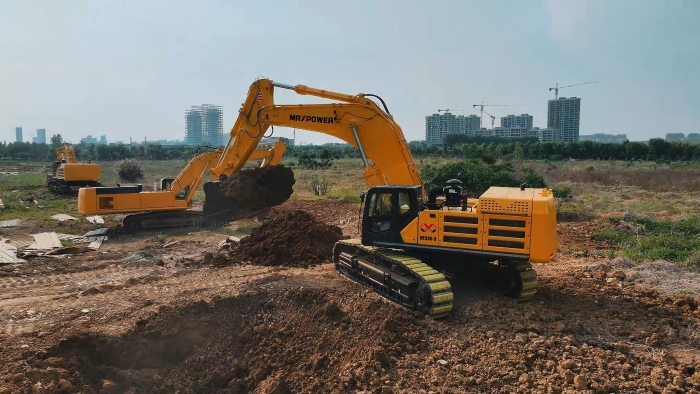
The biggest difference is application focus.
Standard excavators are designed to provide general excavation capability.
They are suitable for:
Digging
Loading
Earthmoving
General construction work
Specialty excavators are designed around specific challenges.
The differences may include:
Specialty models may use different designs to improve access, stability, or working capability.
Some applications require specialized tools to complete specific tasks.
Certain projects require extended reach, compact dimensions, or improved maneuverability.
A specialized machine can often perform certain tasks more effectively than a general-purpose excavator.
The right choice depends on the project requirements.
Selecting specialty excavation equipment requires careful evaluation.
Buying decisions should be based on actual operating conditions rather than simply comparing specifications.
The first step is identifying the main purpose of the machine.
Consider:
What type of projects will the excavator perform?
What materials will it handle?
What terrain conditions exist?
How frequently will the machine operate?
What attachments are required?
A clear understanding of application needs helps avoid purchasing equipment that does not match the workload.
Performance factors should include:
Digging capability
Hydraulic efficiency
Stability
Operating range
Attachment compatibility
Operator control
A specialty excavator should provide the required performance while maintaining reliability.
Some projects require frequent equipment movement.
Contractors should evaluate:
Machine dimensions
Transportation methods
Jobsite accessibility
Setup requirements
A machine that performs well but is difficult to transport may reduce overall project efficiency.
For specialized equipment, manufacturer support is particularly important.
Buyers should consider:
Technical assistance
Spare parts availability
Maintenance guidance
Customization capability
After-sales service
A reliable manufacturer helps ensure long-term equipment performance.
Rental companies are increasingly evaluating specialized equipment because customers have more diverse project requirements.
A specialty excavator can help rental businesses serve customers who need solutions for specific applications.
Potential rental applications include:
Utility contractors
Landscaping companies
Infrastructure projects
Municipal maintenance
Specialized construction tasks
However, rental companies should evaluate market demand before expanding their equipment fleet.
The best investment depends on local project trends and customer requirements.
Efficiency is not only about machine power.
A machine that matches the project requirements can improve productivity in several ways.
Using the right specialty excavator can reduce the need to bring multiple machines to the jobsite.
Better adaptability can improve working cycles and reduce delays.
Machines designed for specific applications can make operations easier and more precise.
Although specialized equipment may require careful selection, improved productivity can create better overall value.
Different industries require different equipment solutions.
Common users include:
For contractors handling complex projects, specialty excavators can improve flexibility.
Utility installation often requires precision excavation in restricted areas.
Large projects may require machines designed for specific construction conditions.
Specialized equipment can support detailed excavation and site preparation.
Distributors can expand their product portfolio by offering solutions for different customer needs.
MAXPOWER develops construction equipment solutions designed for modern project requirements.
The company understands that different industries require different machine capabilities.
MAXPOWER Specialty Excavators are designed for customers who need reliable equipment solutions for challenging applications.
They can support projects involving:
Specialized construction work
Infrastructure development
Utility applications
Complex excavation requirements
Different jobsite environments
In addition to Specialty Excavators, MAXPOWER provides a complete range of construction equipment, including:
This allows customers to select suitable machinery based on project conditions and operational requirements.
Choosing the right manufacturer is as important as selecting the right machine.
A professional supplier should provide:
The manufacturer should understand specialized equipment design and application requirements.
Production processes should ensure consistent machine performance.
Different markets may require different configurations.
Reliable support helps customers maintain equipment performance.
International buyers need suppliers familiar with global equipment requirements.
A long-term partnership with the right manufacturer can provide greater value than simply purchasing a machine.
Construction projects are becoming more complex.
As cities expand and infrastructure requirements increase, demand for specialized machinery will continue to grow.
Future specialty excavators are expected to focus on:
Higher efficiency
Better adaptability
Intelligent control systems
Improved energy management
Greater operator comfort
Manufacturers that continue improving technology will be better positioned to support changing customer needs.
Specialty excavators provide an effective solution for construction projects that require more than standard excavation capability.
By offering improved adaptability, specialized configurations, and better performance in challenging environments, these machines help contractors complete complex projects more efficiently.
Choosing the right specialty excavator requires a clear understanding of project requirements, operating conditions, transportation needs, and manufacturer support.
MAXPOWER provides construction equipment solutions designed for contractors, distributors, and engineering companies looking for reliable machinery for different applications.
With the right equipment configuration, specialty excavators can become a valuable part of a modern construction fleet.
Specialty excavators are used for projects requiring specific machine capabilities, including difficult terrain, restricted spaces, infrastructure work, and specialized excavation tasks.
Specialty excavators are designed for specific applications, while standard excavators are built for general excavation and earthmoving tasks.
Construction companies, utility contractors, infrastructure developers, landscaping companies, and equipment rental businesses may use specialty excavators.
For specific applications, specialty excavators can improve productivity because they are designed to match particular working conditions.
Consider project requirements, operating environment, machine performance, attachments, transportation needs, and manufacturer support.
Yes. Many specialty excavators can work with different attachments depending on application requirements.
MAXPOWER provides reliable construction equipment solutions designed to meet different project requirements and support global customers.







