Jining Maxpower Machinery Co., Ltd.




Urban construction is becoming more complicated than ever.
For contractors working in cities, the biggest challenge is often not whether a machine can dig. Modern excavators already have enough power for most construction tasks. The real challenge is how to complete excavation work efficiently while dealing with limited space, strict noise regulations, environmental requirements, and increasing operating costs.
Traditional diesel excavators have been the standard choice for decades. They provide reliable performance and are suitable for a wide range of applications. However, when projects move closer to residential areas, commercial buildings, hospitals, or environmentally sensitive locations, contractors often face new limitations.
Noise disturbance, exhaust emissions, and fuel consumption can directly affect project approval, operating costs, and construction efficiency.
This is why more contractors are beginning to consider the role of an Electric Excavator for Urban Construction.
MAXPOWER provides construction machinery solutions including Electric Excavators, Excavators, Backhoe Loaders, and Specialty Excavators, helping customers select equipment according to different working environments.
A construction site in a city is very different from a large open excavation project.
Contractors working in urban environments usually have to deal with several limitations at the same time.
Space is often restricted. Equipment may need to operate between existing buildings, roads, underground utilities, and pedestrian areas.
Working hours may also be limited because excessive noise can affect nearby residents and businesses.
At the same time, many cities are introducing stricter requirements related to emissions and environmental protection.
These changes mean that contractors are no longer choosing construction equipment based only on digging capability. They also need to consider how the machine fits into the surrounding environment.
For many urban projects, the question has changed from:
"Can this excavator complete the work?"
to:
"Can this excavator complete the work efficiently while meeting site requirements?"
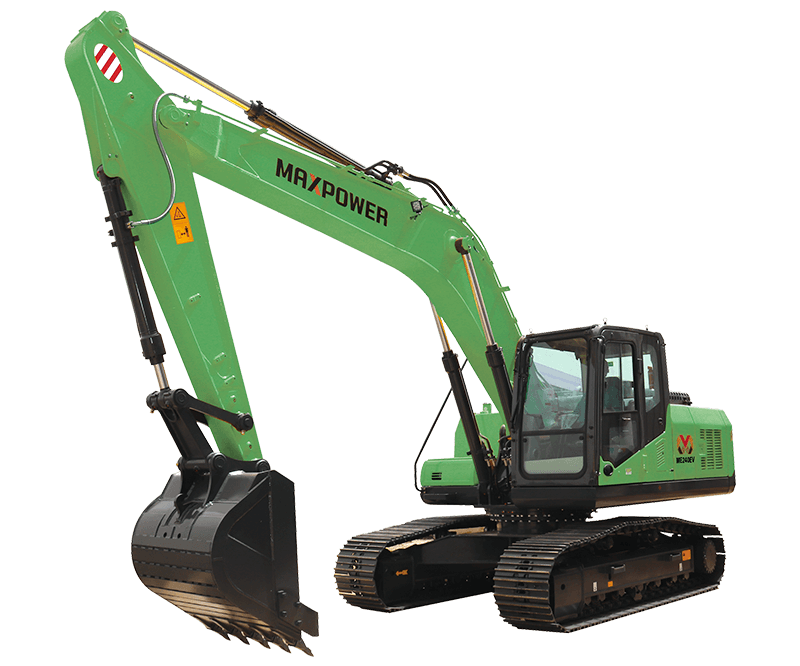
Diesel excavators remain widely used because of their reliability and power. They are still the right choice for many heavy-duty applications.
However, urban projects can create situations where diesel equipment becomes less convenient.
One common issue is noise.
Construction activities near residential communities, schools, hospitals, or commercial areas often require careful control of sound levels. Continuous engine operation can increase complaints and restrict working schedules.
Another challenge is exhaust emissions.
Indoor projects, underground construction, and environmentally sensitive areas may require cleaner equipment solutions.
Fuel management is another consideration. Diesel machines require regular refueling, and fuel costs can become a significant part of long-term operating expenses, especially for contractors with frequent daily operations.
These challenges do not mean diesel excavators are unsuitable. Instead, they highlight why some contractors are looking for alternative solutions.
An electric excavator changes the way contractors approach certain construction environments.
The biggest difference comes from the power system.
Instead of relying on a diesel engine, electric excavators use an electric drive system, which reduces direct emissions during operation and provides quieter performance.
For urban contractors, these characteristics can solve several practical problems.
When working near populated areas, lower operating noise can make it easier to complete projects with fewer disruptions.
When working in enclosed environments, reduced exhaust emissions create a more suitable working condition.
When projects have environmental requirements, electric construction equipment can help contractors meet specific project expectations.
The value of an electric excavator is not simply that it uses electricity. The real value is that it provides a more suitable solution for certain construction situations.
This is one of the biggest questions buyers ask before considering electric equipment.
Many contractors associate electric machines with limited performance. However, modern electric excavators are designed for practical construction applications rather than simple demonstration purposes.
For projects such as:
urban utility installation
landscaping
municipal maintenance
small and medium excavation work
indoor construction
infrastructure repair
an electric excavator can provide the required performance while offering additional advantages in operating conditions.
However, contractors should evaluate the machine according to their actual workload.
A large-scale mining project or continuous heavy excavation operation may still require traditional heavy-duty diesel equipment.
The right question is not whether electric excavators can replace every diesel excavator.
The right question is whether an electric excavator matches the working conditions of the project.
Electric excavators are particularly valuable when the surrounding environment creates additional challenges.
Urban utility projects are one example.
Installing water pipes, electrical systems, and communication infrastructure often requires excavation in populated areas. Contractors need equipment that can work efficiently without creating unnecessary disturbance.
Building renovation projects are another suitable application.
When construction takes place inside existing facilities or near occupied buildings, controlling emissions and noise becomes more important.
Landscaping and maintenance projects can also benefit from electric excavators because these jobs often take place near homes, parks, and public spaces.
In these situations, equipment performance is only one part of the decision. The ability to operate comfortably within the environment becomes equally important.
There is no single answer for every contractor.
The decision should start with understanding the project conditions.
If the machine will mainly work in remote areas where fuel supply is easy and long continuous operation is required, a diesel excavator may still be the better option.
If the machine will frequently operate in cities, residential areas, indoor environments, or projects with emission requirements, an electric excavator may provide stronger long-term value.
Buyers should consider:
Where will the machine operate?
How many hours will it work every day?
Is charging infrastructure available?
Are noise restrictions important?
Are emissions regulations becoming stricter?
Equipment selection should always follow the application.
Buying an electric excavator requires a different evaluation process compared with traditional equipment.
Battery and charging conditions are important factors.
Contractors need to understand:
Available power supply
Charging time
Expected working hours
Project schedule
Maintenance support is another important consideration.
Although electric systems can reduce some engine-related maintenance requirements, professional technical support is still essential.
For overseas buyers, choosing an experienced manufacturer is particularly important because after-sales communication, spare parts supply, and technical guidance directly affect equipment operation.
The construction industry is under increasing pressure to improve efficiency while reducing environmental impact.
This does not mean every contractor will immediately replace their existing fleet.
Instead, many companies are adding electric equipment where it creates the most value.
For example, a contractor may continue using large diesel excavators for major earthmoving while adding an electric excavator for urban projects where low noise and low emissions provide a competitive advantage.
This approach allows companies to improve flexibility without changing their entire equipment strategy.
MAXPOWER focuses on providing construction equipment solutions for global contractors, distributors, and engineering companies.
For customers evaluating electric construction equipment, the key consideration is not only the power source but also whether the machine can meet real project requirements.
MAXPOWER Electric Excavators are designed for applications where contractors need reliable excavation performance together with cleaner and quieter operation.
Combined with MAXPOWER’s broader equipment range, customers can select suitable machinery for different working environments, including:
For contractors facing increasingly complex urban construction conditions, choosing the right equipment can directly influence project efficiency and long-term operating costs.
Electric excavators are not designed to replace every traditional excavator application.
Their real value comes from solving specific construction challenges.
For urban projects where noise, emissions, and working environment are important considerations, an electric excavator can provide a practical alternative.
The best equipment choice depends on understanding the project, not simply choosing the newest technology.
MAXPOWER works with global customers to provide construction machinery solutions that match different applications, helping contractors select equipment that delivers reliable performance in real working conditions.
Yes. Electric excavators are especially suitable for urban projects where lower noise and reduced emissions are important.
Not in every application. Electric excavators are ideal for certain environments, while diesel excavators remain suitable for heavy-duty and remote operations.
Modern electric excavators can handle many construction tasks, including utilities, landscaping, maintenance, and urban excavation projects.
Operating costs depend on electricity prices, usage conditions, and charging infrastructure, but electric systems may reduce fuel and certain maintenance costs.
Buyers should evaluate project type, operating hours, charging availability, maintenance support, and manufacturer experience.







