Maxpower Construction Machinery Manufacturer




Mining projects place some of the toughest demands on construction equipment.
Unlike general construction sites, mining operations often require machines to work for long hours under extreme conditions, including hard rock, abrasive materials, uneven terrain, heavy loading cycles, and continuous production schedules.
Choosing the wrong excavator can directly affect project efficiency, operating costs, and equipment lifespan.
For mining contractors, quarry operators, and equipment distributors, selecting an excavator for mining projects requires looking beyond basic specifications such as engine power or bucket capacity.
The right machine needs to provide sufficient digging force, durability, hydraulic performance, stability, fuel efficiency, and long-term reliability.
This guide explains the key factors to consider when selecting an excavator for mining and quarry applications.
Excavators are among the most important machines in mining and quarry operations.
They are responsible for tasks such as:
Overburden removal
Material excavation
Ore loading
Rock handling
Site preparation
Quarry development
Infrastructure construction
In many mining environments, excavators operate as part of a larger production system involving dump trucks, loaders, drilling equipment, and processing facilities.
If the excavator cannot maintain the required production rate, the entire operation can be affected.
This is why mining companies usually prioritize reliability and productivity over simply choosing the lowest purchase cost.
A machine that performs consistently for thousands of operating hours often provides better long-term value than equipment that requires frequent downtime.
A mining excavator is designed for more demanding working conditions.
Compared with machines used for light construction applications, mining excavators typically require:
Higher digging force
Greater structural strength
Larger operating capacity
Improved durability
Heavy-duty components
Long working-hour capability
Mining environments expose equipment to more stress.
Hard rock, abrasive materials, dust, vibration, and continuous operation can accelerate wear on key components.
Therefore, equipment selection should focus on whether the excavator is designed for the expected workload.
A machine suitable for occasional excavation may not be the right choice for daily mining production.
There is no single excavator size that fits every mining project.
The correct size depends on:
Mine scale
Material type
Required production volume
Truck capacity
Working conditions
Transportation limitations
Large mining operations often require large excavators because they can move significant volumes of material per cycle.
However, medium-sized excavators may be more suitable for smaller quarries, aggregate operations, and mining support activities where flexibility is more important.
Choosing an oversized excavator can increase transportation and operating costs, while choosing an undersized machine can reduce production efficiency.
The best approach is to match excavator capacity with the complete mining workflow.
Digging force is one of the most important performance factors in mining applications.
Mining materials are often more difficult to excavate than normal construction soil.
The machine may need to work with:
Dense clay
Gravel
Limestone
Rock fragments
Compacted material
A powerful hydraulic system allows the excavator to penetrate difficult materials more effectively.
However, digging force should be evaluated together with machine stability and structural strength.
High digging force without sufficient machine stability may not deliver the expected productivity.
The entire excavator system needs to work together.
The hydraulic system is the core of excavator operation.
It controls:
Boom movement
Arm movement
Bucket operation
Attachment functions
Swing performance
Mining applications place continuous demands on hydraulic components.
A strong hydraulic system helps maintain consistent performance during long working cycles.
When comparing mining excavators, contractors should consider:
Hydraulic pump capacity
Operating pressure
Flow efficiency
Cooling performance
Component reliability
A machine that maintains hydraulic performance under heavy loads can significantly improve production consistency.
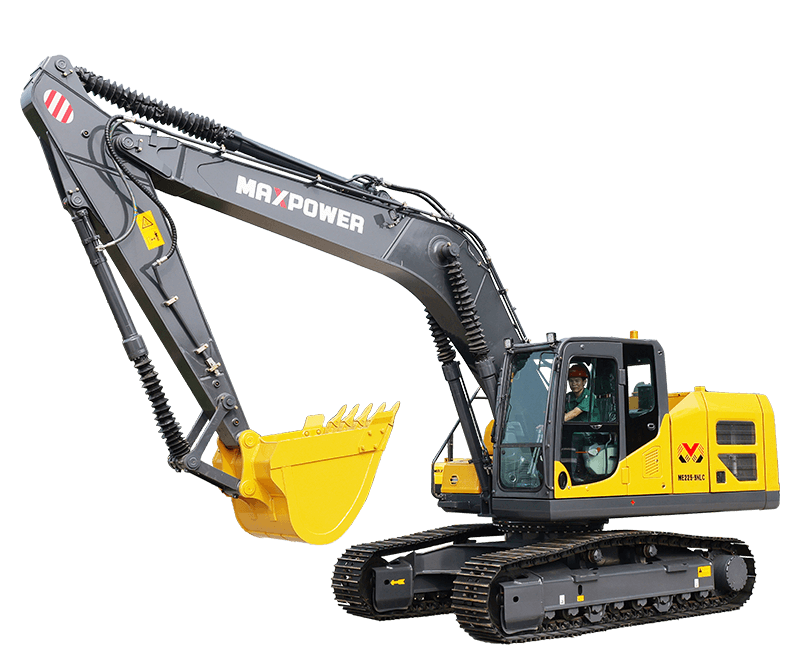
Durability is one of the most important factors for mining equipment.
Mining operations often run equipment for extended periods, sometimes across multiple shifts.
A machine failure can interrupt the entire production process.
Important durability considerations include:
The boom, arm, frame, and undercarriage must withstand repeated heavy loads.
Mining environments often involve high temperatures and large amounts of dust, making effective cooling essential.
Tracked excavators working on rough terrain require strong undercarriage components to handle continuous movement.
High-quality hydraulic components help maintain performance and reduce unexpected repairs.
For mining companies, durability directly affects equipment availability.
Bucket selection has a major impact on mining productivity.
A larger bucket can move more material per cycle, but only when the excavator has enough power and stability to operate effectively.
The ideal bucket depends on:
Material density
Rock conditions
Excavator size
Production targets
Loading requirements
For example, a bucket designed for loose material may not be suitable for heavy rock excavation.
Using the wrong bucket can increase wear and reduce efficiency.
Professional equipment selection should consider the entire digging system rather than treating the bucket as a separate component.
Electric excavators are gaining attention in certain mining and industrial applications.
Potential advantages include:
Lower direct emissions
Reduced noise
Suitable operation in enclosed environments
Different energy management options
However, mining companies must evaluate practical requirements before choosing electric equipment.
Important factors include:
Charging infrastructure
Daily operating hours
Site power availability
Battery performance
Working environment
For surface mining applications, diesel-powered excavators remain widely used because of their flexibility and established operating systems.
For specific mining environments, electric excavators may provide valuable advantages.
MAXPOWER provides electric excavator solutions for applications where reduced emissions and lower noise operation are important considerations.
Mining operations may require different attachments depending on the application.
Common attachments include:
Heavy-duty digging buckets
Rock buckets
Hydraulic breakers
Grapples
Specialized material handling attachments
A suitable attachment can improve productivity and reduce unnecessary stress on the excavator.
For example, using a standard bucket in extremely abrasive rock conditions may accelerate wear.
Mining contractors should evaluate attachment compatibility during the equipment selection process.
Mining equipment costs are not limited to the purchase price.
The real operating cost includes:
Fuel consumption
Maintenance
Spare parts
Labor
Downtime
Productivity loss
A machine that frequently stops working can create significant indirect costs.
For mining operations, equipment availability is often one of the most important performance indicators.
A reliable excavator allows contractors to maintain production schedules and reduce unexpected interruptions.
This is why many professional buyers evaluate manufacturers based on service support, spare parts availability, and technical capability.
Mining excavators require a proactive maintenance approach.
Regular maintenance should include:
Hydraulic system inspection
Filter replacement
Lubrication checks
Undercarriage inspection
Cooling system cleaning
Structural inspections
Mining environments contain large amounts of dust and abrasive particles, which can accelerate component wear.
Maintenance schedules may need to be adjusted according to actual operating conditions.
A machine working in harsh quarry conditions may require more frequent inspection than equipment operating in lighter applications.
It depends on the project.
Some contractors require machines that can perform multiple tasks, while others need equipment optimized for a specific production role.
A quarry operation may need an excavator focused on loading and material extraction.
A mining support contractor may require a more flexible machine capable of excavation, site preparation, and material handling.
Understanding the primary application is essential.
Trying to make one excavator perform every possible task can reduce efficiency.
When purchasing mining equipment, contractors should evaluate more than machine specifications.
Important factors include:
Does the supplier have experience producing heavy construction equipment?
Can the manufacturer provide assistance after delivery?
Are replacement parts available when needed?
Does the manufacturer offer equipment suitable for different applications?
Can the supplier support customers in different regions?
For international buyers, these factors can be as important as the excavator itself.
Mining and quarry operations require equipment that combines power, durability, and reliability.
MAXPOWER provides excavator solutions designed for different construction and heavy-duty applications, including large excavators, specialty excavators, and other construction machinery.
The company's excavator range includes different machine classes to meet various project requirements.
You can explore:
Excavators for general and heavy construction applications.
Specialty Excavators for projects requiring customized working capabilities.
Rotary Drilling Rigs for foundation and drilling-related applications.
For mining contractors and equipment distributors, selecting machinery based on actual working conditions helps create better long-term operating results.
Before purchasing an excavator for mining projects, buyers should consider:
What material will the machine excavate?
How many operating hours are expected each day?
What is the required production capacity?
What bucket size is appropriate?
What maintenance support is available?
How easily can spare parts be obtained?
Will the machine operate in extreme temperatures or dusty environments?
Providing this information allows manufacturers to recommend a more suitable configuration.
Productivity improvements usually come from several factors working together.
The excavator and hauling system should work efficiently together.
Experienced operators can improve cycle efficiency and reduce unnecessary machine stress.
Worn buckets and attachments can reduce productivity.
Tracking fuel consumption, cycle times, and maintenance data can identify potential problems early.
A productive mining excavator is not simply a powerful machine.
It is a machine that consistently performs within its ideal operating conditions.
Choosing an excavator for mining projects requires careful consideration of workload, material conditions, production requirements, and long-term operating costs.
Mining environments demand more than basic excavation capability.
The equipment must provide strong hydraulic performance, durability, stability, and reliability under continuous operation.
The right excavator can improve productivity, reduce downtime, and support safer and more efficient mining operations.
Before purchasing, contractors should evaluate the complete application rather than focusing only on horsepower or purchase price.
By selecting equipment that matches the actual mining conditions, companies can achieve better performance throughout the machine's service life.
The best excavator depends on mine size, material type, production requirements, and working conditions. Large excavators are often used for heavy mining operations, while medium machines may suit smaller quarries and support work.
Mining excavators are designed for heavier workloads and more demanding environments, requiring stronger structures, higher durability, and continuous operating capability.
Service life depends on maintenance, operating conditions, workload, and component quality. Proper maintenance can significantly extend equipment lifespan.
Electric excavators may be suitable for certain mining applications, especially where emissions and noise reduction are important, but charging and operating conditions must be considered.
Bucket size depends on excavator capacity, material density, production requirements, and loading conditions.







