Maxpower Construction Machinery Manufacturer




Construction projects are becoming more demanding as companies look for equipment that can deliver strong performance while meeting new requirements for sustainability, efficiency, and workplace safety.
An electric excavator for construction provides a modern solution by combining excavation capability with cleaner electric power technology. Compared with traditional diesel machines, electric excavators offer quieter operation, reduced emissions, and lower maintenance requirements, making them increasingly suitable for a wide range of construction applications.
From urban infrastructure projects to commercial development and indoor renovation, electric-powered excavation equipment is helping contractors improve productivity while adapting to changing industry expectations.
As construction companies continue upgrading their fleets, choosing the right electric construction machinery has become an important part of long-term business planning.
The construction industry has traditionally depended on diesel-powered machinery because of its reliability and power. However, several factors are encouraging companies to explore electric alternatives.
These factors include:
Stricter environmental requirements
Increasing fuel costs
Demand for quieter job sites
Need for lower operating expenses
Growth of sustainable construction practices
An electric excavator for construction helps address these challenges by replacing diesel combustion with battery-powered electric systems.
This allows companies to maintain excavation capability while reducing the environmental impact of their operations.
One of the most important advantages of an electric excavator is cleaner operation.
Traditional diesel equipment produces exhaust emissions during operation, which can affect air quality, especially in:
Urban construction areas
Indoor environments
Underground projects
Residential locations
Electric excavators eliminate direct exhaust emissions during operation, making them a better choice for projects where air quality is a priority.
For construction companies working toward sustainability targets, adopting electric construction equipment can support broader environmental goals.
Construction sites can be challenging environments due to noise, vibration, and emissions.
Electric excavators help improve working conditions by providing:
Lower noise levels
Reduced vibration
Cleaner air
More comfortable operation
These advantages are particularly valuable for projects located near communities, businesses, or public facilities.
Fuel consumption is one of the largest ongoing expenses for traditional construction equipment.
An electric excavator can reduce operating costs through:
Lower energy expenses
Reduced engine maintenance
Fewer mechanical components
Less frequent servicing
For contractors operating equipment regularly, these savings can improve overall project profitability.
An electric excavator for construction can be used across multiple project types.
Urban construction often requires equipment that can operate efficiently in limited spaces.
Electric excavators are suitable for:
Utility installation
Road maintenance
Pipeline projects
Cable construction
Small excavation work
Their compact design and quiet operation make them suitable for busy city environments.
Commercial construction sites often require flexible equipment for various tasks.
Electric excavators can support:
Site preparation
Material handling
Foundation work
Landscaping preparation
Their clean operation can be especially beneficial in projects with strict environmental requirements.
Indoor projects create special challenges for traditional diesel equipment.
Electric excavators are suitable for:
Factory renovation
Warehouse modification
Indoor demolition
Underground facilities
Without diesel exhaust, these machines provide a cleaner working environment for operators.
Residential construction projects often require equipment that can work without disturbing nearby residents.
Electric excavators provide advantages such as:
Lower noise
Compact operation
Reduced emissions
This makes them useful for:
Housing development
Property improvement
Residential landscaping
Selecting the right machine requires evaluating several important specifications.
Battery technology directly affects machine productivity.
Important factors include:
Battery capacity
Working duration
Charging speed
Battery lifespan
Construction companies should choose battery systems based on their expected daily workload.
Performance remains a critical consideration.
Important specifications include:
Maximum digging depth
Bucket capacity
Hydraulic power
Lifting performance
The machine should provide enough capability for the intended construction applications.
Construction environments can be demanding.
A reliable electric excavator should have:
Strong structural design
Durable components
Stable electrical systems
Reliable hydraulic performance
Equipment durability directly affects long-term ownership value.
Many construction companies handle multiple projects in different locations.
A practical electric excavator should offer:
Compact dimensions
Easy transportation
Flexible jobsite deployment
This allows contractors to use the machine across different project types.
Understanding the differences helps companies choose the right solution.
| Feature | Electric Excavator for Construction | Traditional Diesel Excavator |
|---|---|---|
| Power System | Battery electric | Diesel engine |
| Emissions | Reduced / zero direct emissions | Exhaust emissions |
| Noise | Lower | Higher |
| Maintenance | Simplified | More complex |
| Energy Cost | Electricity | Fuel |
| Best Use | Urban, indoor, sustainable projects | General construction |
Both technologies have their own applications, but electric models provide clear advantages for projects where environmental performance and efficiency are priorities.
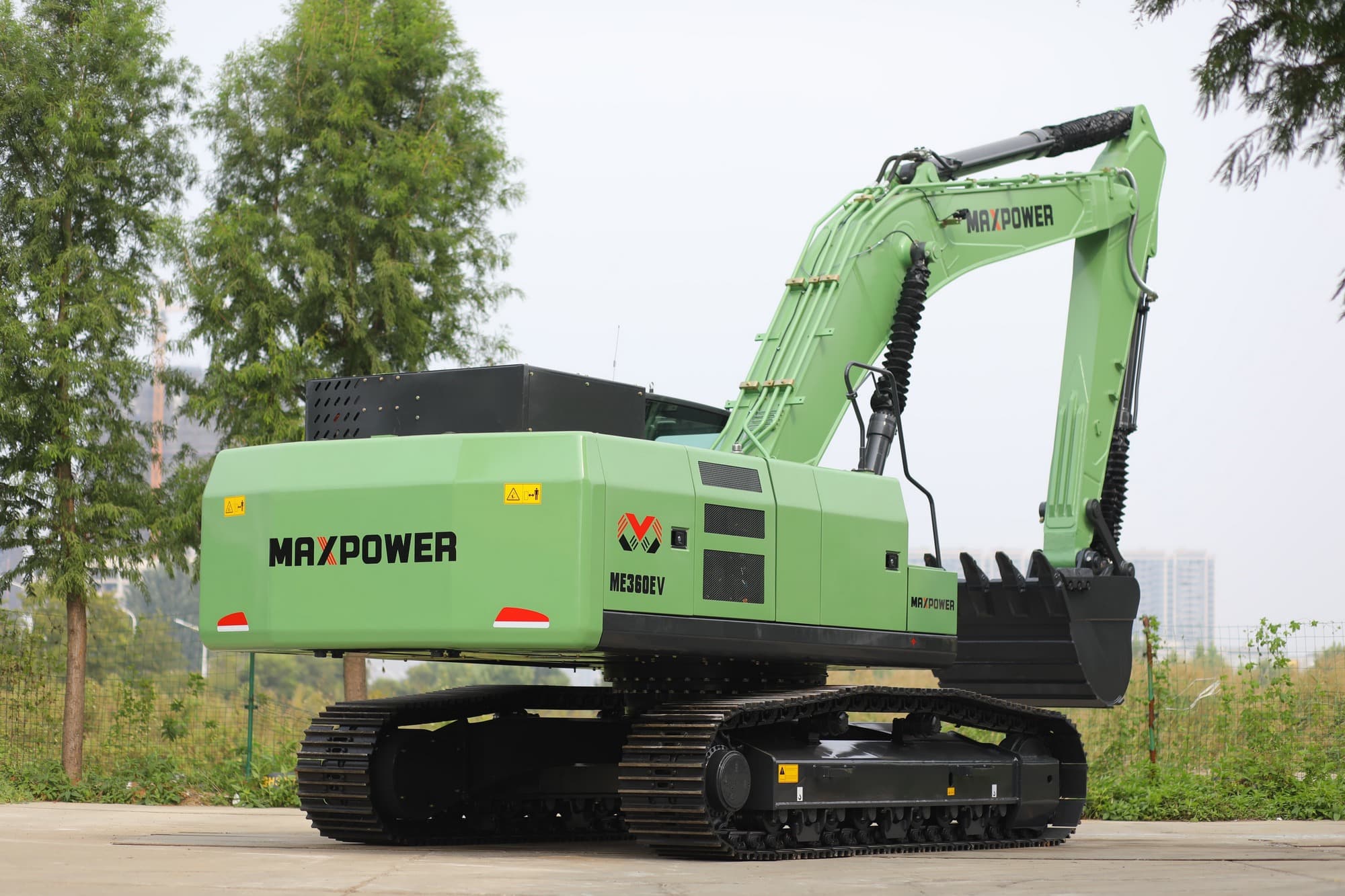
As demand for cleaner construction solutions increases, MaxPower develops electric excavator equipment designed for modern construction requirements.
MaxPower electric excavators focus on providing:
Reliable electric power systems
Efficient excavation performance
Flexible jobsite applications
Cleaner operating conditions
For contractors, construction companies, and equipment distributors, MaxPower electric excavators provide an option to upgrade equipment fleets while adapting to the future direction of construction machinery.
Whether used for urban development, commercial projects, or specialized applications, electric excavation technology helps businesses achieve better efficiency with a more sustainable approach.
The construction equipment industry is moving toward greater electrification and intelligence.
Future battery improvements will focus on:
Longer working time
Faster charging
Improved energy efficiency
Better durability
These improvements will allow electric excavators to handle more demanding projects.
Electric construction machinery is increasingly integrating digital systems.
Future features may include:
Remote equipment monitoring
Smart maintenance alerts
Operation data analysis
Intelligent control systems
These technologies can help contractors improve productivity and reduce downtime.
As sustainability becomes more important, demand for electric construction machinery will continue growing.
More businesses are expected to invest in:
Electric excavators
Battery-powered machinery
Low-emission construction equipment
Yes. Electric excavators are suitable for many construction applications, including urban projects, renovation work, landscaping, and utility installation.
For many compact and medium-duty applications, electric excavators can provide comparable performance while offering additional environmental benefits.
Key benefits include:
Lower emissions
Reduced noise
Lower maintenance costs
Better suitability for restricted environments
Electric excavators are suitable for:
Construction contractors
Rental companies
Landscaping businesses
Infrastructure service providers
Equipment distributors
An electric excavator for construction is becoming an increasingly practical choice for companies seeking cleaner, quieter, and more efficient machinery solutions.
With advantages such as reduced emissions, lower operating costs, and improved working conditions, electric excavators are helping transform modern construction practices.
As technology continues to improve, electric construction equipment will become an essential part of future job sites.
For businesses looking to upgrade their machinery fleet, MaxPower electric excavators provide a reliable solution for achieving higher efficiency while supporting sustainable construction development.







