Jining Maxpower Machinery Co., Ltd.




Choosing between an electric excavator and a diesel excavator is becoming a more important decision for contractors, equipment distributors, and fleet managers.
Diesel excavators remain the standard choice for many construction projects because they offer established performance, flexible refueling, and a wide range of machine sizes. At the same time, electric excavators are gaining attention as construction companies look for equipment that produces no tailpipe emissions during operation and can work in locations where noise and exhaust are major concerns.
The right choice depends less on which technology is newer and more on where the excavator will work, how long it needs to operate each day, what type of work it will perform, and what infrastructure is available at the jobsite.
For some fleets, an electric excavator can be an excellent solution for urban, indoor, utility, and environmentally sensitive projects. For others, a conventional diesel excavator may still provide the flexibility required for long hours of heavy excavation.
Understanding the differences can help buyers select equipment that fits the actual working conditions rather than choosing solely based on the power source.
The fundamental difference is the machine's power source.
A diesel excavator uses a diesel engine to generate mechanical power. That power is transferred through the hydraulic system to operate the boom, arm, bucket, swing system, and other functions.
An electric excavator uses an electric motor and battery system instead of a conventional diesel engine. Electrical energy is converted into mechanical power to operate the machine's working systems.
Both types can perform core excavation tasks, including digging, trenching, loading, grading, and material handling.
The more important differences appear in operating conditions.
Diesel excavators are generally easier to deploy where fuel is readily available and machines must operate for long periods without access to electrical infrastructure.
Electric excavators can be particularly attractive where low noise, reduced local emissions, and access to charging infrastructure are important.
Therefore, the choice should begin with the jobsite rather than the machine category.
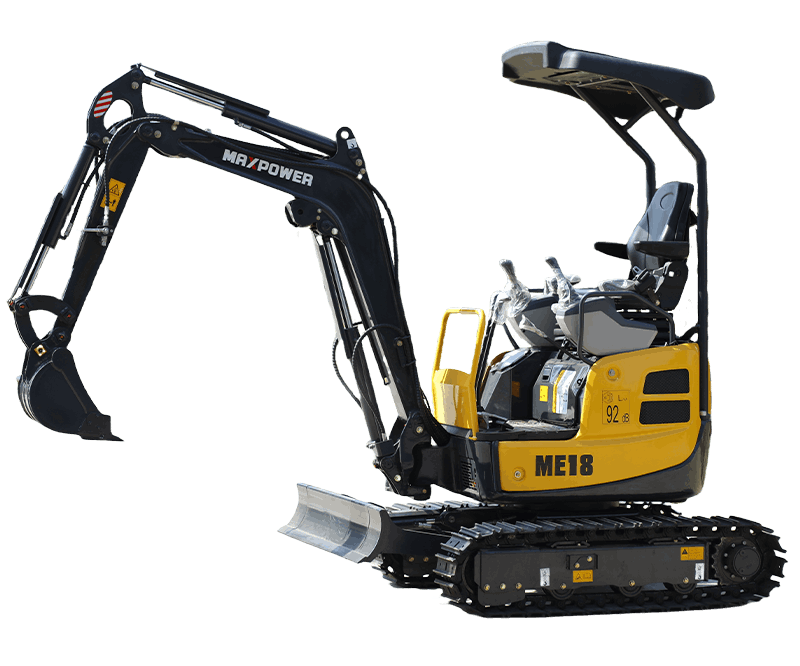
Diesel excavators have been used across the construction industry for decades and remain an important choice for demanding applications.
Their major advantage is operational flexibility.
A contractor can transport a diesel excavator to a remote site and refuel it without requiring dedicated charging infrastructure. This makes diesel machines practical for road construction, earthmoving, mining, quarrying, and other applications where machines may work continuously for long periods.
Diesel excavators are also available across a very wide range of operating weights and working capacities.
For example, a smaller machine can be used where access and maneuverability are important, while larger excavators can handle demanding excavation and material-handling work.
This makes a conventional excavator suitable for contractors who need one machine to work across different locations and project types.
For heavy-duty applications, machine power, hydraulic performance, bucket capacity, digging force, and durability can be more important than the energy source itself.
An electric excavator replaces the conventional diesel power unit with an electric drive system.
The battery stores electrical energy, which is supplied to the electric motor and related systems.
The basic working principle remains familiar to excavator operators.
The operator controls the machine through the hydraulic and electronic control systems, while the boom, arm, bucket, swing, and travel systems perform the required movements.
The major difference is how the machine receives and uses energy.
Because there is no diesel combustion engine producing exhaust at the point of operation, electric excavators can be useful for projects where local emissions are a concern.
They can also offer a quieter working environment, which is particularly valuable when excavation takes place close to residential buildings, commercial areas, hospitals, schools, or other noise-sensitive locations.
This is one of the first questions many equipment buyers ask.
The answer depends on the machine's size and configuration.
Electric excavators are not limited to very small machines. The current MAXPOWER electric excavator range includes machines covering different operating classes.
For example, the ME18EV has an operating weight of 1.86 tons and a 0.05 m³ bucket capacity, making it suitable for applications where compact equipment is required.
At the other end of the range, the ME240EV has a 24-ton operating weight, a 1.2 m³ bucket capacity, a 125 kW electric motor, and a 360 battery capacity specification. The ME360EV reaches 35 tons of operating weight with a 1.6 m³ bucket and 200 kW rated power. These specifications show that electric excavation technology can be applied beyond small urban machines.
However, buyers should not assume that every electric excavator is suitable for every type of heavy work.
Machine size, battery capacity, duty cycle, charging arrangements, hydraulic requirements, and attachment use all need to be considered.
The correct comparison is therefore not simply "electric versus diesel."
It is:
Which power system and machine configuration best fit the project?
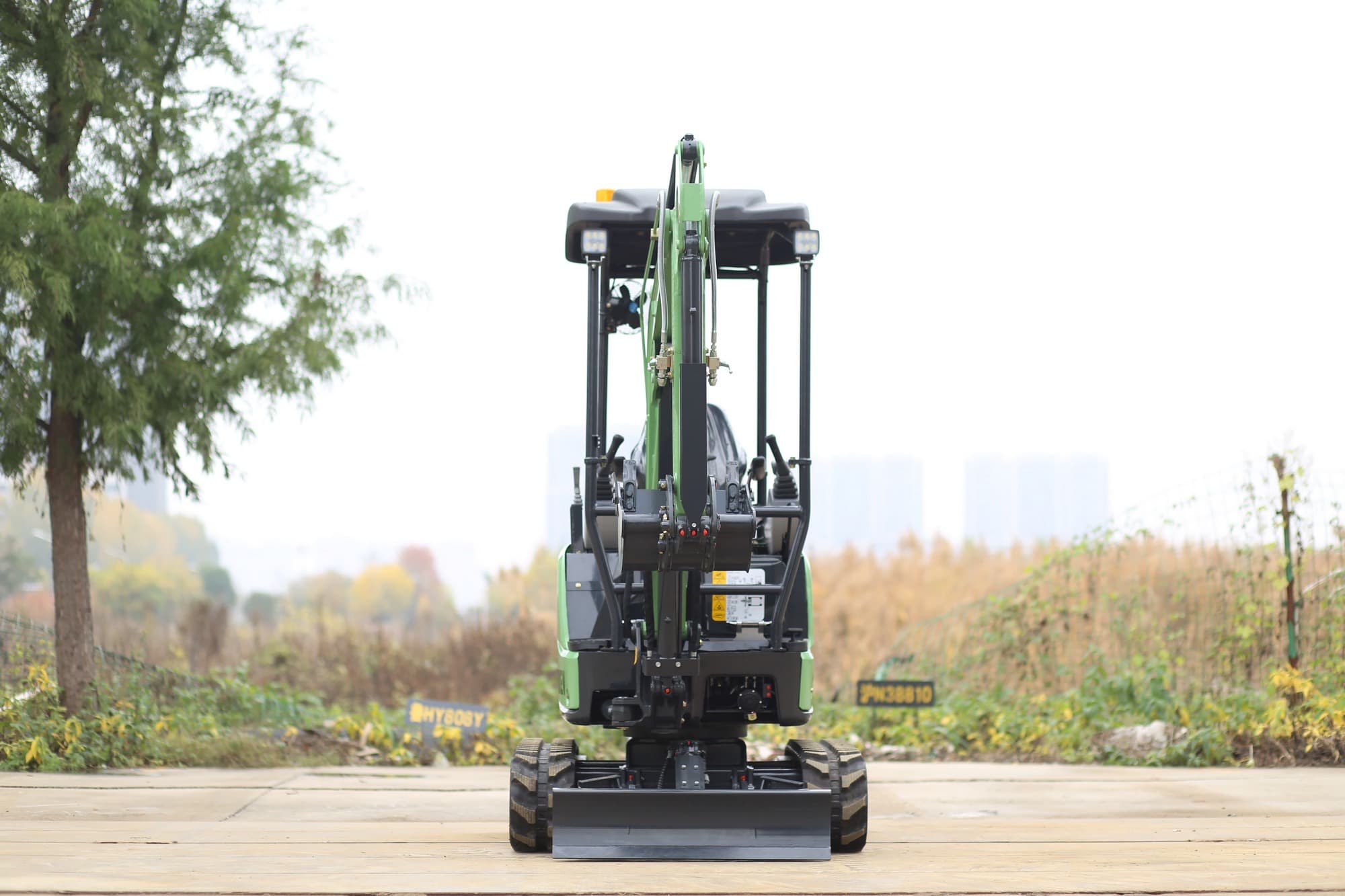
Electric excavators can make particular sense when the construction environment creates limitations for conventional diesel equipment.
Urban construction is one example.
Excavation may take place alongside roads, residential buildings, commercial properties, or public facilities. Noise and exhaust can become practical concerns rather than minor inconveniences.
Indoor construction is another potential application.
Factories, warehouses, underground facilities, and other enclosed environments can benefit from equipment that does not produce diesel exhaust at the point of operation.
Utility projects can also be suitable, especially when excavation is required in populated areas and work schedules are predictable.
Other potential applications include landscaping, municipal maintenance, residential construction, and projects with specific environmental requirements.
The advantage is not that an electric excavator can automatically outperform a diesel excavator.
The advantage is that its operating characteristics can fit certain jobs better.
Electric equipment does not eliminate the need for diesel excavators.
For remote construction sites, long-duration excavation, heavy earthmoving, quarry operations, and projects without reliable charging infrastructure, diesel machines can remain the more practical solution.
Fuel can generally be transported and stored at equipment yards or jobsites, allowing contractors to continue operating without waiting for battery charging.
Diesel excavators can also be advantageous for fleets that regularly move between different types of projects.
A contractor working one week on a remote road project and another week on a large earthmoving site may value the flexibility of conventional equipment.
For these applications, the key considerations are often operating weight, engine power, bucket capacity, digging force, hydraulic performance, and attachment compatibility.
MAXPOWER's conventional excavator range covers mini, small, medium, and large excavator categories, giving buyers options for different operating requirements.
Operating cost is an important consideration when comparing electric and diesel excavators, but there is no universal answer.
Energy costs depend on local electricity and diesel prices, operating hours, machine efficiency, workload, and charging arrangements.
Electric excavators can reduce dependence on diesel fuel, but buyers also need to consider the cost and availability of charging infrastructure.
The equipment's utilization pattern is particularly important.
A machine that works predictable shifts at a facility with suitable charging access may be a strong candidate for electrification.
A machine that operates continuously at remote locations may be more difficult to integrate into an electric fleet.
For fleet managers, the best approach is to estimate the actual energy requirement based on expected working hours and jobsite conditions rather than relying on a general claim about operating costs.
Both machine types require regular maintenance.
A diesel excavator has an engine and associated systems that require routine servicing, including engine oil, filters, fuel-related components, cooling systems, and other engine maintenance items.
An electric excavator eliminates many engine-specific maintenance requirements because it does not use a conventional diesel combustion engine.
However, that does not mean an electric excavator is maintenance-free.
Electric machines still require inspection and maintenance of hydraulic systems, undercarriage components, attachments, cooling systems, electrical components, control systems, and battery-related equipment.
Hydraulic oil, filters, hoses, cylinders, and working equipment remain important regardless of the power source.
For buyers, the better question is not which machine requires no maintenance.
It is which machine's maintenance requirements fit the company's service capabilities and operating environment.
Battery capacity becomes a major consideration when purchasing an electric excavator.
A larger battery can provide more stored energy, but the actual operating duration depends on many factors.
These include:
Excavation intensity
Hydraulic load
Attachment type
Working cycle
Ambient conditions
Operator behavior
Idle time
Charging strategy
Two machines with similar battery specifications may therefore have different practical working patterns.
For example, continuous heavy digging places different demands on an excavator than intermittent landscaping or utility work.
Buyers should provide manufacturers with realistic information about daily operating hours and working conditions before selecting a battery configuration.
Charging is one of the biggest differences between electric and diesel equipment.
A diesel excavator needs access to suitable fuel.
An electric excavator needs access to an appropriate charging solution.
This makes jobsite planning especially important.
Before purchasing an electric excavator, contractors should consider where the machine will be charged, how frequently it will need charging, whether electrical capacity is sufficient, and whether the machine's operating schedule allows charging time.
For fixed or semi-fixed projects, this can be relatively straightforward.
For remote projects with changing locations, charging may require more planning.
A fleet manager should therefore evaluate the complete operating system rather than looking only at the excavator itself.
Electric excavators can be particularly attractive for urban construction.
Urban jobsites often involve limited space, nearby buildings, traffic, pedestrians, and surrounding businesses or residents.
Reducing local exhaust emissions and operating noise can make equipment more suitable for these environments.
For example, an electric excavator can be considered for utility trenching, municipal infrastructure, landscaping, residential construction, and indoor work where conventional diesel equipment may create additional operational challenges.
This does not mean diesel excavators cannot work in cities.
Instead, electric equipment provides contractors with another option when environmental and noise considerations are important.
For heavy-duty excavation, the machine's actual specifications matter more than the label "electric" or "diesel."
Buyers should examine operating weight, bucket capacity, power, hydraulic performance, digging force, cooling capability, duty cycle, and attachment requirements.
Large conventional excavators remain well suited to demanding earthmoving and quarry applications.
For example, MAXPOWER's ME390 has a 37.5-ton operating weight, a 1.8 m³ bucket capacity, and 212 kW rated power. Its product specifications also emphasize a large-displacement main pump, large-diameter main valve, and reinforced hydraulic cylinders for heavy-load applications.
For even larger operations, the ME800 has a 76.5-ton operating weight and a 5 m³ bucket capacity, with engine options including Isuzu and Cummins power units.
These types of machines are designed for a very different duty cycle from a compact electric excavator.
That is why application matching remains more important than choosing a technology based on general industry trends.
A practical comparison should start with the project.
Consider the following questions.
Where will the machine operate?
How many hours will it work each day?
Will it operate continuously or intermittently?
Is reliable charging available?
Are there noise restrictions?
Are local emissions a concern?
What type of material will be excavated?
Which attachments will be used?
What operating weight and bucket capacity are required?
How will the machine be transported?
What maintenance and service support is available?
Once these questions are answered, the appropriate machine category becomes much easier to identify.
For many contractors, a mixed fleet may be more practical than choosing only one technology.
Electric excavators can be assigned to projects where their characteristics provide a clear advantage.
Diesel excavators can continue handling remote, long-duration, and heavy-duty projects where charging infrastructure is limited.
This approach allows companies to introduce electric equipment without immediately replacing their entire fleet.
It can also help fleet managers match each machine to the working environment.
For example, a contractor may use a compact electric excavator for urban utility projects while deploying a larger diesel excavator for quarry or major earthmoving work.
The result is a more flexible equipment strategy.
Before requesting a quotation, buyers should prepare detailed information about the intended application.
Machine size is the first consideration.
A compact project may require a small excavator with easy transport and access, while large excavation work may require a 20-ton, 30-ton, or larger machine.
The expected working hours are equally important.
Buyers should also identify the typical attachments, site conditions, charging environment, transportation requirements, and local service expectations.
For distributors, market conditions should also be considered.
An electric excavator intended for resale may need a configuration that fits the applications and infrastructure commonly found in the target market.
Providing this information to the manufacturer allows the machine to be evaluated based on its actual use rather than a generic specification sheet.
MAXPOWER's product portfolio covers both conventional and electric excavation equipment, allowing buyers to evaluate different machine solutions according to their applications.
The conventional excavator range includes mini, small, medium, and large excavators.
The electric excavator range includes models such as the ME18EV, ME60EV, ME240EV, and ME360EV, covering substantially different operating classes.
This broader product structure is useful for contractors and distributors that do not want to limit their equipment strategy to a single machine type.
For projects requiring specialized configurations, MAXPOWER also provides a dedicated Specialty Excavators product category.
The objective is not to promote electric excavators as a universal replacement for diesel machines.
Instead, the right machine should be selected according to the jobsite, workload, operating environment, and long-term fleet requirements.
There is no single excavator that is ideal for every project.
An electric excavator may be the better choice when low local emissions, reduced noise, predictable work cycles, and charging access are important.
A diesel excavator may be more practical when the machine needs to work remotely, operate for long uninterrupted periods, or handle demanding heavy-duty excavation without access to charging infrastructure.
For many companies, the best strategy may be a combination of both.
The important point is to match the machine to the work.
Instead of asking whether electric excavators are better than diesel excavators in general, buyers should ask which machine can deliver the required productivity, availability, operating flexibility, and serviceability for their specific project.
That approach leads to a more practical equipment investment and helps contractors build a fleet that can adapt to different construction environments.
The choice between an electric excavator and a diesel excavator depends on much more than the power source.
Electric excavators can provide valuable advantages for urban construction, indoor projects, utility work, landscaping, and other applications where local emissions and noise are important considerations.
Diesel excavators continue to offer strong advantages for remote sites, long working cycles, heavy excavation, quarrying, and projects where fuel is easier to access than electrical charging.
For equipment buyers, the most important factors are machine size, working conditions, duty cycle, hydraulic requirements, attachments, energy infrastructure, maintenance support, and expected utilization.
MAXPOWER offers both conventional excavators and electric excavators, giving contractors and distributors the flexibility to select equipment according to their actual project requirements.
The best excavator is not necessarily the newest technology. It is the machine that fits the job, performs consistently, and makes sense for the way the equipment will be used.
Neither type is universally better. Electric excavators can be advantageous for urban, indoor, and low-emission applications, while diesel excavators remain highly practical for remote, heavy-duty, and long-duration projects.
In some applications, yes. However, replacement depends on battery capacity, charging infrastructure, working hours, machine size, and the project's operating conditions.
Some electric excavators are available in larger operating classes and can handle substantial construction work. Buyers should evaluate the specific machine's power, operating weight, hydraulic performance, battery capacity, and duty cycle.
The main advantages can include no tailpipe emissions during operation and lower operating noise compared with conventional diesel equipment. These characteristics can be particularly valuable in urban and enclosed environments.
Yes. Electric power does not eliminate the hydraulic system. Hydraulic oil, filters, hoses, cylinders, valves, and other components still require regular inspection and maintenance.
Yes. Diesel excavators remain an important choice for many construction applications, particularly where high utilization, remote operation, heavy-duty excavation, and flexible refueling are required.
Consider the required operating weight, bucket capacity, daily working hours, battery capacity, charging infrastructure, attachments, jobsite conditions, transportation, maintenance, and local service support.
Yes. MAXPOWER's product portfolio includes conventional excavators as well as a dedicated Electric Excavators range, covering different machine sizes and applications.







