Jining Maxpower Machinery Co., Ltd.




A standard excavator can handle most digging jobs when the machine can get close enough to the work. Problems begin when it cannot.
A drainage channel may be too wide to approach safely. A riverbank may not provide stable ground near the excavation. A deep foundation may extend beyond the practical reach of a conventional boom and arm. On another project, the machine may need to remove material from a slope without repeatedly moving closer to the edge.
These are not necessarily problems that can be solved by buying a larger standard excavator.
Sometimes the missing capability is reach.
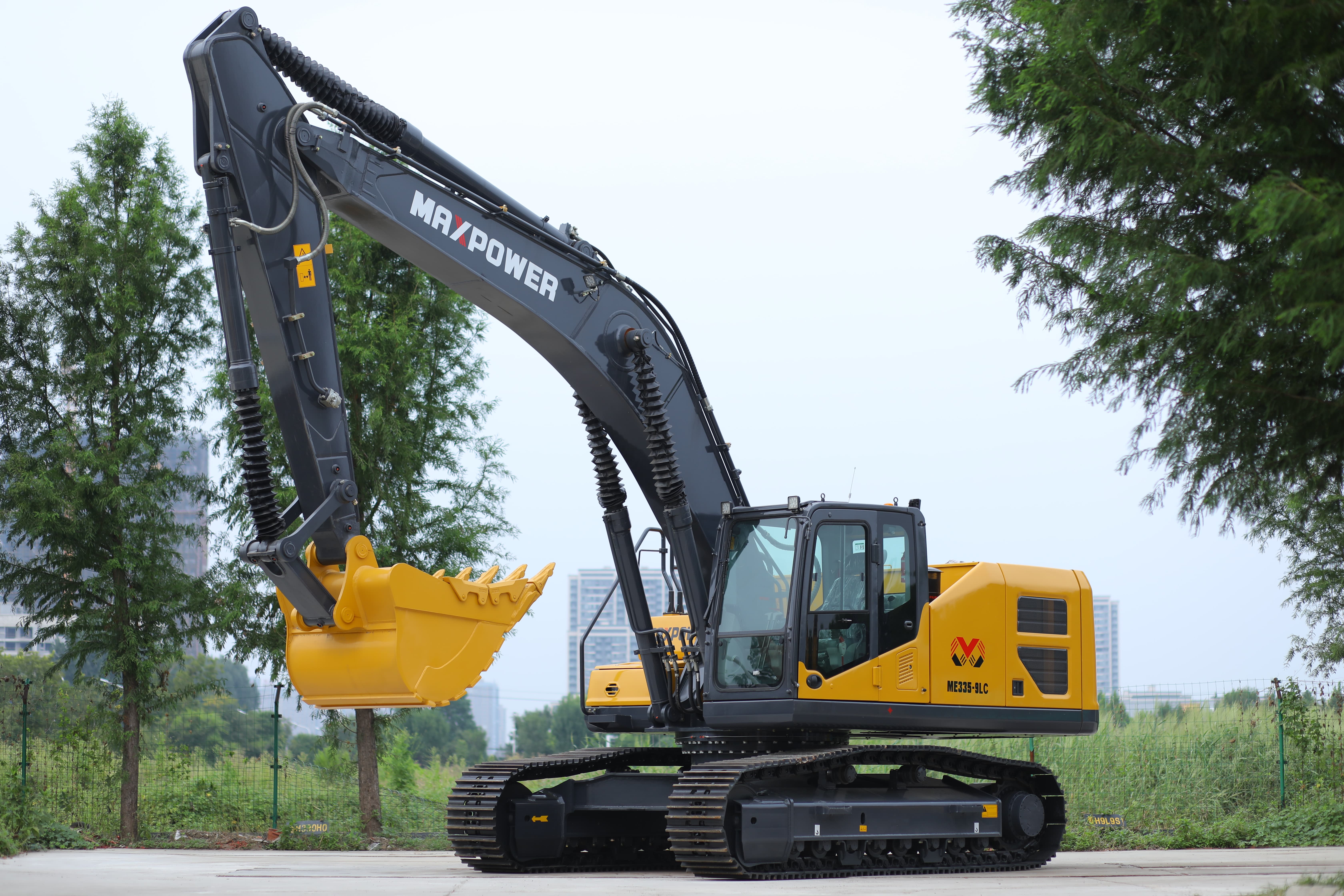
A long reach excavator uses an extended boom and arm configuration to increase the distance between the base machine and the working attachment. It allows contractors to perform certain excavation, dredging, slope, and demolition tasks from positions that would be difficult or inefficient for conventional equipment.
The additional reach, however, changes the machine's working geometry. Digging force, attachment weight, stability, lifting capacity, hydraulic requirements, and counterweight all need to be considered together.
For contractors considering long-reach equipment, the first question should therefore be: Does the project actually require more reach, or would a standard excavator be more productive?
A long reach excavator is an excavator configured with extended working equipment to provide a greater horizontal and vertical working range than a conventional configuration.
The most visible difference is the longer boom and arm.
But a professionally configured long reach excavator is more than a standard machine fitted with longer steel structures.
Extending the working equipment changes leverage and load distribution across the excavator. The machine needs to remain stable while the attachment operates farther away from the undercarriage.
The boom, arm, hydraulic cylinders, attachment, counterweight, upper structure, and undercarriage therefore need to work as a complete system.
This is why long-reach capability should be considered during equipment selection rather than treated as a simple aftermarket modification.
Maximum digging depth is usually one of the first specifications buyers check, but many reach problems occur horizontally rather than vertically.
Imagine cleaning sediment from a canal.
A standard excavator may be capable of reaching the required depth, but if it cannot reach far enough across the waterway, the operator must repeatedly reposition the machine.
The same problem can occur during slope work. The machine may need to operate farther away from the edge for practical site reasons.
Deep excavations create another challenge. As the excavation becomes deeper and wider, the excavator may no longer be able to position its bucket effectively from the available working platform.
When repositioning becomes excessive or the machine cannot safely approach the work area, long-reach equipment deserves consideration.
Dredging and waterway maintenance are natural applications for long reach excavators because the machine often cannot operate directly above the material being removed.
Riverbanks, canals, drainage channels, reservoirs, and ponds can contain sediment that needs to be removed from a stable position on shore.
A longer working range allows the bucket to reach farther into the waterway.
The contractor can potentially cover a larger excavation area before repositioning the machine.
That can improve the working sequence, particularly where moving the excavator along the bank is difficult.
However, dredging creates its own equipment considerations.
Wet sediment can have very different handling characteristics from dry soil. Bucket capacity, material density, reach, hydraulic performance, and dumping location all affect productivity.
The longest boom is therefore not automatically the best dredging configuration.
Yes, and this is one of their common application areas.
Water infrastructure contractors may use long reach excavators for sediment removal, channel maintenance, bank shaping, drainage improvement, and similar work.
The advantage comes from maintaining distance between the base machine and the working area.
This can be particularly useful where the ground close to the water is unsuitable for positioning heavy equipment.
Site assessment remains essential.
Bank stability, ground bearing conditions, water depth, working radius, and material characteristics all need to be considered before positioning the excavator.
Longer reach does not eliminate the need for proper site engineering.
Slope excavation can force a conventional excavator into inefficient positions.
The operator may need to work above or below the material while maintaining enough distance from the slope edge.
A long reach configuration can increase the area that can be accessed from one machine position.
This can be useful for slope trimming, embankment work, drainage construction, and certain road or infrastructure projects.
The benefit is not simply additional distance.
It can also reduce the number of times the machine needs to move during a continuous excavation sequence.
For contractors, fewer repositioning cycles can translate into more productive working time.
Yes, provided the machine configuration is suitable for the required depth and application.
Deep foundation and basement projects sometimes create working areas that conventional excavators cannot reach effectively from ground level.
A long reach excavator may allow material to be removed from deeper areas while the base machine remains at a suitable working position.
However, buyers should distinguish between maximum theoretical reach and practical excavation performance.
As the bucket moves farther away from the machine, leverage changes.
The excavator may not have the same digging and lifting characteristics at maximum extension as it does close to the machine.
This is why working range charts and actual application requirements are more useful than one headline maximum-reach figure.
It can change the effective digging characteristics.
Extending the boom and arm increases the distance between the machine and bucket. This changes the mechanical leverage acting on the excavator.
For applications involving loose sediment, soil, or finishing work, that trade-off may be entirely acceptable because reach is the priority.
For extremely hard material requiring maximum breakout force, a standard heavy-duty configuration may be more appropriate.
Contractors therefore need to ask what the machine will actually dig.
If the project requires extended reach into relatively manageable material, a long reach excavator may perform very well.
If the primary requirement is breaking extremely hard ground, additional reach may not be the most important capability.
The farther an attachment is positioned from the machine, the greater its influence on stability.
This is basic leverage.
A heavy attachment operating close to the excavator is very different from the same mass operating at the end of an extended boom and arm.
For this reason, attachment weight needs careful consideration on long reach excavators.
A bucket that is suitable for a standard boom configuration may not automatically be appropriate for extended working equipment.
The manufacturer should evaluate the attachment together with the boom, arm, hydraulic system, counterweight, and machine stability.
Contractors should avoid selecting buckets based only on volume.
Material density matters as well.
This is where buyers need to be careful.
A long reach boom should not be treated as a universal attachment that can simply be installed on any excavator of roughly the same size.
The base machine needs to be suitable for the configuration.
Important considerations include hydraulic cylinder arrangement, structural connection points, counterweight, undercarriage stability, hydraulic performance, control settings, attachment weight, and the intended working radius.
Changing the working equipment can significantly change the forces acting on the machine.
A purpose-selected or professionally engineered configuration is therefore preferable to an improvised conversion.
More reach is not always better.
An unnecessarily long configuration can reduce digging performance and make transportation more complicated without providing useful productivity.
Start by measuring the actual work.
How far is the excavation from the nearest suitable machine position?
How deep is it?
How much material needs to be removed?
What is the material density?
Where will the excavated material be dumped?
How often will the machine need to reposition?
A contractor cleaning a relatively narrow drainage channel may need only a modest increase in working range.
A large waterway or deep excavation may require substantially more.
Selecting the shortest configuration that comfortably covers the required working envelope can often provide a better balance between reach and performance.
The correct base machine depends on the reach requirement, attachment, material, and operating conditions.
A longer boom creates greater leverage, so machine stability becomes increasingly important.
Larger base excavators can provide greater operating weight and stability, but simply choosing a heavier machine is not enough.
The complete configuration needs to be engineered around the application.
For buyers, this means operating weight should be considered alongside boom length, arm length, counterweight, bucket capacity, hydraulic performance, and ground conditions.
If a supplier recommends a long reach configuration based only on excavator tonnage, the discussion is probably incomplete.
For ordinary excavation, the standard excavator is usually the better machine.
It typically provides a more compact working configuration and is well suited to conventional digging, loading, trenching, and earthmoving.
A long reach excavator becomes valuable when distance itself is the problem.
If the standard machine can safely access and efficiently reach the work, there may be little reason to use an extended configuration.
If the contractor repeatedly loses time repositioning the machine, cannot approach the excavation area, or needs to reach across water, slopes, or deep excavations, the long reach configuration may solve a real productivity problem.
The application should determine the equipment.
A long reach excavator should be specified from project information rather than a general request for "the longest boom available."
Provide the manufacturer with the required horizontal reach and digging depth.
Explain the material being handled and its approximate density.
Describe the site, including where the machine will stand and where material will be dumped.
If possible, provide project drawings, photographs, or dimensions.
The manufacturer should also know the expected attachment and daily operating requirements.
Transportation deserves attention as well. Extended working equipment can affect how the machine is shipped and moved between projects.
These details help turn a generic excavator inquiry into an equipment configuration that actually fits the job.
MAXPOWER's product portfolio includes conventional Excavators as well as Specialty Excavators for projects requiring configurations beyond normal excavation work.
Long-reach requirements fit naturally within this specialty-equipment approach because the working geometry needs to be matched to a specific project problem.
For conventional digging, contractors can select from the standard excavator range according to machine size and workload.
For applications involving unusual reach, restricted positioning, or other specialized conditions, discussing the project with MAXPOWER before selecting the configuration is the more practical approach.
The objective should be to determine whether additional reach will genuinely improve the job rather than simply choosing a more specialized machine.
Long reach productivity depends heavily on machine positioning.
The excavator should be placed where the extended working range can cover as much productive area as possible without unnecessary repositioning.
Operators also need to understand that the machine behaves differently from a standard excavator.
Bucket loading, swing movements, attachment positioning, and working radius all require appropriate control.
Trying to operate a long reach machine exactly like a conventional heavy digging excavator can reduce efficiency and place unnecessary stress on the equipment.
The best results come when the machine is used for the work it was configured to perform.
That depends on how often your projects require the capability.
For a contractor that encounters one unusual job every few years, owning specialized equipment may not make commercial sense.
For a company regularly involved in dredging, waterways, slope work, deep excavation, or similar projects, the calculation is different.
The machine can allow the contractor to bid for projects that conventional equipment cannot handle efficiently.
Equipment utilization should therefore be part of the purchasing decision.
A specialty excavator creates value when its specialty capability is used often enough to improve productivity or expand the contractor's project opportunities.
A long reach excavator is useful when the biggest limitation on the jobsite is not digging power but access to the material.
Dredging, canal maintenance, river work, slopes, and deep excavation can all create situations where a conventional boom and arm cannot efficiently reach the working area.
The solution, however, is not simply to install the longest boom possible.
Reach, digging force, attachment weight, material density, machine stability, hydraulic performance, transportation, and working radius all need to be considered together.
MAXPOWER's Specialty Excavators product direction provides a natural equipment option for contractors facing these types of non-standard excavation requirements.
Before choosing a long reach excavator, measure the job first. Once the required working envelope and material conditions are clear, selecting the right machine becomes much easier.
Long reach excavators are commonly used for dredging, river and canal maintenance, slope work, deep excavation, and other applications where the machine needs to work farther from the excavation area.
It uses extended working equipment to provide greater horizontal or vertical reach. This changes the machine's working geometry, digging characteristics, attachment requirements, and stability.
Extended working equipment changes leverage and can reduce effective digging performance compared with a shorter heavy-duty configuration. The actual performance depends on the complete machine design.
Not automatically. The base machine, hydraulic system, cylinders, structure, counterweight, undercarriage, attachment, and stability need to be suitable for the extended configuration.
Bucket selection depends on machine configuration, reach, material density, and application. A bucket suitable for a standard excavator may be too heavy for long-reach operation.
Yes. Their extended working range makes them useful for removing sediment from waterways while the base machine remains on a suitable working platform.
Provide the required horizontal reach, digging depth, material type, material density, attachment, site conditions, and expected operating hours to the manufacturer before selecting the machine.
It can be valuable for contractors that regularly perform dredging, slope, waterway, or deep excavation work. For ordinary excavation, a standard excavator is generally more practical.







