Maxpower Construction Machinery Manufacturer




For contractors considering an electric excavator, digging performance is rarely the only concern. One question usually comes first:
Can the battery last through a normal working day?
That question is understandable. A diesel excavator can be refueled relatively quickly, while an electric machine needs a charging strategy that fits the project schedule. If the battery, charger, and daily workload are poorly matched, even a capable excavator can spend too much time waiting for energy.
This makes electric excavator battery life a practical equipment-selection issue rather than simply a battery specification.
A machine working intermittently on urban utility repairs will consume energy differently from one performing continuous excavation. Hydraulic demand, attachments, ambient temperature, operator technique, travel, idle periods, and material conditions can all influence actual operating time.
For buyers evaluating MAXPOWER Electric Excavators, the better question is therefore not simply "How many hours does the battery last?"
It is:
Can the excavator's battery and charging system support the way my projects actually operate?
Battery life can refer to two different things, and buyers should distinguish between them.
The first is runtime per charge—how long the excavator can work before it needs additional energy.
The second is battery service life—how long the battery system remains useful over years of charging and operation.
These are related but very different purchasing considerations.
A contractor mainly concerned with daily production needs to understand runtime and charging.
A fleet manager evaluating long-term ownership also needs to consider battery management, operating environment, charging practices, maintenance, and eventual battery performance over the equipment's service life.
When discussing an electric excavator with a manufacturer, buyers should therefore avoid asking only for "battery life."
Ask specifically about runtime, battery capacity, charging requirements, and long-term battery management.
Battery capacity tells you how much energy the system can store, but it does not tell you exactly how long the machine will work.
The excavator's energy demand constantly changes.
Digging hard material requires more power than waiting for a truck.
Operating a hydraulic attachment can create a different energy demand from using a standard bucket.
Travelling around a large site consumes energy that a machine working from one position does not.
This means two contractors operating the same electric excavator can achieve different runtimes.
The difference does not necessarily indicate a battery problem. Their duty cycles may simply be different.
For professional buyers, runtime estimates are most useful when they are based on a clearly defined application.
Excavation intensity has a direct effect on energy consumption.
Consider a machine performing light utility trenching in relatively loose soil. The excavator may spend part of the working period positioning, waiting, or performing moderate hydraulic movements.
Now compare that with continuous loading in dense material.
The second application demands more sustained hydraulic output and can consume stored energy faster.
This is why a battery specification should always be discussed alongside the intended work.
Tell the manufacturer what the machine will dig, how many hours it normally works, how continuous the workload is, and which attachments will be used.
That information is far more useful than asking whether the excavator can "work all day."
Potentially, but "a full shift" is not a standardized workload.
An eight-hour shift does not necessarily mean eight hours of continuous maximum hydraulic demand.
Real construction work includes excavation, positioning, waiting, inspection, breaks, material coordination, and other activities.
A utility contractor may have natural opportunities for charging during the day.
A production-focused earthmoving operation may have far fewer.
The important figure is therefore the project's actual duty cycle.
Before purchasing an electric excavator, contractors should estimate how many hours the machine is genuinely performing high-energy work and how much charging time can be integrated into the schedule.
Imagine two excavators both recorded as operating for eight hours.
Machine A performs intermittent municipal work. It digs for short periods, waits while pipes are positioned, moves occasionally, and has several natural pauses.
Machine B continuously loads material into trucks.
Their energy consumption will not be the same.
This is why duty cycle is a much better basis for electric excavator selection than shift duration alone.
Fleet managers should look at existing project data where possible.
How much time does the current diesel excavator spend actively digging?
How much time is spent idling?
How much travel is involved?
When are the natural breaks?
These questions can reveal whether an electric machine fits the workflow without requiring major operational changes.
Charging time depends on the battery system, charger, available electrical supply, charging method, and machine design.
There is no single charging time that applies to every electric excavator.
This is an important point for buyers because a fast-charging capability is useful only when the jobsite can provide the required electrical infrastructure.
Before ordering the machine, the contractor should confirm what power supply is available where the excavator will operate.
A charger that requires electrical capacity the site cannot provide creates a logistical problem regardless of how advanced the excavator is.
The machine and charging infrastructure need to be planned together.
Opportunity charging can be useful when it fits naturally into the project schedule.
If the excavator normally stops during lunch, shift changes, material delays, or other planned periods, these pauses may provide opportunities to add energy without sacrificing productive time.
This can change the battery requirement considerably.
Instead of specifying enough stored energy to cover the longest possible uninterrupted shift, the contractor may be able to integrate charging into existing downtime.
However, charging practices should follow the manufacturer's battery and charging recommendations.
The goal is not simply to plug the machine in whenever possible. It is to build a charging strategy around the equipment's intended operation.
Not by itself.
Fast charging can reduce the time needed to add energy, but several practical questions remain.
Does the jobsite have the required electrical supply?
Can the project schedule accommodate charging?
How does the manufacturer recommend managing repeated charging?
What charging equipment is required?
Where will the charger be located?
A construction company should treat charging infrastructure as part of the equipment system.
Buying an electric excavator without planning the charging side is similar to buying a diesel machine without considering how fuel will reach a remote jobsite.
Battery performance can be influenced by temperature.
Very cold or very hot operating environments may affect energy availability, charging behavior, thermal management, and overall system performance.
Construction equipment has to work outdoors under conditions that passenger vehicles may rarely experience.
A contractor working in a hot climate has different concerns from a company operating through cold winters.
When requesting an electric excavator, provide the manufacturer with realistic environmental information.
Typical summer and winter temperatures can help determine whether the proposed configuration is appropriate.
This is particularly important for international buyers sourcing equipment for markets with climatic conditions very different from the manufacturer's location.
They can.
An electric excavator still relies on hydraulic systems for many working functions, and hydraulically demanding attachments can increase energy consumption.
A breaker, for example, creates a different duty cycle from a standard digging bucket.
This does not mean electric excavators should avoid hydraulic attachments.
It means attachment requirements should be included when estimating energy demand.
If a contractor plans to use a particular attachment for several hours each day, that information should be provided before selecting the battery and machine configuration.
Yes.
The same operating habits that affect fuel consumption on diesel excavators can influence energy consumption on electric machines.
Unnecessary travel, inefficient digging cycles, excessive repositioning, and poor attachment use all consume energy without increasing useful production.
Good machine positioning can shorten swing cycles.
Appropriate bucket loading can reduce unnecessary hydraulic demand.
Planning the excavation sequence can reduce travel.
For fleet managers, operator training therefore remains important after switching from diesel to electric equipment.
Electrification does not eliminate the need for efficient operation.
Urban projects can be particularly suitable for electric excavators because the machine may work close to established electrical infrastructure.
But availability should never be assumed.
Before deployment, contractors should identify the charging location and confirm that the electrical system can support the required charger.
Cable routing and working-area organization also need consideration so charging equipment does not interfere with site operations.
If the excavator works on multiple small projects each day, the charging strategy may be based around a central equipment yard rather than individual jobsites.
The correct arrangement depends on how the contractor operates.
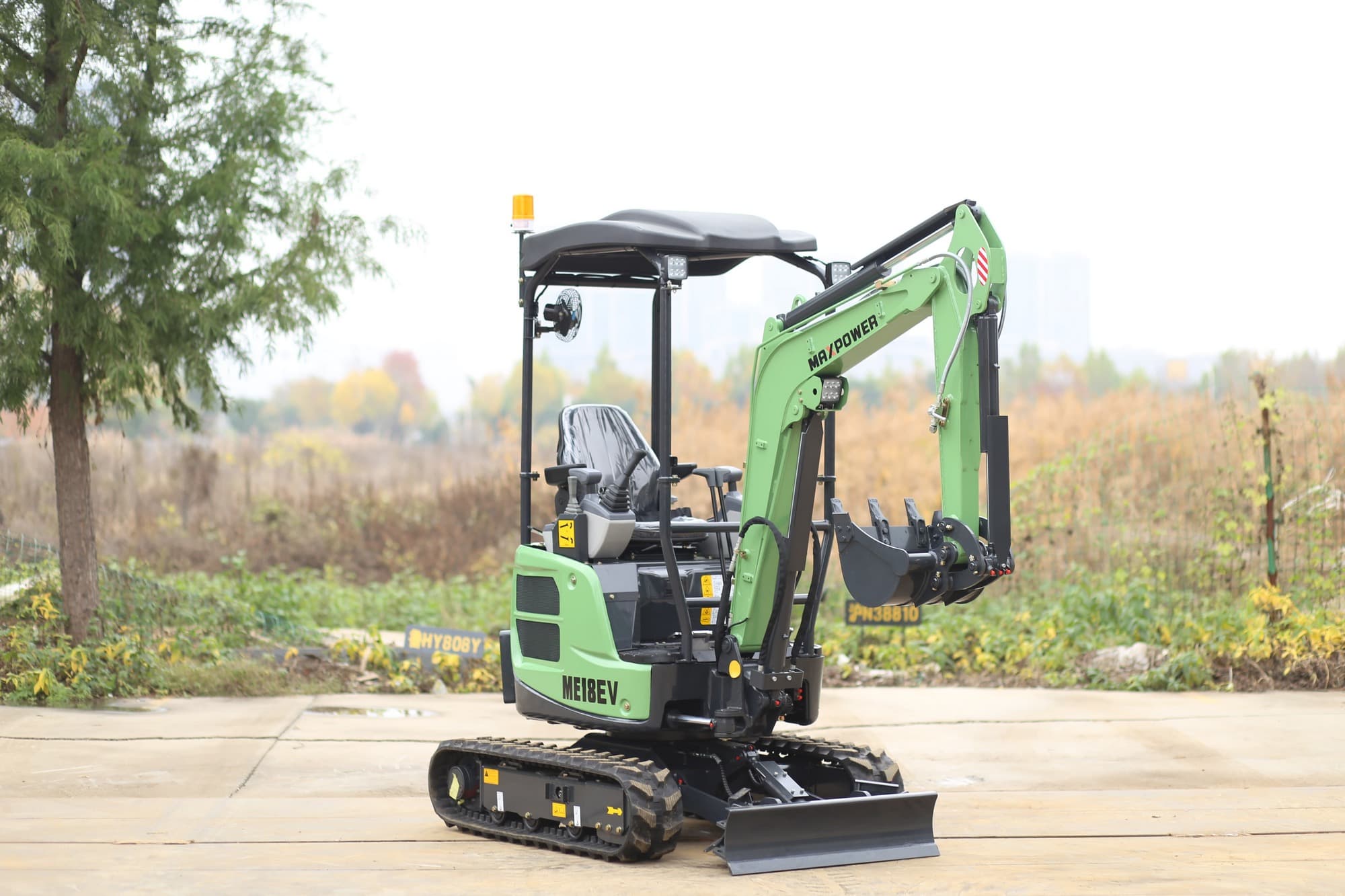
Remote sites create a more difficult electrification question.
If suitable grid power is unavailable, charging infrastructure may become a major part of the project plan.
In these environments, conventional Excavators may remain the more practical solution depending on the work.
This is an important purchasing principle: electric equipment should be selected because it fits the operating environment, not simply because the technology is attractive.
For projects with predictable access to electricity, an electric excavator may work well.
For constantly changing remote sites, the contractor needs to evaluate the charging challenge carefully before committing.
Do not compare battery capacity alone.
A larger battery may store more energy, but the machine may also be larger and consume more energy during operation.
Buyers should look at the complete machine: operating weight, digging capability, electric motor performance, hydraulic system, battery capacity, charging requirements, attachments, and expected duty cycle.
The most useful question is how much productive work the machine can complete within the contractor's normal schedule.
For example, MAXPOWER's electric product category includes machines across different operating classes rather than treating electric excavators as a single compact-machine segment.
Buyers can explore the Electric Excavators range and compare the appropriate machine class against the work they actually perform.
A useful conversation with the manufacturer should cover more than digging depth and battery size.
Describe the application and daily operating pattern.
Explain whether the machine will work continuously or intermittently.
Provide information about the material, attachments, site temperature, travel requirements, and available electrical infrastructure.
Then ask how the proposed battery and charging configuration fits that workload.
For overseas buyers, after-sales support also deserves attention. Electric machines introduce battery, electrical, charging, hydraulic, and control-system considerations that require suitable technical documentation and support.
A supplier should be able to discuss the complete operating system rather than simply quote a battery specification.
Contractors do not need to convert every machine at once.
A more practical approach can be to identify the projects where electric equipment provides the clearest operational advantage.
An electric excavator might handle predictable urban, indoor, municipal, or utility work.
Diesel excavators can remain available for remote or high-utilization projects where conventional refueling provides greater flexibility.
This creates a mixed fleet in which machines are assigned according to their strengths.
MAXPOWER offers both Electric Excavators and conventional Excavators, allowing equipment buyers to compare both directions according to project requirements.
Long-term battery performance depends on the specific battery system and manufacturer requirements.
Operators should follow the recommended charging, storage, inspection, and operating procedures.
Temperature management deserves particular attention, as does the use of approved charging equipment.
The machine should also receive routine inspections of electrical and cooling systems according to its maintenance schedule.
Fleet managers should monitor battery-related performance rather than waiting until runtime has noticeably declined.
Keeping records of operating hours, charging patterns, and machine behavior can help identify changes over time.
The answer depends on the workflow.
If your excavator works predictable shifts, has reliable access to charging, and frequently operates in environments where low noise or zero tailpipe emissions at the machine are valuable, electric equipment deserves serious consideration.
If your machine constantly moves between remote projects and needs long uninterrupted operating periods without reliable electrical infrastructure, conventional equipment may remain more practical.
For many contractors, the answer will not be entirely electric or entirely diesel.
The better strategy is to put each machine where its operating characteristics create the most value.
Electric excavator battery life cannot be judged from battery capacity alone.
Actual runtime depends on machine size, digging intensity, hydraulic demand, attachments, operator behavior, temperature, travel, and the project's duty cycle.
Charging infrastructure is equally important. A well-matched electric excavator with a poorly planned charging system can still disrupt production.
For buyers considering MAXPOWER Electric Excavators, the best approach is to define the work first: daily operating pattern, application, attachments, site conditions, temperature, and available electrical supply.
Once those factors are clear, battery capacity and charging can be evaluated as part of the complete equipment solution.
The question is not simply whether the battery lasts eight hours.
The question is whether the machine can complete the work your project expects between available charging opportunities.
Runtime depends on battery capacity, machine size, digging intensity, hydraulic demand, attachments, temperature, operator behavior, and other operating conditions. There is no single runtime that applies to every electric excavator.
It may be able to support a full shift depending on the machine, duty cycle, battery configuration, and opportunities for charging. Actual productive working time should be evaluated rather than shift length alone.
Charging time depends on the battery, charger, available electrical supply, and machine design. Buyers should confirm charging requirements for the specific model.
Temperature can affect battery and charging performance. Buyers operating in very cold or hot climates should discuss local conditions with the manufacturer.
Hydraulically demanding attachments can change energy consumption. Attachment type and expected daily usage should be included when evaluating battery requirements.
Opportunity charging may be practical when it fits the project schedule and follows the manufacturer's recommended charging procedures.
No. Battery capacity should be matched to machine energy demand, duty cycle, charging availability, weight, and project requirements rather than maximized without considering the complete system.
Provide the required machine size, application, daily operating hours, duty cycle, attachments, working temperature, travel requirements, and available charging infrastructure.







