Jining Maxpower Machinery Co., Ltd.




When comparing excavators, buyers often focus first on engine power, operating weight, bucket capacity, and digging depth. But these figures do not fully explain how effectively a machine can penetrate hard ground.
Two specifications provide a better indication: excavator breakout force and arm digging force.
They are often confused because both describe digging performance, but they measure different actions. Manufacturers commonly publish them separately because bucket breakout force represents bucket-curling force, while arm digging force represents the pulling force generated through the arm.
For contractors comparing MAXPOWER Excavators, understanding these numbers can make it easier to match a machine to soil conditions and daily excavation requirements.
Excavator breakout force usually refers to the maximum force generated as the bucket curls through its digging arc.
Imagine the bucket teeth entering compacted soil. As the bucket cylinder retracts or extends according to the linkage design, the bucket curls and breaks material away from the excavation face.
That force is especially relevant when working with compacted soil, dense clay, gravel, or other resistant materials.
Breakout force is normally expressed in kilonewtons (kN) or pounds-force (lbf).
A higher figure indicates greater potential force at the bucket under the specified test conditions, but it should not be treated as a complete measure of excavator productivity.
Arm digging force describes a different movement.
Instead of measuring bucket curl, it represents the force produced as the arm pulls the bucket toward the machine.
This action is important during trenching and general excavation because the operator frequently draws the bucket through the material using the arm.
Current excavator specifications often show bucket force and arm force separately. For example, large excavator specifications may list substantially different values for maximum bucket breakout force and arm digging force.
That is why buyers should avoid comparing one manufacturer's bucket force with another machine's arm force.
They are not equivalent specifications.
Neither number should be considered independently.
Bucket breakout force becomes particularly relevant when the bucket needs to bite into resistant material.
Arm digging force becomes more important as the excavator pulls material through the digging stroke.
A normal excavation cycle uses both.
The bucket penetrates and curls while the arm moves through the material. The boom then raises the load before the upper structure swings toward the dumping area.
Real productivity therefore depends on how effectively the entire hydraulic and working-equipment system performs together.
Not automatically.
A machine with very high breakout force may perform well in demanding digging conditions, but contractors also need to consider operating weight, hydraulic performance, bucket capacity, arm configuration, stability, and the material being excavated.
A compact excavator working in landscaping does not need the same force as a large machine performing heavy earthmoving.
Current industry specification data shows breakout force generally rises substantially as excavator size increases.
The objective is therefore not to purchase the highest breakout force available. It is to have sufficient force for the normal workload.
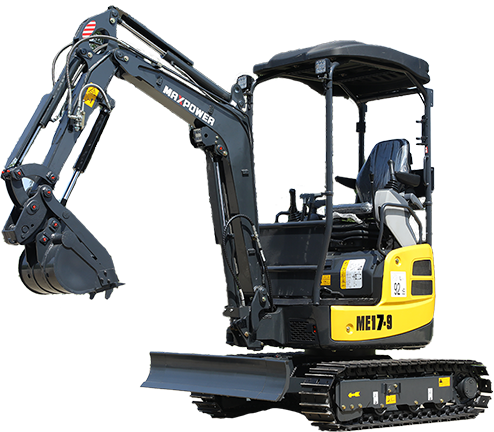
Arm length affects the excavator's working geometry.
A longer arm can provide greater reach and digging depth, but additional length changes leverage.
As a result, machines using different arm configurations can have different arm digging-force specifications even when the base excavator remains similar. Published excavator specifications demonstrate this relationship, with longer arm configurations providing greater reach while arm tear-out force can decrease.
This creates an important purchasing trade-off:
More reach does not automatically mean more digging force.
Contractors need to decide which characteristic matters more for the intended application.
Breakout force is transmitted to the material through the bucket and its cutting components.
Bucket size, geometry, teeth, condition, and material resistance therefore influence practical digging performance.
An oversized bucket filled with dense material can place unnecessary load on the excavator.
A badly worn cutting edge can also reduce penetration efficiency even when the hydraulic system is producing normal force.
This is why excavator specifications and bucket selection should be considered together.
When comparing MAXPOWER Excavators, buyers should not isolate breakout force from the rest of the specification sheet.
Look at bucket breakout force and arm digging force alongside operating weight, bucket capacity, hydraulic performance, maximum digging depth, reach, and intended application.
For unusual working requirements, Specialty Excavators may also deserve consideration.
The best comparison is always based on the material the machine will actually excavate.
A contractor working primarily in loose soil has different requirements from one regularly dealing with compacted ground and heavy earthmoving.
Excavator breakout force and arm digging force describe two different parts of the digging cycle.
Breakout force indicates the bucket's ability to curl into and break material, while arm digging force reflects the pulling action of the arm.
Neither specification alone determines excavator productivity.
Machine weight, hydraulics, arm length, bucket configuration, ground conditions, and operator technique all influence actual performance.
For MAXPOWER buyers, the better approach is to define the expected material and workload first, then compare digging-force specifications within the appropriate excavator class.
Excavator breakout force is the force generated through the bucket-curling action and indicates how effectively the bucket can penetrate and break resistant material.
No. Breakout force normally refers to bucket force, while arm digging force measures the force generated as the arm pulls the bucket toward the machine.
No. The required force depends on excavator size, material conditions, bucket configuration, and application.
A longer arm changes leverage and can reduce arm digging force while providing additional reach and digging depth.
Compare operating weight, arm digging force, hydraulic performance, bucket capacity, arm length, digging depth, and working reach.







