Jining Maxpower Machinery Co., Ltd.




Two excavators can have similar operating weights and engine power yet behave very differently on soft ground.
One machine may move across the site without much difficulty, while another leaves deep tracks or struggles as the ground becomes wet. The difference is not always engine power or traction. Excavator ground pressure and track configuration can play an important role.
For contractors working on soft soil, agricultural land, wet construction sites, or other low-bearing-capacity surfaces, ground pressure deserves attention before choosing an excavator.
MAXPOWER offers Excavators across different machine classes. Understanding the relationship between operating weight, track width, and ground contact can help buyers select a configuration that better matches the intended jobsite.
Ground pressure describes how the excavator's weight is distributed over the area where the tracks contact the ground.
In simple terms, a heavy machine concentrated over a relatively small contact area places more pressure on the surface than the same weight distributed across a larger area.
This matters when the soil cannot support high loads.
On firm compacted ground, ground pressure may not be a major limitation. On wet soil, loose fill, or soft agricultural land, it can strongly influence mobility and surface disturbance.
Ground pressure is therefore not simply another specification. It describes part of the interaction between the excavator and the jobsite.
Wider tracks can increase the contact area between the machine and the ground.
When other conditions remain similar, spreading the machine's weight over a larger area can reduce ground pressure.
This is one reason wider track shoes are often considered for soft-ground applications.
However, buyers should not assume the widest possible track is automatically the best configuration.
Track width can influence machine dimensions, transportation, maneuverability, undercarriage loading, and how the excavator behaves on different surfaces.
The correct track configuration should match the normal working environment.
Not necessarily.
Operating weight matters, but contact area matters as well.
A heavier excavator equipped with an undercarriage designed to distribute its weight effectively may not create ground pressure in direct proportion to the difference in machine weight.
This is why comparing excavators only by tonnage can be misleading.
If soft-ground performance is important, buyers should compare the manufacturer's published ground-pressure specification and undercarriage configuration rather than estimating performance from operating weight alone.
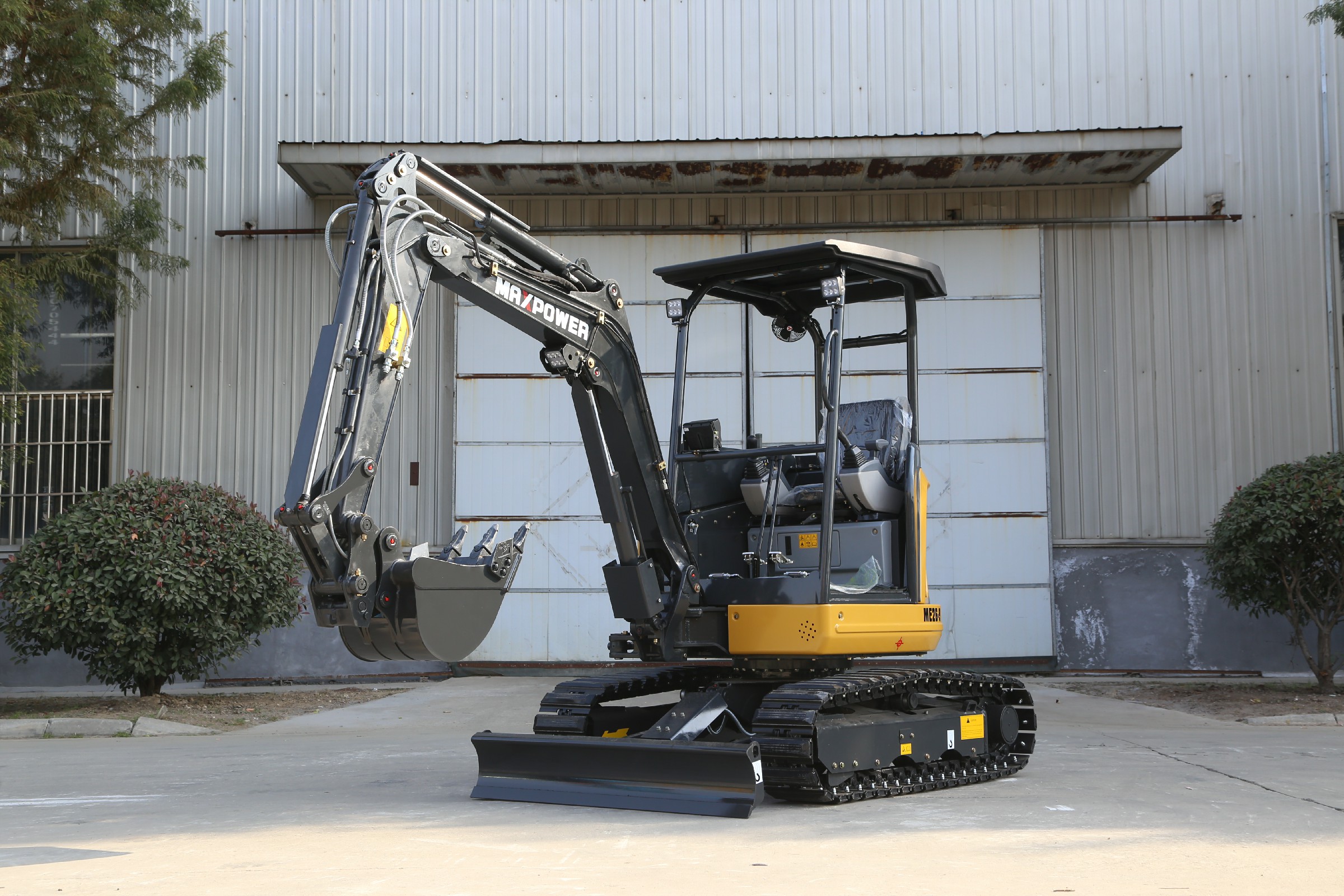
Soft soil deforms under load.
When an excavator applies more pressure than the ground can comfortably support, the tracks can sink deeper into the surface.
Once this happens, travel resistance increases.
The machine may require more effort to reposition, the site can become badly rutted, and working stability may deteriorate.
For contractors, this can reduce productivity even when the excavator itself has sufficient digging capability.
Selecting an appropriate undercarriage configuration can help, but equipment choice does not replace proper site assessment. Extremely weak ground may require access preparation or other engineering measures before heavy machinery operates there.
They can help in appropriate conditions because the increased contact area may reduce ground pressure.
But mud creates more than one problem.
Traction, track cleaning, soil consistency, slope, and the depth of the soft layer all influence mobility.
A wide-track excavator can still become stuck if the ground is incapable of supporting the machine.
This is why buyers should distinguish between soft ground that can support distributed machine weight and ground that requires additional site preparation.
Yes, for a particular application.
If the excavator spends most of its life on firm construction surfaces, an extremely wide-track configuration may provide little practical benefit.
Wider tracks can also increase overall machine width, which may affect transportation and access to restricted jobsites.
The correct configuration is therefore a compromise between ground performance, mobility, transport dimensions, and the work the excavator performs most frequently.
Ground pressure and stability are related through the condition of the working surface.
An excavator needs a suitable supporting surface to work effectively.
If one side of the machine sinks more than the other, the working platform can become uneven.
That changes the excavator's position relative to the load and excavation area.
Operators should not rely on wider tracks to compensate for unsafe ground conditions. Site conditions should always be evaluated before positioning and operating the machine.
For buyers, the practical lesson is that undercarriage selection and jobsite preparation need to work together.
Ground pressure deserves particular attention when the excavator will regularly work on wet, soft, or easily disturbed surfaces.
This may include certain agricultural, drainage, land-development, environmental, and undeveloped construction projects.
For ordinary work on compacted construction sites, other specifications such as digging force, hydraulic performance, reach, bucket capacity, and transportability may have greater priority.
The importance of ground pressure therefore depends on where the machine will actually spend its working life.
If soft-ground capability matters, do not look at track width alone.
Compare ground pressure together with operating weight, track-shoe width, overall machine width, undercarriage dimensions, digging requirements, transportation limits, and working conditions.
MAXPOWER's Excavators cover different operating classes, allowing buyers to match machine size to different excavation requirements.
For unusual terrain or specialized operating environments, the Specialty Excavators category may also be relevant.
The objective is not to find the excavator with the lowest possible ground-pressure number. It is to select a machine that combines suitable ground performance with the excavation capability the project actually requires.
Excavator ground pressure helps explain why machine weight alone does not determine performance on soft ground.
Operating weight, track width, contact area, soil conditions, and undercarriage configuration all influence how an excavator interacts with the surface.
Wider tracks can reduce ground pressure in suitable configurations, but they are not automatically the best choice for every project.
For MAXPOWER customers, ground pressure should be evaluated alongside digging performance, machine dimensions, transportation, and the expected jobsite conditions.
The right excavator is the one that can reach the site, remain properly supported, and still deliver the excavation performance required by the project.
Excavator ground pressure describes how the machine's weight is distributed across the track contact area and applied to the ground.
A wider track configuration can increase ground contact area and may reduce ground pressure when other factors remain comparable.
No. Very low ground pressure may be useful on soft surfaces, but track configuration must also suit transportation, access, stability, and normal working conditions.
Potentially, but the machine configuration and ground-bearing conditions need to be suitable. Operating weight alone does not determine soft-ground performance.
Check published ground pressure, operating weight, track width, overall dimensions, undercarriage configuration, transport requirements, and actual soil conditions.







