Jining Maxpower Machinery Co., Ltd.




When looking at an excavator, the boom and arm are two of the most noticeable components. They work together with the bucket and hydraulic system to perform digging, lifting, loading, and material handling.
However, they do different jobs.
For equipment buyers, operators, maintenance teams, and contractors, understanding the difference between an excavator boom and arm is useful when evaluating machine specifications, working range, attachment compatibility, and repair requirements.
The difference also becomes important when a machine needs to work at unusual depths or distances. A standard configuration may be ideal for general excavation, while a long-reach or specialized configuration may be better for specific applications.
The boom is the first major articulated section connected to the excavator's upper structure.
It extends upward and forward from the machine and supports the arm.
The boom determines much of the excavator's overall working geometry. When the boom moves, the position of the arm and bucket changes accordingly.
A typical excavator boom works with hydraulic cylinders that allow the operator to raise and lower it.
Its main functions include:
Raising and lowering the working equipment
Supporting the arm
Positioning the arm and bucket
Providing vertical working range
Transferring hydraulic and structural loads
Because the boom carries substantial loads during excavation and lifting, its structural strength is critical to machine reliability.
The excavator arm, sometimes called the stick or dipper, is connected to the end of the boom.
It extends from the boom toward the bucket.
While the boom primarily controls the overall height and position of the working equipment, the arm controls how far the bucket reaches from the machine.
The arm plays an important role in:
Digging reach
Digging depth
Bucket positioning
Material loading
Excavation control
The arm is also hydraulically operated, allowing the operator to move the bucket toward or away from the machine.
The simplest way to understand the difference is to look at their positions and functions.
| Component | Main Function | Main Influence |
|---|---|---|
| Boom | Raises and positions the working equipment | Working height and overall geometry |
| Arm | Extends and retracts the bucket | Digging reach and depth |
| Bucket | Excavates or handles material | Digging and material handling |
The boom is connected to the excavator body.
The arm is connected to the boom.
The bucket is connected to the arm.
Together, these components form the excavator's primary working equipment.
The boom and arm do not operate independently.
During a typical digging cycle, the operator coordinates their movements to position the bucket correctly.
The boom may be lowered while the arm extends into the excavation area. The bucket then penetrates the material and is curled to collect the load.
After the bucket is filled, the boom can raise the working equipment while the arm and bucket are positioned for dumping.
This coordinated movement allows the excavator to perform complex tasks with relatively precise control.
The hydraulic system is responsible for supplying the force required for these movements.
Both the boom and arm influence digging depth, but the arm has a particularly important role in determining how far the bucket can reach downward.
Arm length is therefore closely related to digging depth and reach.
A longer arm can provide greater reach in certain configurations, but it also changes the machine's working characteristics.
For this reason, increasing arm length is not simply a matter of making the machine more capable.
The configuration must remain compatible with the excavator's hydraulic capacity, structural design, and stability requirements.
The arm has a major influence on horizontal reach.
A longer arm can allow the bucket to reach farther from the machine, which can be useful for applications such as deep excavation, slope work, dredging, and material handling.
However, maximum reach should not be considered in isolation.
As reach increases, lifting capacity and digging performance can change.
The machine must be configured for the intended working range.
This is why contractors should look at the complete working envelope rather than focusing only on one maximum reach figure.
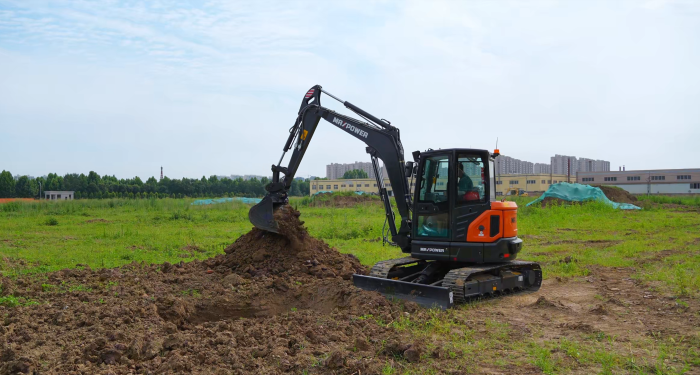
Yes.
Boom geometry affects how the excavator works within different areas of the jobsite.
Different boom configurations can be designed for different operating requirements.
For example, a configuration optimized for digging close to the machine may have different characteristics from one intended to provide extended reach.
Boom geometry can influence:
Maximum digging depth
Dumping height
Reach
Lifting capability
Working radius
The boom therefore plays a major role in determining how an excavator performs beyond basic engine and hydraulic specifications.
Not every project requires the same working range.
A contractor working on foundations may prioritize digging depth.
A dredging contractor may need extended reach.
A demolition contractor may require a specialized working configuration.
A general earthmoving contractor may prefer a balanced configuration suitable for multiple applications.
Manufacturers can therefore offer different boom and arm combinations to meet different requirements.
The important consideration is whether the configuration matches the intended application.
A long-reach excavator uses an extended working configuration to increase the distance between the machine and the bucket.
This can be useful when the excavator needs to reach areas that cannot be accessed directly.
Typical applications include:
Dredging
Slope excavation
Deep trenching
Canal maintenance
Riverbank work
Certain demolition projects
A long-reach configuration changes the machine's operating characteristics.
The longer working equipment creates different load conditions, which means the excavator must be designed or configured appropriately.
A standard excavator should not simply be modified with excessively long components without considering structural and hydraulic requirements.
Deep excavation requires more than simply having a powerful engine.
The working equipment must reach the required depth while maintaining sufficient control and digging performance.
If the arm is too short, the machine may not reach the bottom of the excavation.
If the configuration provides excessive reach without sufficient hydraulic or structural capability, productivity may suffer.
For deep excavation projects, contractors should evaluate:
Maximum digging depth
Arm length
Boom geometry
Bucket configuration
Hydraulic performance
Machine stability
These specifications work together.
A longer boom or arm does not automatically produce better performance.
Increasing working length can change the machine's load characteristics.
The excavator may experience:
Reduced lifting capacity at extended reach
Greater structural loads
Different balance characteristics
Changes in digging force
Different hydraulic demands
This is why specialized long-reach excavators require an appropriate overall configuration.
The working equipment, counterweight, hydraulic system, and machine structure must be considered together.
Arm length is one of the specifications buyers should examine when comparing excavator configurations.
A longer arm can increase reach and digging depth, while a shorter arm can provide different digging and lifting characteristics.
The best configuration depends on the work.
For example, a contractor performing deep trench excavation may value reach and depth more than maximum lifting capacity.
A contractor performing heavy-duty excavation close to the machine may prefer a configuration optimized for digging force.
There is no universally ideal arm length.
The boom is typically operated by hydraulic cylinders mounted between the machine structure and boom.
When hydraulic pressure is supplied to the cylinder, it extends or retracts, causing the boom to move.
The hydraulic system provides the force, while the boom structure transfers that force into movement.
Because these components operate under significant loads, hydraulic cylinder condition and boom structural integrity are both important.
Hydraulic leaks, damaged cylinder rods, worn pins, or structural cracks can affect machine performance.
The arm is also operated through hydraulic force.
The arm cylinder connects the boom and arm and controls the arm's movement relative to the boom.
This movement allows the bucket to extend into the excavation area or move back toward the machine.
The arm cylinder works together with the boom cylinder and bucket cylinder.
These hydraulic functions need to operate smoothly and proportionally for the operator to maintain accurate bucket control.
Boom and arm components are exposed to repeated mechanical loads.
Over time, wear can occur around:
Pivot points
Bushings
Pins
Cylinder mounting points
Welded structures
Bucket linkage connections
The severity of wear depends on working conditions, operating hours, material type, machine configuration, and maintenance.
Heavy excavation and abrasive working environments can place particularly high demands on the working equipment.
Regular inspection can help identify problems before they become major structural failures.
Good operating technique can reduce unnecessary stress.
Operators should avoid using the boom or arm as a lever against extremely hard material unless the machine is specifically designed for that operation.
Sudden movements under heavy loads can also increase stress on pins, bushings, cylinders, and structural components.
Smooth hydraulic control is generally preferable to aggressive movements.
Proper machine positioning is equally important.
The excavator should be positioned so that the boom and arm can work within a suitable operating range rather than constantly operating at extreme angles.
Inspection should form part of routine equipment maintenance.
Operators and maintenance teams should look for:
Visible cracks
Deformed structures
Hydraulic leaks
Excessive play around pins
Damaged bushings
Unusual movement
Cylinder damage
Welding deterioration
Any unusual change in working behavior should be investigated.
A small amount of wear around a pin or bushing may be manageable during routine maintenance.
Ignoring it can allow the problem to spread to other components.
Yes, depending on the machine and repair requirements.
Replacement may be necessary after severe structural damage, prolonged wear, or a major accident.
However, replacement components must be compatible with the specific excavator.
Important factors include:
Excavator model
Working equipment configuration
Hydraulic cylinder dimensions
Pin dimensions
Mounting points
Machine operating weight
Intended application
A component that physically fits may not necessarily provide the correct operating characteristics.
This is why buyers should provide complete machine information when requesting replacement boom or arm components.
Start with the actual job rather than the component itself.
Consider the required:
Digging depth
How deep does the bucket need to reach?
Horizontal reach
How far from the machine must the bucket work?
Dumping height
Does the excavator need to load high-sided trucks?
Lifting capacity
Will the machine regularly lift heavy loads at extended reach?
Material conditions
Will the machine work in soil, gravel, rock, or other demanding materials?
Attachment requirements
Will the machine use a standard bucket or specialized attachments?
Once these requirements are clear, the appropriate boom and arm configuration becomes much easier to determine.
Two excavators with similar engine power and operating weight can behave differently if their working equipment configurations differ.
For professional buyers, this is an important point.
Looking only at horsepower can lead to an incomplete equipment comparison.
The boom and arm determine how effectively that power can be applied to the actual working area.
When comparing excavators, buyers should therefore examine the complete working envelope, including:
Maximum digging depth
Maximum reach
Maximum dumping height
Bucket capacity
Arm configuration
Boom configuration
Hydraulic performance
This provides a much more practical understanding of what the machine can actually do.
MAXPOWER provides excavator solutions for different construction and heavy-duty applications.
Its Excavators range is designed for contractors and equipment users working across different operating environments.
For applications requiring more specialized working capabilities, Specialty Excavators provide additional configuration options.
The company also offers Electric Excavators for applications where electric power is a practical choice.
When selecting an excavator, the working equipment should be considered alongside machine size, hydraulic performance, attachment requirements, and the intended job.
The boom and arm form a connected working system.
Changing one component affects the operating geometry of the other.
A longer arm combined with a particular boom may provide extended reach, while another configuration may emphasize digging force or lifting performance.
This is why professional excavator selection should focus on the complete configuration rather than selecting individual components independently.
The same principle applies when replacing damaged working equipment.
The replacement must match the machine's original engineering requirements or an approved alternative configuration.
The excavator boom and arm may look like simple structural components, but they play a central role in machine performance.
The boom supports and positions the arm, while the arm extends the bucket into the working area. Together, they determine much of the excavator's reach, digging depth, lifting geometry, and overall working range.
For contractors and equipment buyers, understanding this relationship makes it easier to compare excavators and select the right configuration for a particular project.
The key is not to choose the longest boom or arm.
It is to choose a configuration that provides the right balance of reach, digging force, lifting capability, hydraulic performance, and structural durability for the work the machine will actually perform.
The boom connects the excavator body to the arm and primarily controls the working equipment's vertical position. The arm connects the boom to the bucket and strongly influences digging depth and reach.
Yes. In construction equipment terminology, the excavator arm is commonly called the stick or dipper.
Neither is independently more important. The boom and arm work together, and their combined configuration determines the excavator's working range and performance.
It can increase reach and digging depth in an appropriate configuration, but a longer arm can also change digging force, lifting capacity, stability, and structural loads.
Long-reach excavators are commonly used for applications such as deep excavation, dredging, slope work, canal maintenance, and certain specialized projects.
Yes, but replacement components must be correctly matched to the excavator model, mounting dimensions, hydraulic system, and intended configuration.
They should be included in routine equipment inspections, with particular attention to cracks, pins, bushings, hydraulic cylinders, mounting points, and structural deformation.







