Jining Maxpower Machinery Co., Ltd.




Construction conditions vary significantly from one market to another. A machine that works well on a large open site may not be the best choice for road maintenance, utility work, agricultural projects, or general contracting in Australia.
For many Australian contractors, a backhoe loader remains a practical choice because it combines excavation and loading capabilities in one machine. Instead of moving between several types of equipment, contractors can use one machine for digging trenches, handling materials, backfilling, site preparation, and a range of general construction tasks.
However, choosing a backhoe loader for the Australian market requires more than comparing horsepower or operating weight. Contractors and equipment distributors need to consider working conditions, transport requirements, attachment options, operator visibility, maintenance, parts support, and the type of projects the machine will handle.
MAXPOWER offers Backhoe Loaders as part of its construction equipment portfolio, alongside Excavators, Specialty Excavators, and Electric Excavators.
For Australian buyers looking for versatile construction machinery, understanding how a backhoe loader fits different applications is a good starting point.
Australia has a particularly diverse construction environment.
Contractors may work on urban infrastructure one week and move to rural or agricultural projects the next. Equipment therefore needs to be versatile enough to handle changing jobsite conditions.
A backhoe loader combines a front loader with a rear excavating arm. This gives the machine two primary functions without requiring a separate loader and excavator for every task.
Typical applications include:
Trenching
Drainage work
Road maintenance
Site preparation
Material handling
Backfilling
Landscaping
Utility installation
Agricultural construction
General earthmoving
For smaller contractors, this versatility can be particularly valuable because equipment utilization is often more important than having a large fleet of specialized machines.
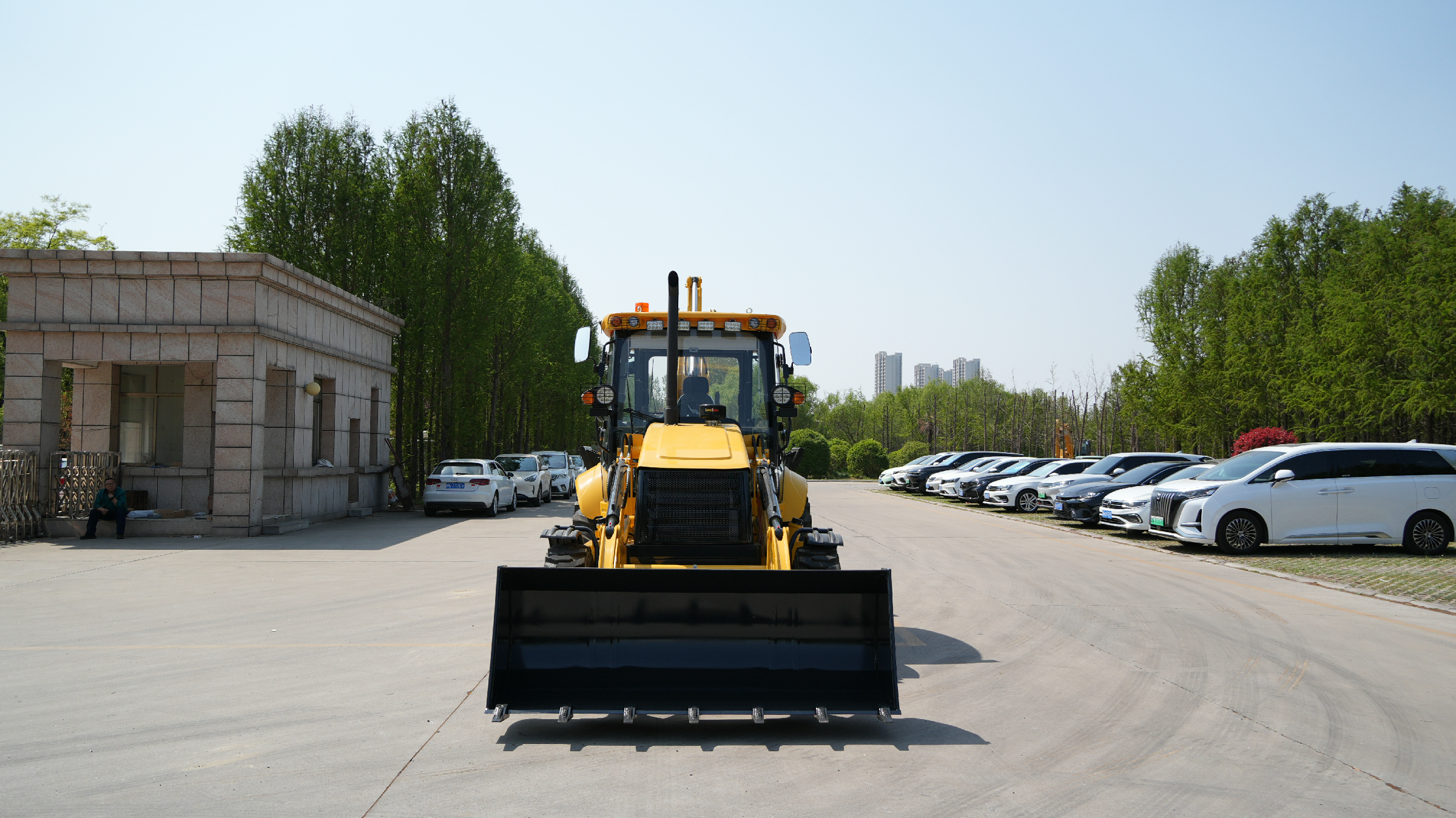
The biggest advantage of a backhoe loader is its ability to perform different types of work with the same machine.
The rear excavator is primarily used for digging and trenching, while the front loader handles materials and prepares the working area.
The rear digging arm can be used for:
Utility trenches
Drainage channels
Foundation preparation
Pipeline installation
General excavation
This makes the machine useful for contractors involved in civil construction and utility work.
The front loader can handle materials such as:
Soil
Gravel
Sand
Construction debris
Aggregate
Instead of bringing a separate wheel loader to the site for basic loading work, contractors can use the backhoe loader for both excavation and material handling.
After a trench or foundation area has been completed, the loader can help return excavated material to the site.
This makes the machine useful throughout several stages of a project rather than only during excavation.
Equipment utilization has a direct impact on construction productivity.
A machine that sits unused for most of the week does not provide the same value as equipment that can be deployed across multiple types of projects.
This is one reason backhoe loaders remain attractive to contractors handling diverse workloads.
A contractor may use the same machine for a drainage project in the morning, move to material handling in the afternoon, and use it for site preparation the following day.
That flexibility can be especially useful for:
Small construction companies
Civil contractors
Utility contractors
Rural contractors
Municipal maintenance teams
Agricultural businesses
The goal is not necessarily to replace every specialized machine. Instead, a backhoe loader can cover a broad range of everyday construction tasks while specialized equipment is reserved for applications that genuinely require it.
Selecting the right machine starts with the job rather than the specification sheet.
Before purchasing, contractors should consider what the machine will actually be doing.
If trenching and digging represent a large part of the machine's workload, the rear excavator configuration becomes particularly important.
Consider:
Required digging depth
Maximum reach
Bucket capacity
Digging force
Hydraulic performance
The machine should provide enough capability for the expected working conditions without being unnecessarily oversized.
The front loader is equally important.
For material handling applications, buyers should evaluate:
Loader capacity
Lift capability
Dump height
Bucket configuration
Hydraulic response
A machine used primarily for road maintenance may have different loading requirements from one used for moving aggregate on a construction site.
Australian projects can range from large open construction sites to narrow urban work areas.
Machine dimensions therefore matter.
Before purchasing, consider:
Working width
Overall height
Turning requirements
Site access
Transportation between jobs
A highly capable machine is not useful if it cannot access the work area efficiently.
Attachments can significantly expand the applications of a backhoe loader.
Depending on the machine configuration and hydraulic system, contractors may use different tools for different jobs.
Potential applications include:
Standard digging buckets
Narrow trenching buckets
Wider buckets
Hydraulic breakers
Fork attachments
Grapples
Other specialized tools
Attachment compatibility should therefore be discussed with the manufacturer before purchase.
For contractors, this can be more important than simply choosing a machine based on maximum engine output.
This is one of the most common questions from construction equipment buyers.
There is no universal answer.
A standard excavator is generally more suitable when excavation is the primary task and the project requires greater digging capability, reach, or specialized attachments.
A backhoe loader becomes more attractive when the contractor needs both excavation and loading functions from one machine.
For example, a utility contractor may need to:
Excavate a trench.
Remove soil.
Move materials.
Backfill the trench.
Prepare the surrounding site.
A backhoe loader can perform several of these tasks without requiring multiple machines.
For projects that involve extensive deep excavation, heavy-duty earthmoving, or specialized digging, an excavator may be the better choice.
The right decision depends on the balance between excavation, loading, mobility, and overall machine utilization.
Yes. Road maintenance is one of the applications where machine versatility can be particularly useful.
Maintenance teams may need to perform several tasks within the same project, including:
Drainage repairs
Shoulder maintenance
Trenching
Material handling
Surface preparation
Debris removal
A backhoe loader can move between these tasks without requiring a large equipment fleet.
For contractors servicing multiple road projects, this flexibility can simplify equipment planning.
Utility installation often requires excavation in areas where access and productivity are both important.
Backhoe loaders can support work involving:
Water lines
Drainage systems
Electrical infrastructure
Communication lines
Pipeline projects
The operator can excavate the trench using the rear arm and use the front loader for material handling and backfilling.
The exact machine configuration should be selected according to trench dimensions, soil conditions, attachment requirements, and jobsite limitations.
For distributors, purchasing equipment is different from purchasing a machine for a single project.
The distributor needs to consider whether the product can serve multiple customer groups.
A versatile backhoe loader may have applications across:
Construction
Agriculture
Infrastructure
Landscaping
Utility work
Municipal projects
This broader application range can make the machine easier to position across different customer segments.
However, distributors should also evaluate the manufacturer's ability to provide technical documentation, spare parts, training information, and long-term product support.
Construction equipment operates in demanding conditions. Even a well-designed machine requires regular maintenance and occasional replacement of wear components.
For overseas buyers, after-sales support should therefore be considered before placing an order.
Important questions include:
Are spare parts available?
How can technical issues be reported?
What maintenance information is provided?
Can the manufacturer provide operating guidance?
Is technical communication available for overseas customers?
A competitive machine without adequate support can become difficult to operate profitably over the long term.
For distributors, this issue is even more important because they may be responsible for supporting local customers.
When comparing manufacturers, buyers should look beyond the machine's appearance and headline specifications.
A reliable manufacturer should demonstrate capability in several areas.
Consistent production quality is essential when equipment will be used commercially.
The manufacturer should understand how hydraulic systems, loader structures, excavator arms, power systems, and machine controls work together.
Critical components should be inspected throughout the manufacturing and assembly process.
The manufacturer should be capable of assisting customers with operation, maintenance, and troubleshooting.
International equipment buyers need a supplier familiar with overseas communication, documentation, shipping, and market requirements.
MAXPOWER develops construction machinery for different working applications and international markets.
Its product portfolio includes Backhoe Loaders as well as Excavators, Specialty Excavators, Electric Excavators, Specialty Equipment, and Rotary Drilling Rigs.
This broader product range is useful for customers whose equipment requirements may change from one project to another.
For a contractor evaluating a backhoe loader, the important question is not simply whether the machine can dig.
It is whether the equipment can provide the right combination of excavation, loading, mobility, attachment flexibility, and support for the projects the company actually undertakes.
MAXPOWER can work with customers to identify suitable construction machinery according to their operating requirements.
Before making a purchase, overseas buyers should provide the manufacturer with as much project information as possible.
Useful information includes:
Main applications
Expected working hours
Typical soil conditions
Required digging depth
Loading requirements
Preferred attachments
Jobsite conditions
Local climate
Transportation requirements
Target market, if purchasing for distribution
This information allows the manufacturer to recommend a more appropriate configuration.
It is usually more productive to discuss the application first and the machine specifications second.
The best results come from treating the backhoe loader as a multi-purpose machine rather than using only one of its functions.
For example, a contractor working on drainage infrastructure can use the rear arm for excavation, the loader for moving excavated material, and the machine again for backfilling and site cleanup.
Proper operator training also matters.
Operators should understand:
Attachment selection
Hydraulic operation
Safe positioning
Machine stability
Routine inspection
Preventive maintenance
Good operating practices can reduce unnecessary wear and help maintain machine productivity over time.
For a growing contractor, equipment investment needs to support future work rather than only the current project.
A versatile backhoe loader can provide a practical starting point for companies that handle different types of construction work.
As the business expands, contractors can add specialized machines such as excavators, specialty excavators, or drilling equipment when project requirements justify the investment.
This approach can help build a more flexible equipment fleet without purchasing highly specialized machinery before there is sufficient demand.
Backhoe loaders remain a practical choice for contractors who need one machine capable of handling excavation, loading, material movement, and general site work.
For the Australian market, the right machine should be selected according to actual project conditions rather than a simple comparison of specifications.
Jobsite access, excavation requirements, loader performance, attachments, transportation, maintenance, and after-sales support all deserve attention before purchase.
For contractors, distributors, and equipment buyers looking for a versatile construction machine, MAXPOWER Backhoe Loaders offer an option worth evaluating as part of a broader construction equipment strategy.
The right backhoe loader is not necessarily the largest or most powerful machine. It is the machine that can perform the required work efficiently, reliably, and consistently across the projects your business actually takes on.
A backhoe loader combines rear excavation with front loading, making it suitable for trenching, drainage, material handling, backfilling, road maintenance, landscaping, and general construction.
Backhoe loaders can be suitable for many Australian applications, particularly general construction, utility work, road maintenance, agricultural projects, and infrastructure maintenance. The appropriate configuration depends on local working conditions and project requirements.
A backhoe loader combines a loader and excavator in one machine. An excavator is primarily designed for excavation and can offer greater specialization for demanding digging applications.
Attachment options depend on the machine configuration and hydraulic system. Buyers should confirm compatibility with the manufacturer before ordering.
Consider excavation depth, digging performance, loader capacity, machine dimensions, attachments, operating environment, transportation, maintenance, spare parts, and manufacturer support.
Yes. Their combination of trenching, material handling, and backfilling capabilities makes them useful for many utility construction and maintenance applications.
MAXPOWER provides a range of construction equipment, including Backhoe Loaders, Excavators, Specialty Excavators, Electric Excavators, Specialty Equipment, and Rotary Drilling Rigs, allowing buyers to evaluate equipment according to different project requirements.







