Maxpower Construction Machinery Manufacturer




Utility construction requires equipment that can work accurately around existing infrastructure while still providing enough power for excavation, material handling, and site restoration. Water pipelines, sewer systems, electrical cables, communication lines, and drainage networks all require different excavation conditions, yet contractors often need to complete several of these tasks on the same project.
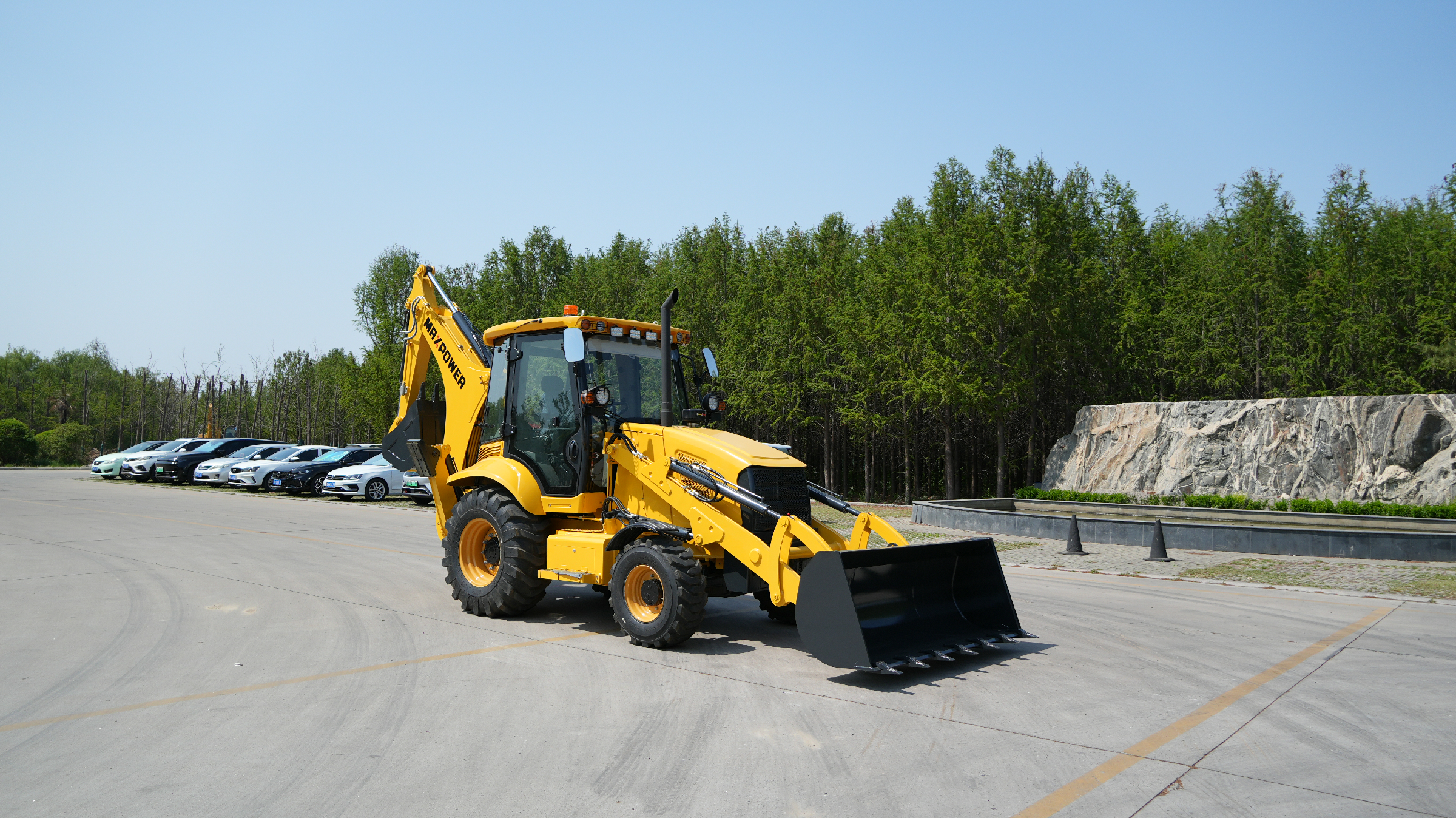
This is one reason Backhoe Loaders for Utility Construction remain an important equipment choice. A backhoe loader combines a rear digging attachment with a front loader, allowing contractors to excavate trenches, move spoil, handle materials, backfill excavated areas, and clean the worksite with one machine.
For contractors evaluating construction equipment, the key question is not simply whether a backhoe loader can dig a trench. The more important question is whether its overall configuration matches the workflow, site conditions, and productivity requirements of the utility project.
A backhoe loader can support many stages of underground utility construction.
Typical applications include:
Water pipeline installation
Sewer construction
Drainage installation
Electrical cable trenching
Communication infrastructure
Gas pipeline preparation
Utility repair
Backfilling and site restoration
The rear backhoe is primarily responsible for excavation and trenching, while the front loader can move excavated soil, aggregate, bedding material, and construction debris.
This combination is especially useful when contractors need to complete several related operations without moving multiple machines onto a relatively small jobsite.
Utility construction is different from large-scale earthmoving.
A contractor may only need to excavate a relatively narrow trench, expose an existing pipeline, remove soil, place materials, and restore the site afterward.
Bringing a large excavator to every utility project may not always be the most efficient approach.
A backhoe loader offers several practical advantages.
First, it combines digging and loading functions. Second, it can be useful across different stages of the project. Third, its versatility allows contractors to use the same machine for excavation, material handling, and site cleanup.
For companies handling many smaller utility projects, this flexibility can have a significant impact on equipment utilization.
Yes. Trenching is one of the core applications of a backhoe loader.
The rear attachment can excavate trenches for underground infrastructure while allowing the operator to control the digging process according to project requirements.
Utility trenches may be required for:
Water infrastructure projects often require trenches with controlled dimensions and sufficient working space for pipe installation.
Sewer systems require carefully planned excavation because trench depth, alignment, drainage requirements, and existing infrastructure can all affect construction.
Underground electrical installations require trenches that provide adequate space and protection for cable systems.
Fiber optic and communication networks increasingly rely on underground installation, creating demand for efficient trenching equipment.
The correct machine configuration should always be selected according to required trench dimensions, soil conditions, working depth, and project specifications.
Water pipeline construction involves more than simply digging a trench.
The work may include excavation, soil removal, bedding preparation, pipe installation, backfilling, and surface restoration.
A backhoe loader can support several of these operations.
The rear excavator attachment can create the trench, while the front loader can move soil and aggregate around the worksite.
After pipe installation, the machine can also assist with backfilling and general site cleanup.
This reduces the need to switch continuously between different types of equipment.
For contractors working on smaller municipal water projects, residential developments, or local infrastructure upgrades, this multi-purpose capability can be particularly valuable.
Yes, but the machine should be selected according to the depth and scale of the sewer project.
Sewer construction often requires trench excavation, soil removal, bedding preparation, pipe installation, and backfilling.
A backhoe loader can support these tasks when the required excavation capability is within the machine's operating range.
For smaller sewer projects, maintenance work, and local infrastructure construction, a backhoe loader can provide a practical combination of digging and loading functions.
For major sewer projects involving deep excavation, long continuous trenches, or high excavation volumes, contractors may benefit from using a dedicated excavator.
This distinction is important when evaluating equipment. The best machine is the one that matches the dominant workload rather than the machine with the broadest list of possible applications.
Electrical and communication cable projects often involve relatively narrow trenches and work around existing infrastructure.
A backhoe loader can be suitable for these applications when its digging dimensions and working capabilities meet the project requirements.
The machine can help with:
Trench excavation
Soil removal
Material handling
Backfilling
Site cleanup
However, utility trenching requires careful planning because underground construction may involve existing water lines, gas pipelines, electrical systems, and communication infrastructure.
Equipment selection should therefore consider not only digging performance but also operator visibility, maneuverability, control, and the working environment.
Utility excavation presents several challenges that buyers should consider before selecting equipment.
The biggest concern is often the presence of existing utilities.
Excavation may take place near pipelines, cables, drainage systems, or other buried infrastructure.
This makes controlled excavation and proper site planning essential.
Utility projects frequently take place along roads, sidewalks, residential areas, commercial properties, or developed industrial sites.
The machine may have limited room to maneuver.
Soil conditions can vary significantly between projects.
Clay, sand, gravel, compacted soil, and mixed ground conditions can all influence excavation performance.
Utility construction may take place in areas that remain partially accessible to vehicles and pedestrians.
Contractors must plan equipment movement and work zones carefully.
These challenges make versatility and machine control particularly important.
Selecting the right backhoe loader requires a project-specific evaluation.
The required trench depth should be compared with the machine's available digging capability.
Contractors should consider both normal operating depth and the maximum requirements expected during their typical projects.
Reach affects where excavated material can be placed and how efficiently the machine can operate without repeatedly repositioning.
The front loader becomes important when the machine must move soil, aggregate, bedding material, or construction debris.
Hydraulic performance affects digging responsiveness, attachment control, and overall productivity.
Utility construction frequently occurs in confined environments.
Machine width, operating footprint, turning requirements, and transportation considerations should therefore be evaluated before purchasing.
Different utility projects may require different buckets or attachments.
Contractors should consider the types of work they expect to perform over the machine's service life.
Not necessarily, but it can support a significant portion of the workflow.
Consider a water pipeline repair project.
The machine may first excavate the affected area. It can then help remove soil and move materials around the site.
After the pipeline repair is completed, the loader can assist with backfilling and cleanup.
However, other equipment may still be required for lifting pipes, compacting soil, transporting materials, or performing specialized work.
The advantage of a backhoe loader is therefore not that it eliminates every other machine. Its advantage is that it can combine several common construction functions into one piece of equipment.
This is one of the most important questions for utility contractors.
A dedicated excavator is generally better suited to projects involving:
Deep trenches
Large excavation volumes
Long continuous excavation
Heavy earthmoving
Large infrastructure projects
A backhoe loader may be more suitable when the project requires:
Digging and loading
Frequent equipment repositioning
Smaller work areas
Utility repairs
Municipal maintenance
Multiple tasks on the same site
For example, a contractor repairing a short section of water pipeline may benefit from the versatility of a backhoe loader.
A contractor installing several kilometers of large-diameter pipeline may require dedicated excavators and additional specialized equipment.
Efficiency is not determined only by digging speed.
Equipment utilization, repositioning time, transportation, material handling, and task changes can all influence project productivity.
A backhoe loader can improve efficiency by reducing the number of machine changes required during multi-stage work.
For example, instead of using one machine exclusively for excavation and another for loading, a backhoe loader can perform both functions.
This can be especially useful for contractors handling multiple short-duration projects.
The machine can move between excavation, loading, backfilling, and cleanup tasks as the project progresses.
Utility construction often takes place in environments that were not designed specifically for heavy machinery.
Contractors may work alongside:
Existing buildings
Roads
Sidewalks
Utility poles
Underground infrastructure
Fences
Residential properties
A machine that is difficult to maneuver can reduce productivity and make jobsite management more complicated.
Backhoe loaders are therefore attractive for many utility applications because they provide a combination of excavation capability and general-purpose construction functionality.
The specific machine dimensions and configuration should still be evaluated against the actual site conditions.
Utility work is not limited to new construction.
Maintenance and emergency repairs are major parts of the industry.
A water main can fail unexpectedly. A drainage system may require excavation. A buried cable may need repair. Sewer infrastructure may require access.
These projects often have short response times.
A versatile machine can be valuable because it can be deployed for different types of maintenance work without requiring a completely specialized fleet.
For contractors providing municipal or utility maintenance services, equipment versatility can therefore become an important part of fleet planning.
MAXPOWER Backhoe Loaders are designed for contractors that require flexible construction equipment for multiple applications.
For utility construction, the machine's combination of rear excavation and front loading functions can support different stages of work, including trenching, material handling, backfilling, and site cleanup.
MAXPOWER's equipment portfolio also includes Excavators, Specialty Excavators, Electric Excavators, Specialty Equipment, and Rotary Drilling Rigs.
This broader range allows contractors to select different equipment solutions depending on excavation depth, project scale, working environment, and application requirements.
For projects where a backhoe loader is the appropriate choice, MAXPOWER provides an equipment option designed around multi-purpose construction work.
A backhoe loader is highly versatile, but it is not the right choice for every utility project.
Consider a dedicated excavator when the project involves extensive excavation and digging represents most of the machine's operating time.
An excavator may be preferable for:
Deep utility trenches
Large pipeline installation
Major sewer projects
Large-scale drainage construction
Heavy earthmoving
Long-duration excavation
MAXPOWER Excavators can be considered when excavation productivity is the primary requirement.
The important point is to avoid selecting equipment based only on the machine category. Instead, evaluate the actual workload, site conditions, required digging capability, and expected utilization.
Before purchasing a backhoe loader, contractors should review their recent projects.
Consider:
How many hours per week are spent excavating?
This indicates the importance of digging performance.
How often is material loading required?
Frequent loading may increase the value of the front-loader function.
How deep are typical trenches?
This helps determine the required excavation capability.
How frequently does the machine move between jobsites?
Frequent movement makes transportation and mobility more important.
What percentage of work involves municipal or utility maintenance?
A broader range of small projects may favor a versatile machine.
This approach provides a more reliable basis for equipment selection than simply comparing headline specifications.
Utility construction requires equipment that can adapt to different underground infrastructure projects and changing jobsite conditions.
From water and sewer pipelines to electrical cables, drainage systems, and utility repairs, contractors often need to excavate, move materials, backfill trenches, and restore work areas within the same project.
A backhoe loader can support many of these activities through its combination of rear excavation and front loading capabilities.
MAXPOWER Backhoe Loaders are designed for contractors, utility companies, municipalities, and infrastructure service providers that need versatile construction equipment for demanding applications.
For smaller and medium utility projects where flexibility is important, a backhoe loader can provide an efficient equipment solution. For deeper or larger-scale excavation, contractors should evaluate dedicated excavators based on their specific requirements.
The right choice ultimately depends on the project's excavation requirements, working environment, equipment utilization, and long-term fleet strategy.
A backhoe loader can be used for utility trenching, water pipeline installation, sewer construction, drainage work, electrical cable excavation, material handling, backfilling, and site cleanup.
Yes. A backhoe loader can excavate trenches for water pipelines when the required trench dimensions and digging depth are within the machine's operating capabilities.
Yes. They can support trench excavation, soil removal, material handling, backfilling, and site cleanup on suitable sewer projects.
Yes. Backhoe loaders can be used for electrical and communication cable trenching, particularly on smaller and medium-sized projects.
It depends on the project. Excavators are generally better for deep and continuous excavation, while backhoe loaders provide greater versatility when digging is combined with loading and material handling.
Yes. The rear attachment can excavate while the front loader can help move soil and support backfilling operations.
Consider digging depth, reach, hydraulic performance, loader capacity, machine dimensions, maneuverability, attachment requirements, maintenance support, and expected operating hours.
MAXPOWER Backhoe Loaders provide a combination of excavation and loading capabilities for utility, municipal, infrastructure, and general construction applications.







