Jining Maxpower Machinery Co., Ltd.




A piling contractor comparing two rigs sees a higher torque figure and expects faster drilling. That expectation needs checking before equipment is ordered.
Rotary drilling rig torque describes turning capability, not completed metres per shift. For buyers considering the MAXPOWER MR240, the useful question is how its published specifications relate to the intended pile and ground conditions.
MAXPOWER lists the MR240’s maximum output torque as 240 kN·m.
Torque describes the turning action delivered by the rotary drive. It is not a penetration-rate guarantee or a statement that the rig can drill every formation. Use the rating to identify a candidate machine, then assess the proposed drilling method.
The MR240’s rated engine output is 272 kW at 1,900 rpm.
Kilowatts measure power; kilonewton-metres measure torque. They describe different properties and cannot be compared numerically. The relationship between power and torque also involves rotational speed, but the engine rating alone does not reveal the rotary drive’s complete performance curve.
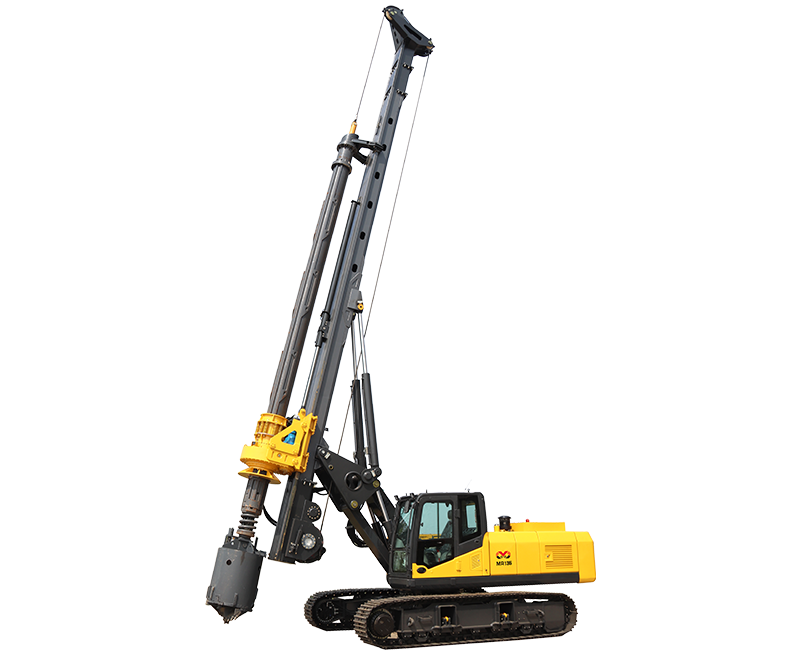
The published drilling-speed range is 5–30 rpm. This refers to drilling rotation, not engine speed. Keep the two specifications separate when comparing machines.
Ask which operating range is recommended for your proposed tooling and formation. Selecting the highest rpm merely because it appears in the specification is not a suitable operating plan.
Do not treat separate maximum specifications as one confirmed operating point.
The public MR240 page does not include a torque–speed curve showing available output throughout the drilling range.
Request that curve or equivalent performance information. It should clarify the operating conditions rather than leave the buyer to assume maximum torque is continuously available at maximum speed.
The MR240 lists a 2,000 mm maximum drilling diameter and 58/73 m maximum drilling depth. The page does not explain which configurations correspond to the two depths.
Neither should be presented as an unconditional capability for every supplied machine.
Provide the required diameter and depth together, then request written confirmation of the configuration proposed for that combination.
No. The MR240’s crowd-cylinder section separately lists 280 kN maximum hoisting force.
That is a force specification, not rotary drilling rig torque. It should not be treated as a general crane lifting rating either.
When comparing equipment, keep rotary-drive performance and crowd-system specifications in their respective categories.
It cannot replace a ground investigation.
FHWA’s drilled-shaft reference covers site investigations for both construction and design. For an equipment inquiry, provide the available borehole logs and relevant soil and rock information.
Ask MAXPOWER to evaluate the proposed tooling and drilling method against those conditions. A torque number alone is not evidence of a particular rock penetration rate.
Request evidence from a representative drilling task, not only a video of the rotary head turning.
Record the bore diameter, depth interval, formation, tooling, penetration time, and time spent extracting and emptying the tool. Separate productive drilling from waiting.
This gives your team a practical basis for discussing output without inventing a metres-per-hour figure from the brochure.
Use the MR240 product page to begin the discussion, then obtain a configuration-specific technical offer.
Confirm the selected depth arrangement, compatible drilling tools, rotary performance information, transport requirements, and operating documentation.
For a wider comparison, review MAXPOWER’s rotary drilling rig range, but keep each model’s specifications separate. Do not transfer a configuration or rating from another machine.
Rotary drilling rig torque is useful when read alongside rotation speed, engine power, drilling dimensions, and the proposed configuration.
The purchasing decision should connect those figures to an actual pile design and ground investigation—not a general promise of faster drilling.
Send MAXPOWER your pile dimensions, ground information, and production requirements. Request a technical review of the MR240 configuration before finalizing equipment selection.
MAXPOWER publishes 240 kN·m.
No. They refer to different rotating systems.
No. Evaluate the complete drilling task and configuration.
The public page does not establish that. Confirm the supplied configuration.
Pile dimensions, ground investigation information, tooling requirements, and expected workload.







