Maxpower Construction Machinery Manufacturer




A contractor comparing two small excavators notices similar engine ratings but different operator stations. Which machine will be more comfortable during a long shift? Will the cab fit through the storage entrance? What equipment is actually included?
Those questions are worth answering before ordering. A mini excavator cab should be evaluated as part of the supplied machine—not as a photograph or a model suffix.
MAXPOWER lists separate ME20.9 4SC Stage V and ME20.9 CAB Stage V versions.
Keep those descriptions distinct in your inquiry. Ask for photographs and a configuration sheet for the version being supplied, rather than accepting a generic ME20.9 brochure.
That gives the purchasing team and operator the same machine to evaluate.
Both product pages list the 3TNV80F engine with rated output of 15.2 kW at 2,500 rpm. The published figures therefore provide no basis for treating the CAB version as a power upgrade.
Keep the cab decision focused on the operator environment. Assess digging performance separately against the actual excavation requirements.
Both versions are listed at 2 tonnes operating weight, with a 0.05 m³ bucket.
Those matching entries do not establish that every delivered configuration weighs exactly the same. Request the weight for the ordered machine, including its specified equipment.
For a buyer working near a trailer’s payload limit, a catalog figure alone should not settle the transport decision.
The CAB page lists 2420/2435 mm to the top of the cab and 1220 mm to the top of the boom. It does not explain the configurations behind the paired cab-height figures.
Ask which height applies to your order. Check storage doors and overhead obstacles against that confirmed dimension—not the lower boom-height figure.
The public specification does not identify heating or air conditioning as included equipment.
Before choosing a mini excavator cab for winter or summer work, request the actual equipment list. Ask about ventilation, glazing, and any available heating or cooling configuration.
A written answer is more useful than discovering after delivery that the feature your operator expected was never included.
Sit in the proposed machine during a demonstration. Adjust the seat, reach the controls, and assess the view toward the bucket and travel route from the normal operating position.
HSE’s excavator safety guidance emphasizes visibility from the driver’s position and appropriate visibility aids. Good visibility does not replace keeping pedestrians outside the operating area.
Arrange the demonstration accordingly.
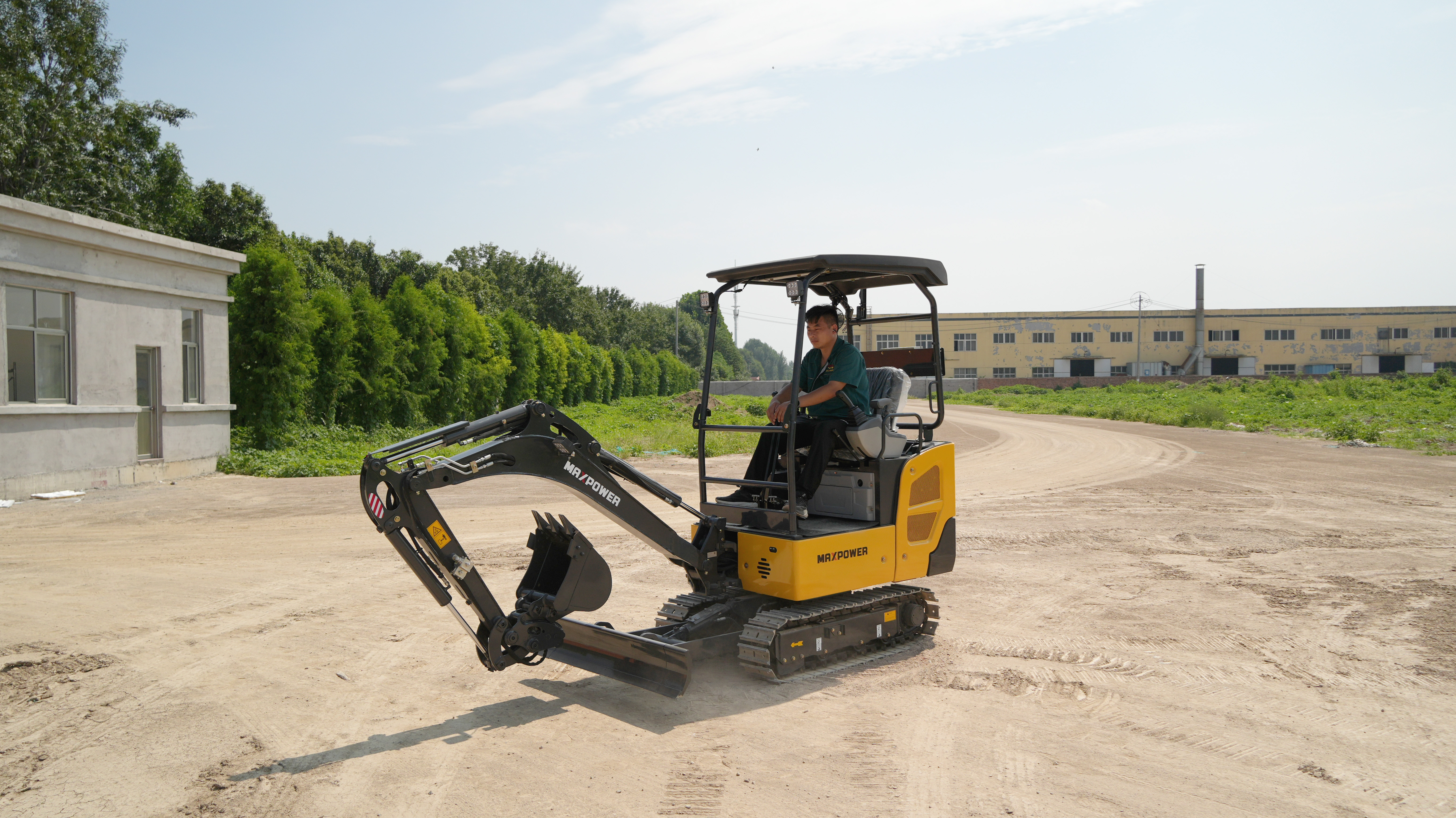
Do not assume that choosing a cab establishes a dust-protection rating.
HSE’s construction dust guidance calls for assessing exposure and applying appropriate controls. The ME20.9 page does not publish cabin filtration or pressurization ratings.
For dusty work, request evidence of the supplied cab’s protective capability and have the site exposure assessed. Treat enclosure and verified exposure control as separate questions.
Put the version name, included cab equipment, confirmed dimensions, and operating documentation into the order confirmation.
For repeat purchases, retain that specification so later machines are not ordered from the family name alone.
Use MAXPOWER’s excavator range to compare alternatives, but keep each model’s figures separate. Ask for a handover covering controls, visibility aids, and routine cab inspections.
The ME20.9 comparison shows why cab selection should not be confused with engine selection. Its two published versions share headline power, weight, and bucket figures.
The remaining decision belongs at the operator’s seat and in the configuration sheet. Confirm what is supplied, check the working environment, and order the version that meets those requirements.
Contact MAXPOWER with your operating climate, access restrictions, and daily work pattern. Request the exact cab equipment list and dimensional drawing before finalizing your order.
15.2 kW at 2,500 rpm.
No. The two pages show the same rated output.
No. It is not specified on the cited product page.
2420/2435 mm; confirm the applicable configuration.
Control access, seated visibility, entry and exit, and the actual equipment supplied.







