Maxpower Construction Machinery Manufacturer




A backhoe loader may spend the morning excavating a drainage trench and the afternoon moving material between a stockpile and a work area. The digging specifications matter, but they do not describe how the machine will approach the pile, reverse, turn, and travel through the site.
Consider a contractor comparing equipment for a narrow construction yard. A higher travel-speed figure offers little practical value if every loading cycle requires several positioning adjustments.
For buyers evaluating the MEL880A in MAXPOWER’s backhoe loader range, the transmission, steering, and machine dimensions deserve attention together. The aim is to understand how the proposed configuration fits the work—not simply collect the highest numbers from a specification sheet.
MAXPOWER identifies the MEL880A transmission and hydraulic torque-converter assembly as CA359169S, with four forward and four reverse gears.
Include that designation in the equipment confirmation. It gives the purchasing team a specific reference when discussing operation, maintenance documentation, and replacement components.
For a distributor ordering several machines, retaining this information also makes later comparisons more straightforward. Ask whether subsequent orders use the same configuration rather than assuming that an unchanged machine name guarantees identical equipment.
The gear count describes the available forward and reverse ratios. The published table does not explain automatic shift logic or the procedure for changing direction.
Those details should be clarified during the demonstration and handover.
Ask the operator to show how direction and gear selection work, then review the relevant operating instructions. Do not assume that four reverse gears mean the machine should reverse at its maximum published travel speed.
Similarly, the gear count does not establish how quickly a loading cycle can be completed. That needs to be assessed through the work itself.
An open-yard driving demonstration answers only part of the question. A more useful assessment reproduces the movements your operator will perform repeatedly.
Ask a trained operator to approach a representative material pile, collect an appropriate load, reverse into the designated area, and move toward the unloading position. Keep the demonstration within the machine’s operating instructions and the site’s safety arrangements.
Watch where the operator pauses. Is the pause necessary for safe direction selection, or is poor stockpile positioning forcing an extra maneuver? Does the route allow a clear approach, or does the machine need to turn sharply before every pickup?
Record the sequence rather than judging the machine from one fast movement. A backhoe loader transmission should be evaluated within a controlled, repeatable working cycle.
The listed maximum speed is 34–39 km/h, without an explanation of the configurations or test conditions behind that range.
Treat it as published performance information—not a recommended speed for a construction yard or a loaded movement.
For short loading runs, focus your assessment on positioning and completed work. For longer movements, review the route, visibility, surface, and operating restrictions.
HSE’s construction traffic-management guidance emphasizes suitable routes, minimizing unnecessary vehicle movements, and separating pedestrians from machinery. Those considerations should shape the site plan before travel speed becomes a purchasing priority.
Published steering data gives an angle of ±40° and a 7,144 mm minimum turning radius.
The radius is not a diameter, and the steering angle is not a permissible slope angle.
Request a turning diagram showing how the radius is measured. Then plot the complete machine’s movement around your stockpile, barriers, parked trucks, and unloading position.
This is more useful than checking whether the tires alone can follow a curved route. HSE’s vehicle-route guidance specifically includes vehicle length, width, maneuverability, and visibility among the factors to assess.
The MEL880A’s published transport dimensions are 8,295 mm long, 2,360 mm wide, and 3,838 mm high.
Use these measurements for an initial route assessment, then confirm the delivered configuration and approved travel position.
Check more than the entrance gate. Include corners immediately behind it, overhead structures, parked equipment, and the final approach to the working area.
HSE advises measuring overhead clearance along vehicle routes, including suspended services that may have been added after a building was designed. Its guidance also notes that ramps can affect clearance beneath an obstruction.
The published operating weight is 8,800 kg, with 351 mm minimum ground clearance.
Neither figure, by itself, confirms that a temporary ramp, service cover, or soft route is suitable.
Ground clearance is a dimensional specification, not permission to cross any obstacle. Before delivery, identify questionable supporting surfaces and arrange an assessment for the machine and any applicable load.
HSE’s vehicle and load guidance states that bridges and ramps need to support the vehicles and loads using them. Apply that principle to the route assessment rather than relying on the machine’s appearance or tire size.
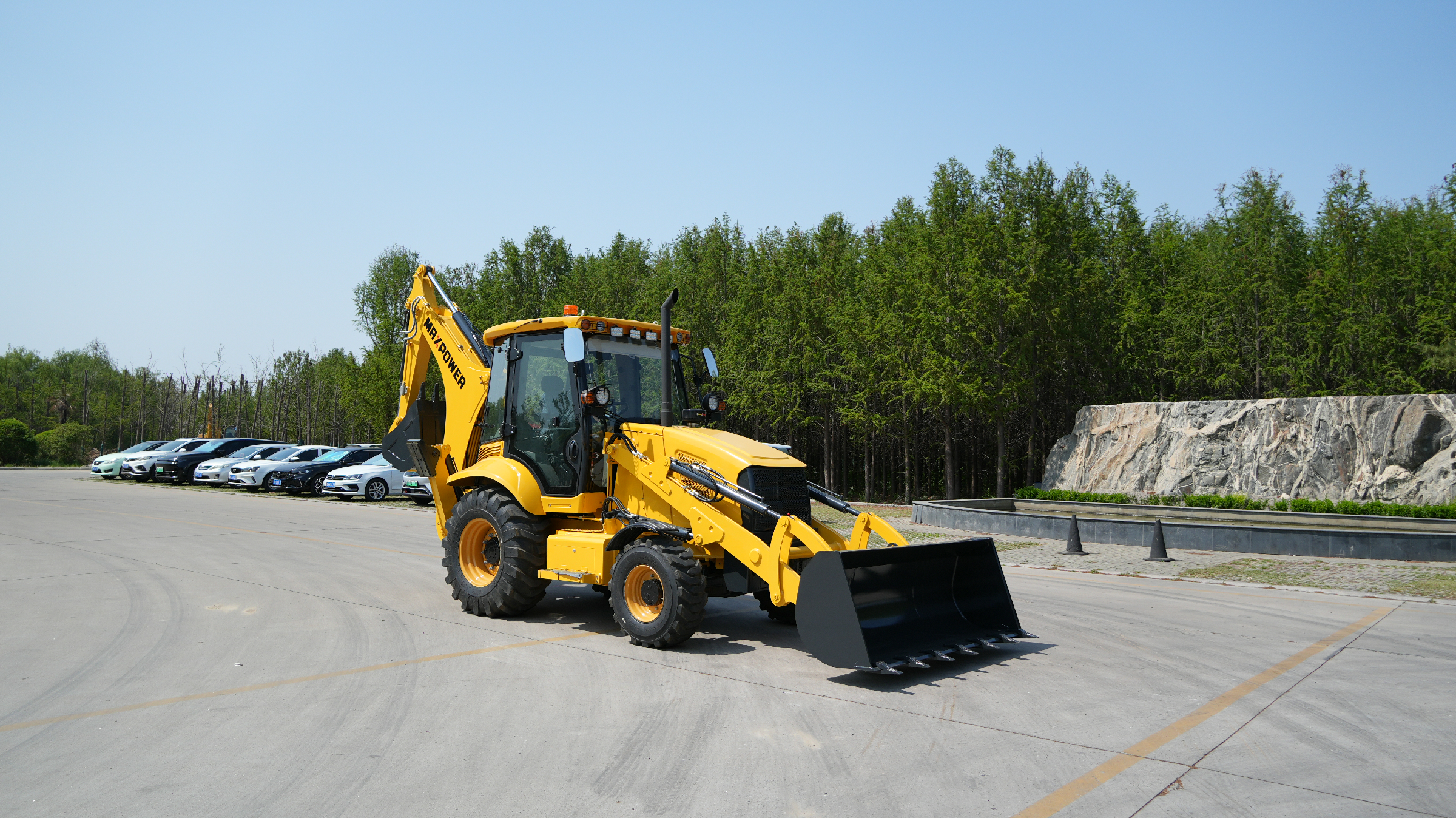
Reversing capability is useful, but it should not become a reason to accept unnecessary reversing movements.
HSE’s reversing guidance recommends eliminating reversing where possible, including through one-way layouts or drive-through loading positions. Where it remains necessary, reversing areas should be planned and uninvolved people kept clear.
For your equipment evaluation, sketch two possible loading arrangements. Compare how many movements each requires and where pedestrians or delivery vehicles could cross the route.
That exercise may reveal a layout problem before it is mistaken for a machine-performance problem.
Ask for a handover covering the supplied transmission controls, direction selection, travel configuration, parking procedure, and relevant warning indications.
Have the operator demonstrate their understanding rather than relying entirely on a verbal explanation. HSE identifies operator competence and training as essential parts of construction vehicle management.
For maintenance, request the specified lubricant, inspection procedure, service intervals, and parts identification information. Do not borrow fluid recommendations or service settings from another backhoe loader because the transmission looks similar.
Discuss the documentation you need through MAXPOWER’s repair and maintenance contact route before the machine is dispatched.
The order should connect the machine configuration to the requirements discussed during selection.
Record the transmission designation, included equipment, confirmed dimensions, and documentation to be supplied. Where the catalog presents a range, ask which specification applies to your order and under what conditions.
Keep demonstration observations separate from guaranteed performance commitments. A satisfactory loading demonstration is useful evidence for your assessment, but one observed cycle should not become an unsupported daily production promise.
For repeat purchases, retain the agreed configuration sheet as the reference for the next order.
The MEL880A’s backhoe loader transmission should be assessed alongside its steering, dimensions, travel requirements, and intended loading sequence.
The published figures help identify the configuration. A representative demonstration and a measured site layout show whether that configuration fits your operation.
Before ordering, resolve the practical questions: how the machine changes direction, where it turns, what route it follows, and which operating instructions accompany it.
Send MAXPOWER your site layout, material-handling tasks, and typical travel distances. Ask the team to review the proposed MEL880A configuration and provide the technical documentation needed for your equipment decision.
MAXPOWER lists four forward and four reverse gears.
The published transmission and torque-converter designation is CA359169S.
No. Confirm the shift controls and operating procedure for the supplied machine.
The product page lists 34–39 km/h. Confirm the applicable configuration and conditions.
A representative approach, loading, reversing, turning, and unloading sequence—not just maximum-speed travel.







